AI Pulse May 19, 2026
May 26, 2026



EXECUTIVE SUMMARY
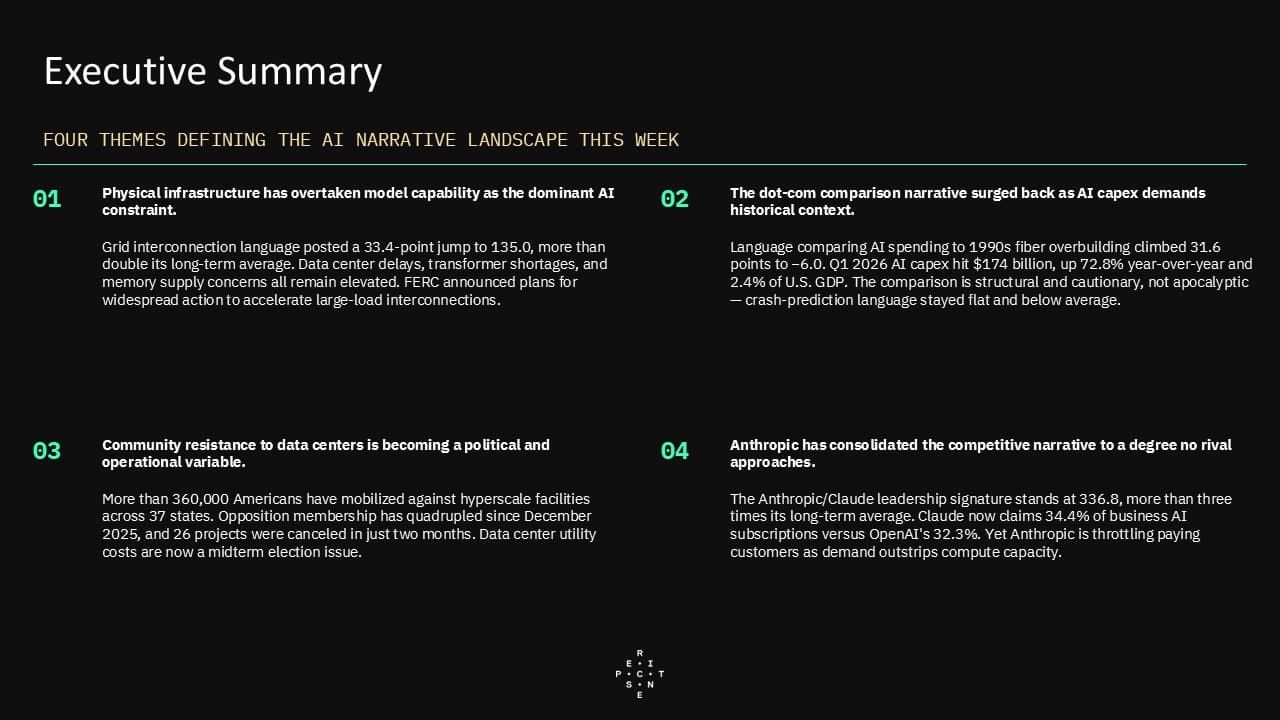
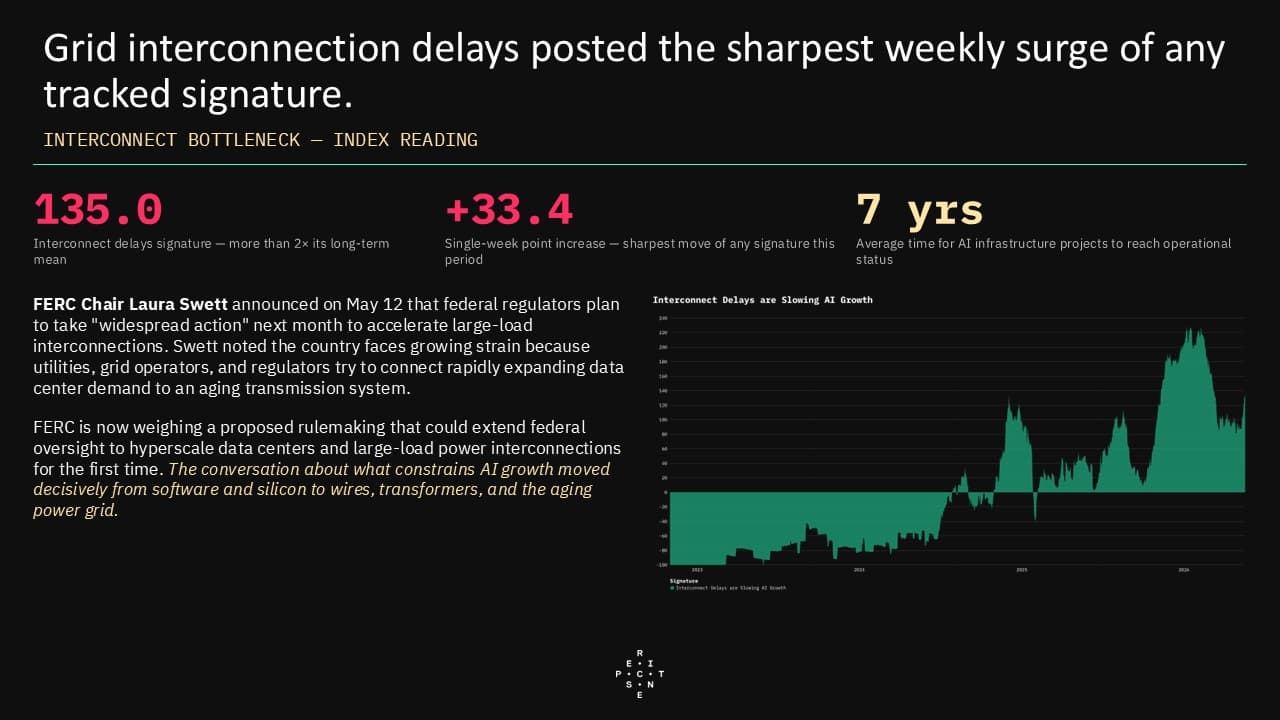
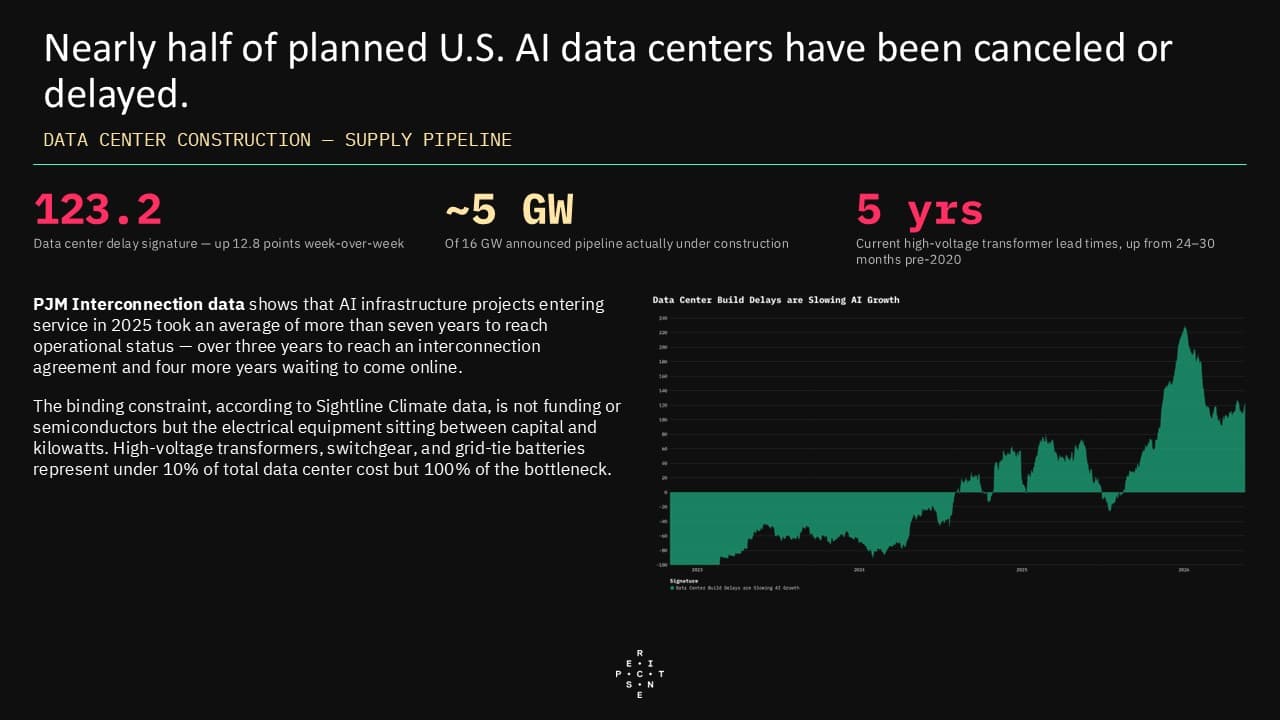
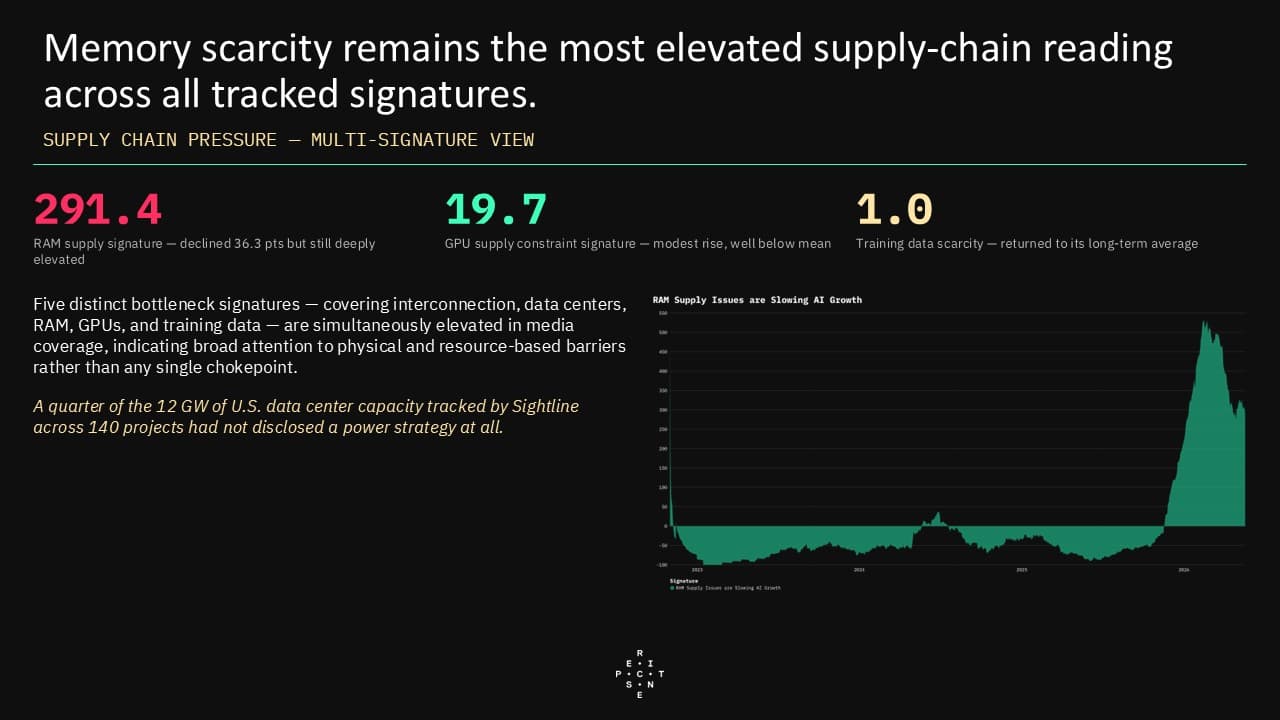
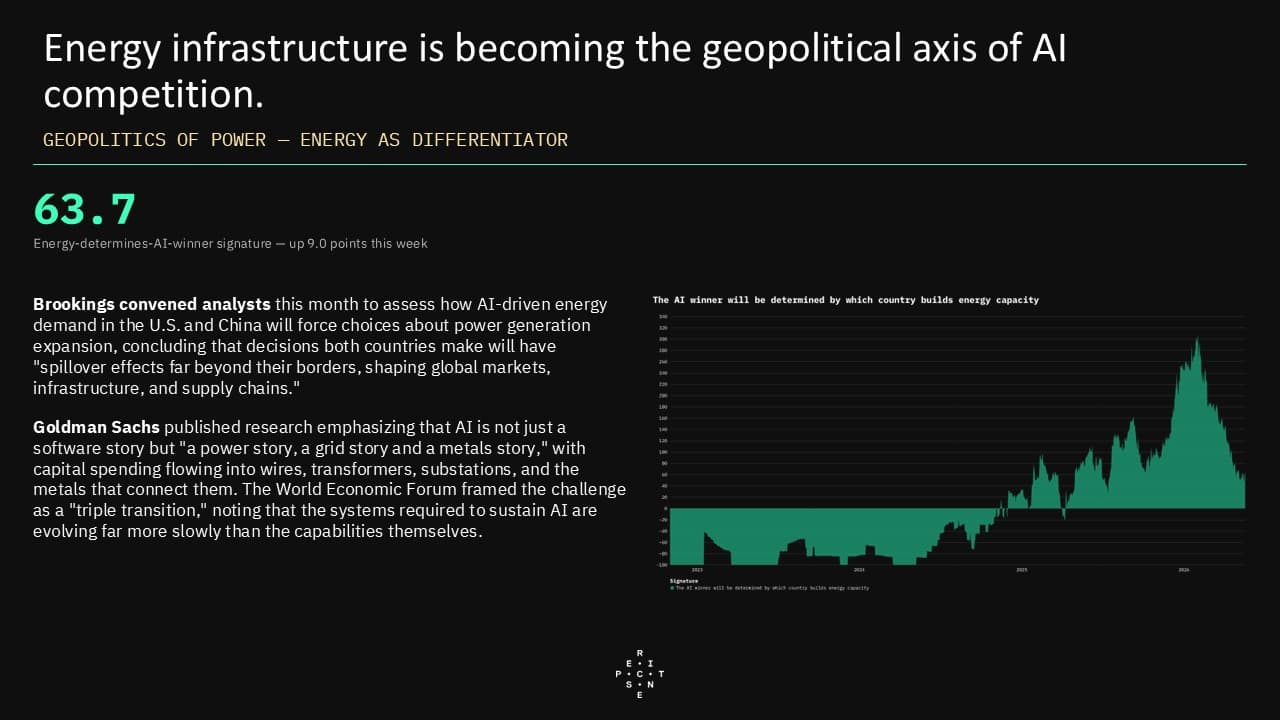
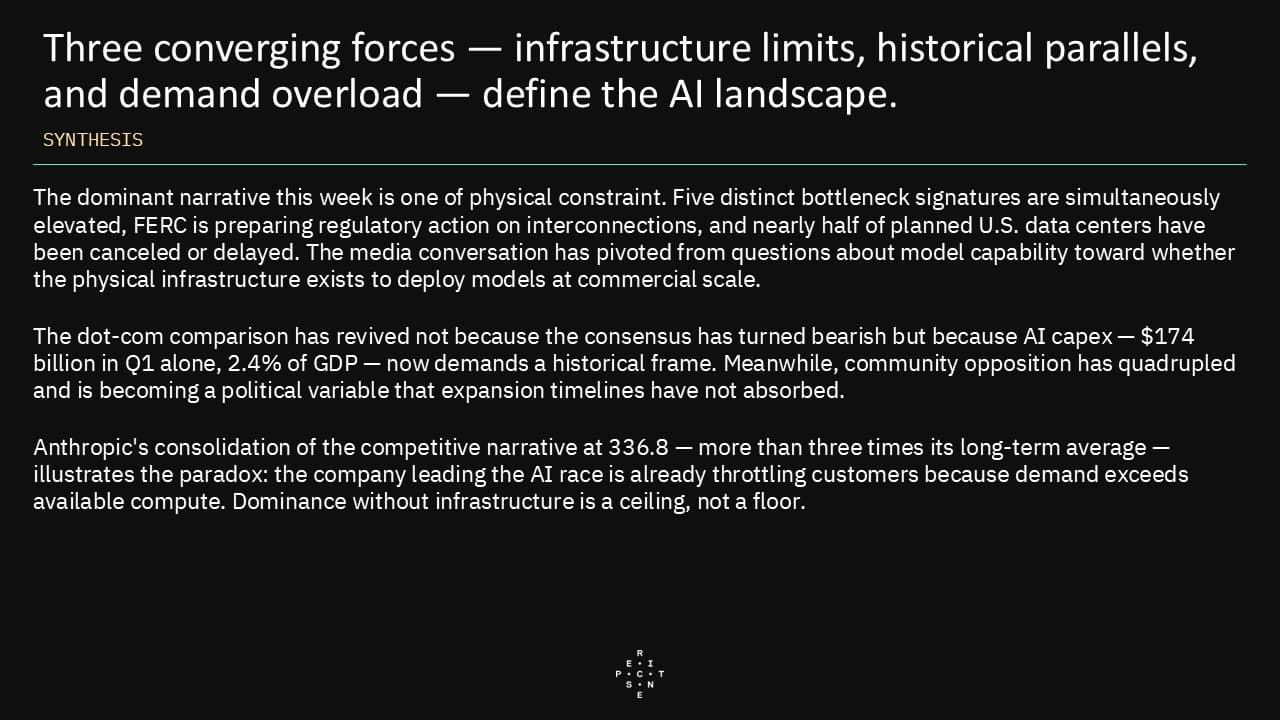
- Physical infrastructure has overtaken model capability as the dominant constraint narrative in AI media coverage. Language about grid interconnection delays posted the largest single-week increase of any semantic signature tracked, while data center construction delays, transformer shortages, and memory chip supply concerns all remain elevated. Federal regulators, analysts, and geopolitical commentators are converging on the view that energy infrastructure, permitting, and supply chain management—not algorithms—will determine which companies and countries lead the AI buildout.
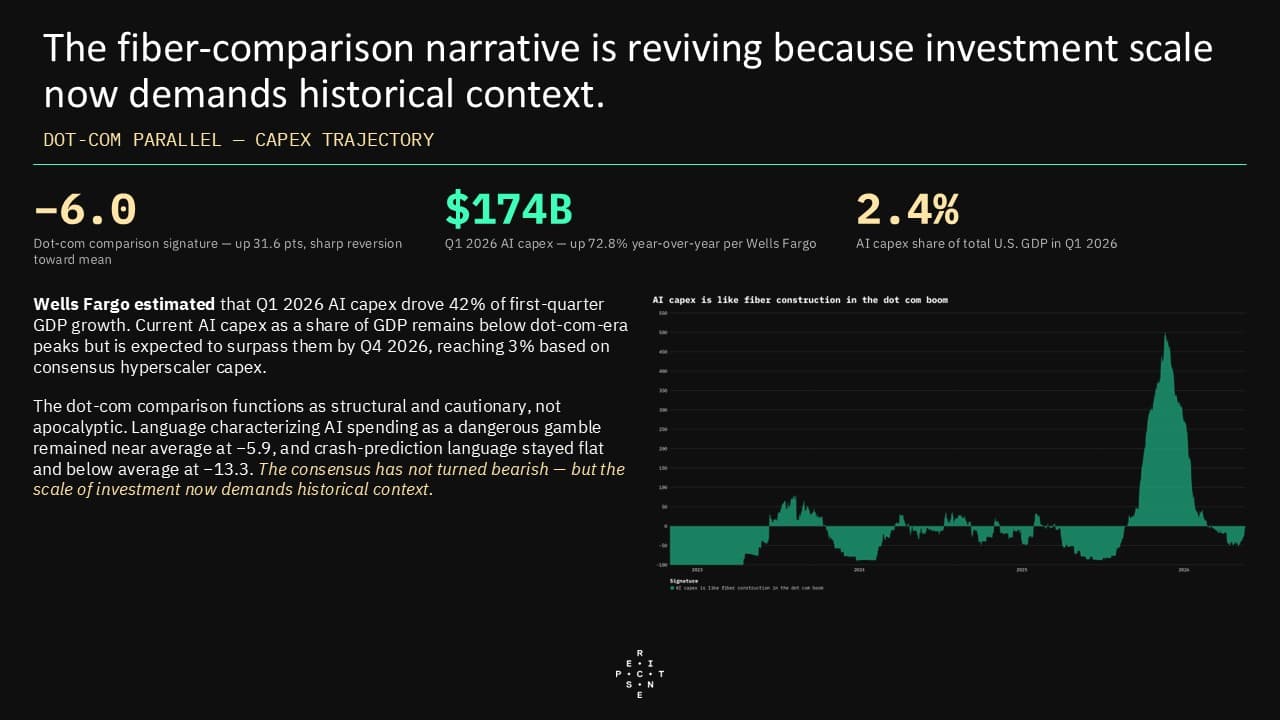
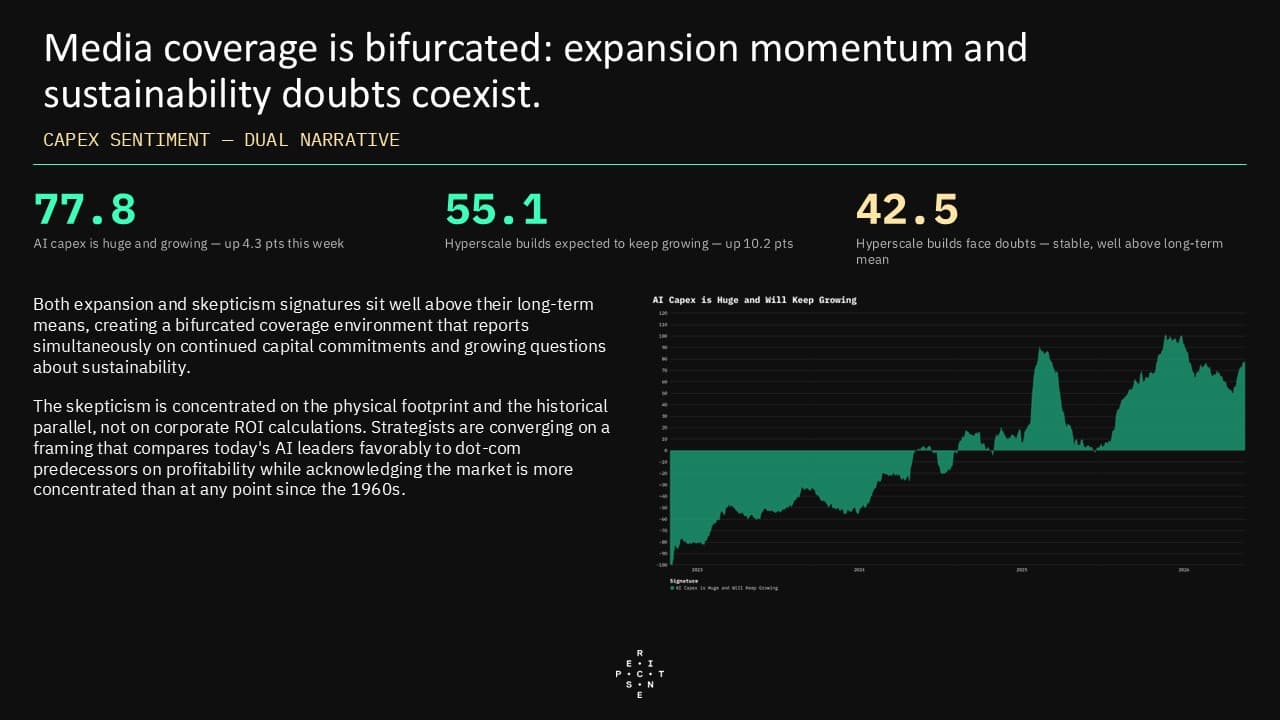
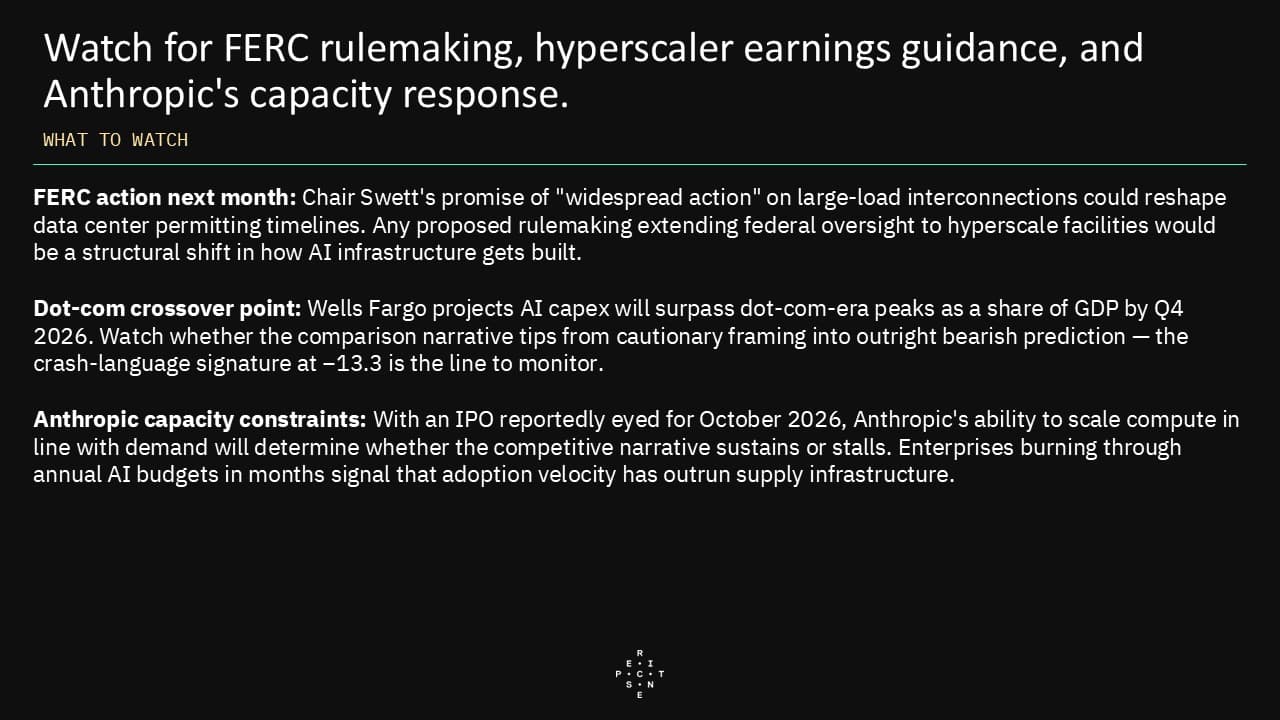
- The dot-com comparison narrative surged back toward its long-term average this week, driven not by bearish sentiment but by the sheer scale of capital deployment demanding historical context. AI capital expenditure now represents a growing share of U.S. GDP and is projected to exceed dot-com-era peaks by late 2026. Yet the media has not crossed into outright crash prediction; language characterizing AI spending as a dangerous gamble or forecasting that an investment collapse will crash markets remained flat or below average. The comparison functions as structural and cautionary, not apocalyptic—even while the infrastructure bottlenecks detailed across coverage suggest that the physical world may impose the discipline that investor sentiment has not.
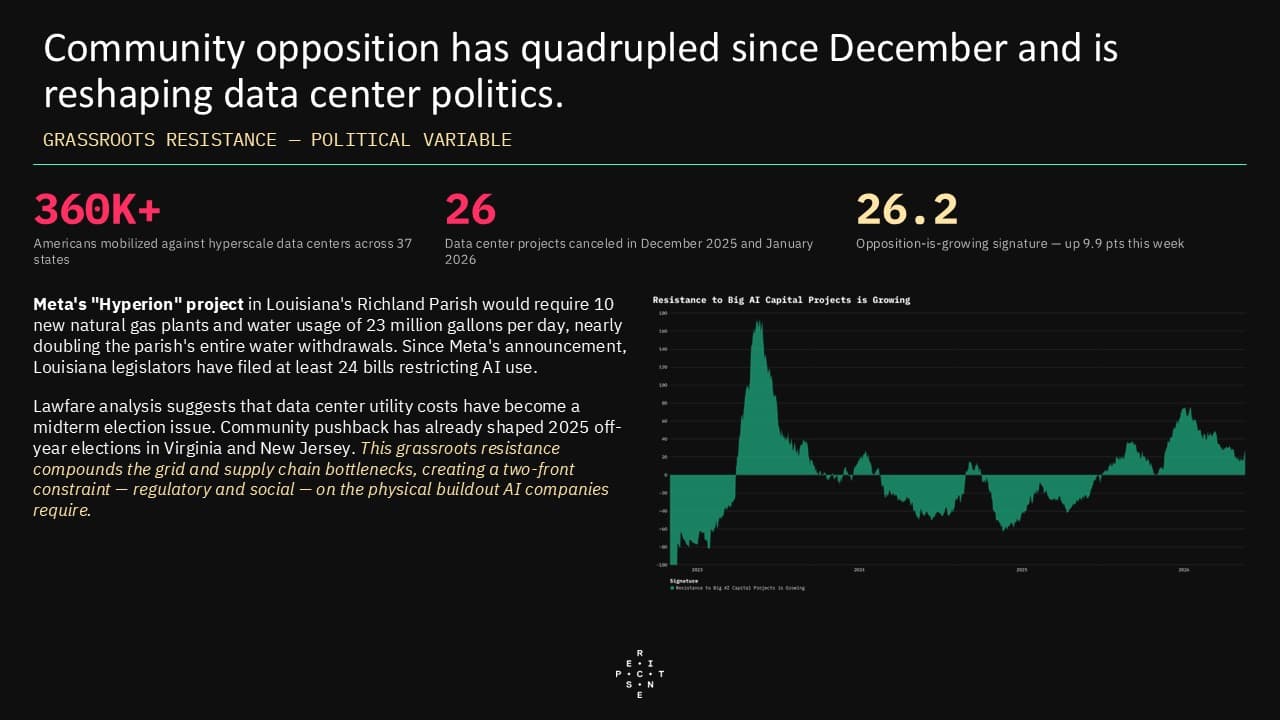
- Community resistance to data center construction is emerging as a political and operational variable that expansion timelines have not fully absorbed. Opposition membership has quadrupled since December 2025, more than two dozen projects were canceled in a two-month span, and data center utility costs are becoming an electoral issue. This grassroots pushback compounds the grid and supply chain bottlenecks described elsewhere in coverage, creating a two-front constraint—regulatory and social—on the physical buildout that AI companies require.
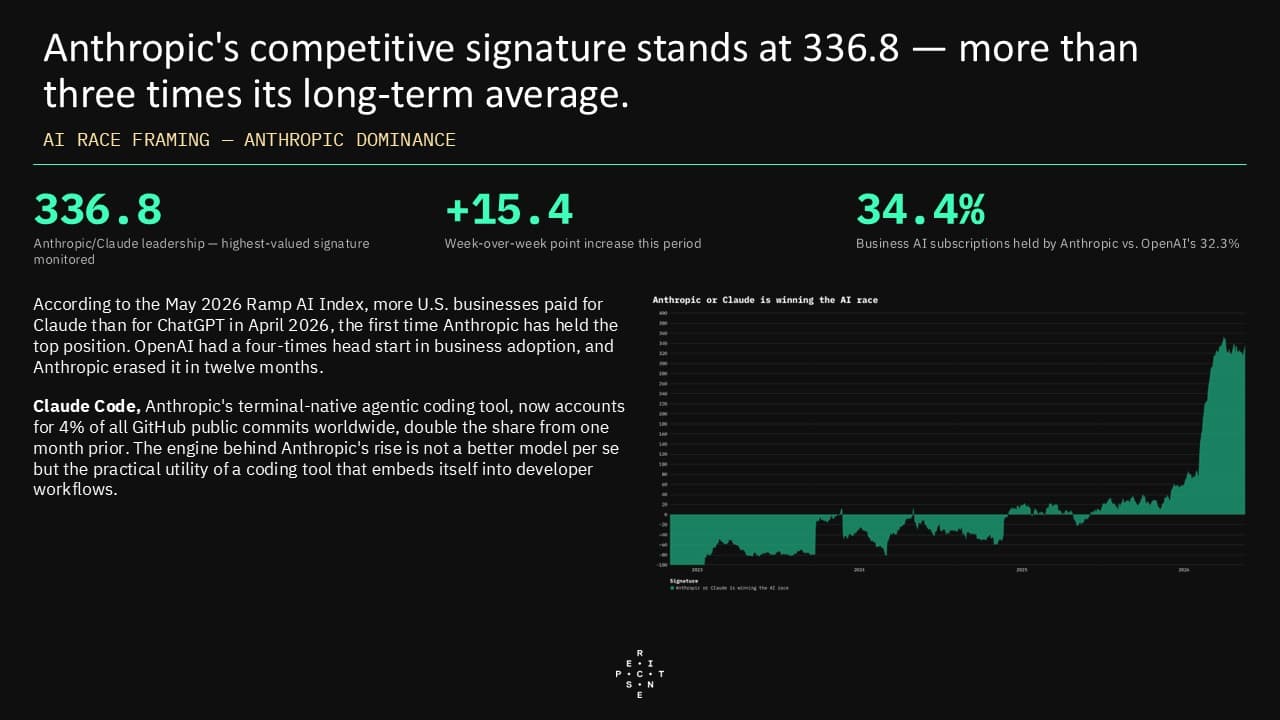
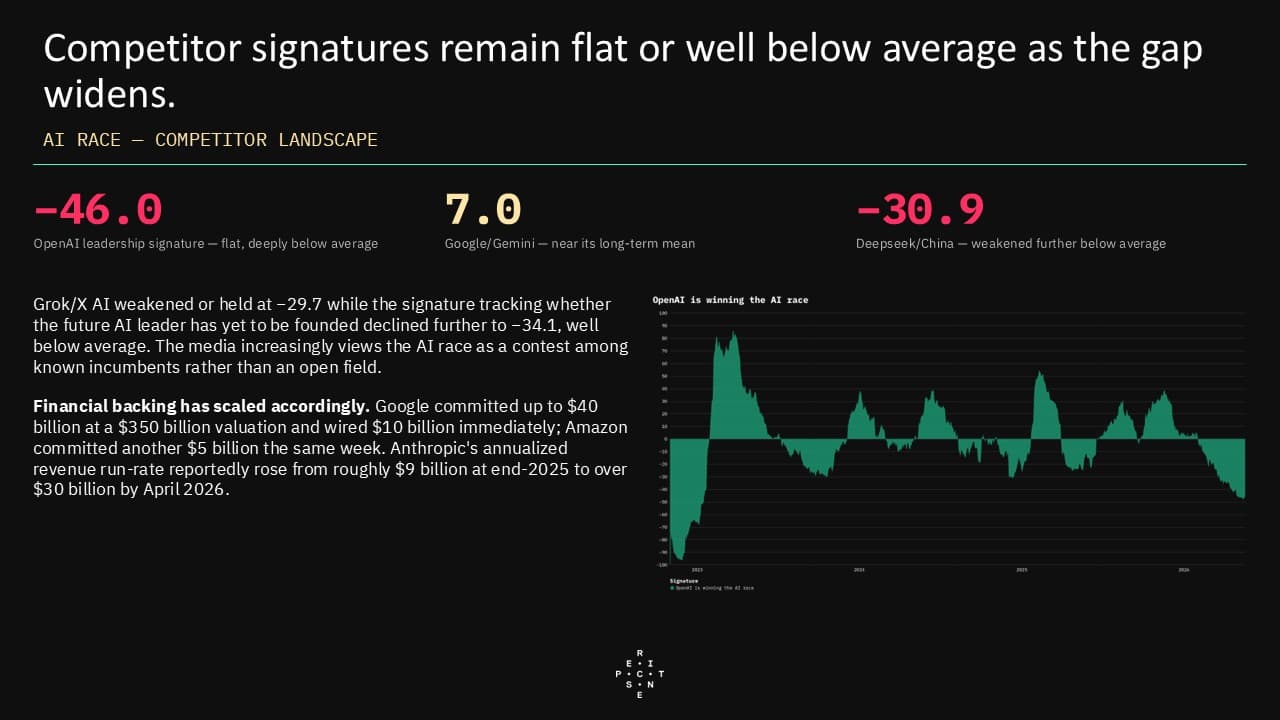
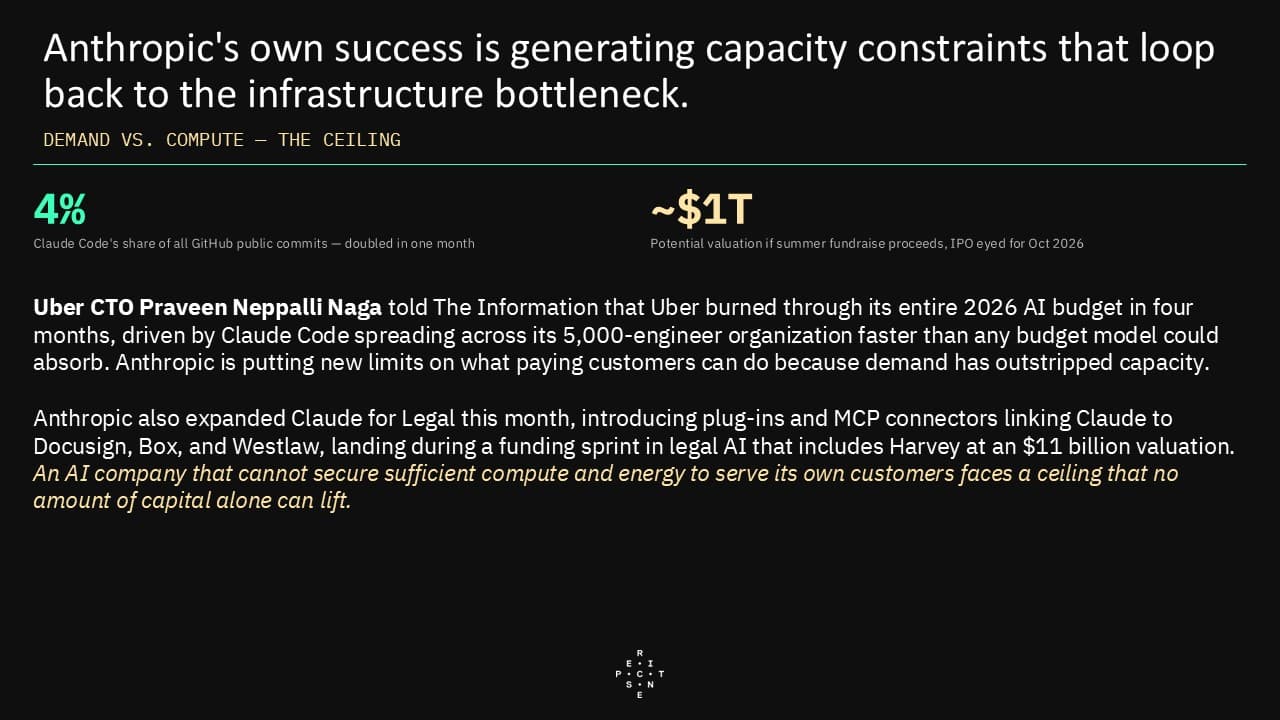
- Anthropic has consolidated the competitive narrative to a degree that no other AI company currently approaches, but its own success is generating capacity constraints that loop directly back to the infrastructure bottleneck. Media language asserting that Anthropic or Claude leads AI competition is the highest-valued signature monitored—more than three times its long-term average—while competitor signatures for OpenAI, Google, and others remain flat or well below average. Yet Anthropic is already throttling paying customers and burning through enterprise budgets faster than planned, illustrating that demand-side dominance without supply-side infrastructure creates a ceiling that capital alone cannot remove.
DISCLOSURES
This commentary is being provided to you as general information only and should not be taken as investment advice. The opinions expressed in these materials represent the personal views of the author(s). It is not investment research or a research recommendation, as it does not constitute substantive research or analysis. Any action that you take as a result of information contained in this document is ultimately your responsibility. Epsilon Theory will not accept liability for any loss or damage, including without limitation to any loss of profit, which may arise directly or indirectly from use of or reliance on such information. Consult your investment advisor before making any investment decisions. It must be noted, that no one can accurately predict the future of the market with certainty or guarantee future investment performance. Past performance is not a guarantee of future results.
Statements in this communication are forward-looking statements. The forward-looking statements and other views expressed herein are as of the date of this publication. Actual future results or occurrences may differ significantly from those anticipated in any forward-looking statements, and there is no guarantee that any predictions will come to pass. The views expressed herein are subject to change at any time, due to numerous market and other factors. Epsilon Theory disclaims any obligation to update publicly or revise any forward-looking statements or views expressed herein. This information is neither an offer to sell nor a solicitation of any offer to buy any securities. This commentary has been prepared without regard to the individual financial circumstances and objectives of persons who receive it. Epsilon Theory recommends that investors independently evaluate particular investments and strategies, and encourages investors to seek the advice of a financial advisor. The appropriateness of a particular investment or strategy will depend on an investor's individual circumstances and objectives.