

Markets Pulse
WeeklyJune 16, 2026

AI Pulse June 9, 2026

6.09AIPulse1.jpg
6.09AIPulse2.jpg
6.09AIPulse3.jpg
6.09AIPulse4.jpg
6.09AIPulse5.jpg
6.09AIPulse6.jpg
6.09AIPulse7.jpg
6.09AIPulse8.jpg
6.09AIPulse9.jpg
6.09AIPulse10.jpg
6.09AIPulse11.jpg
6.09AIPulse12.jpg
6.09AIPulse13.jpg
6.09AIPulse14.jpg
6.09AIPulse15.jpg
6.09AIPulse16.jpg
5.19AIPulse17.jpg

EXECUTIVE SUMMARY

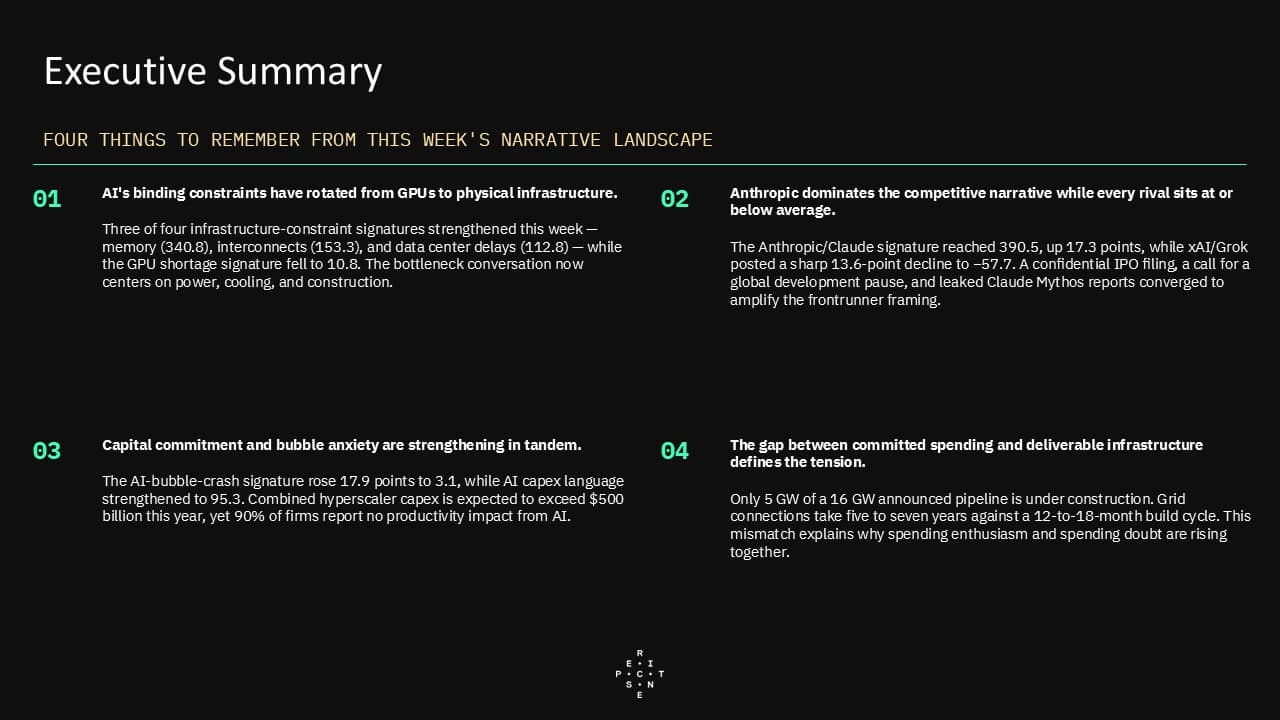
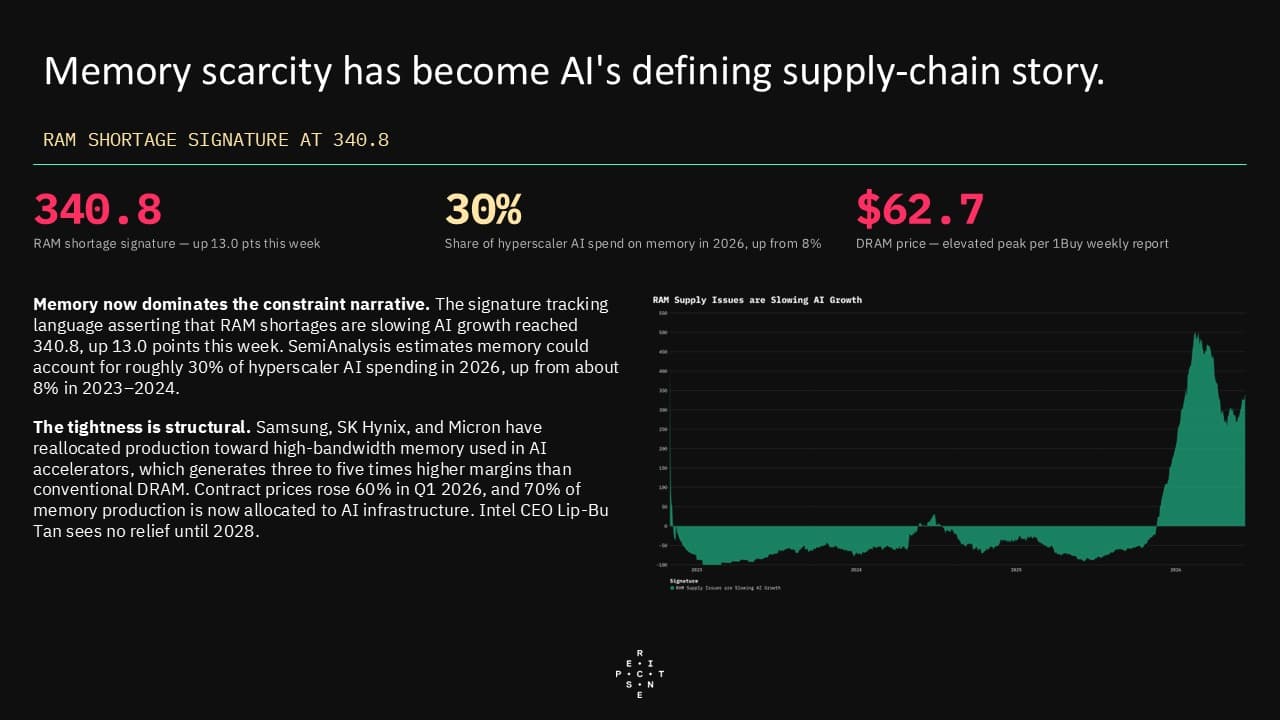
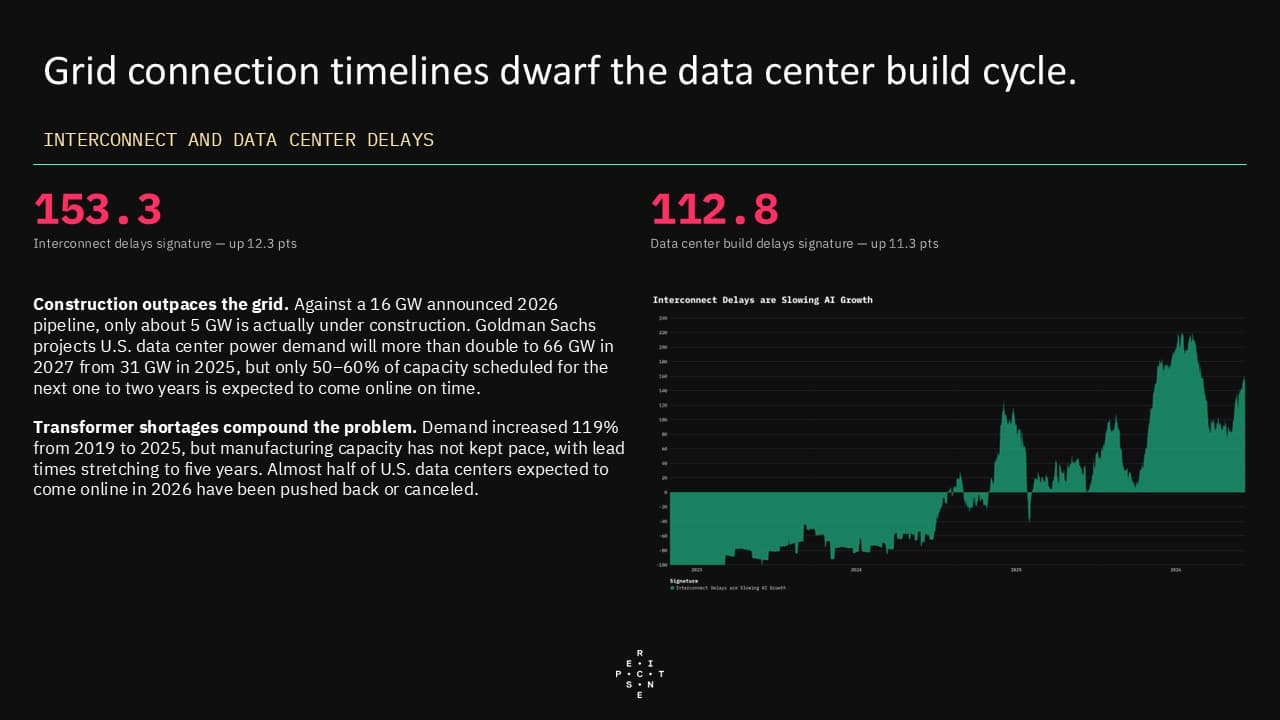
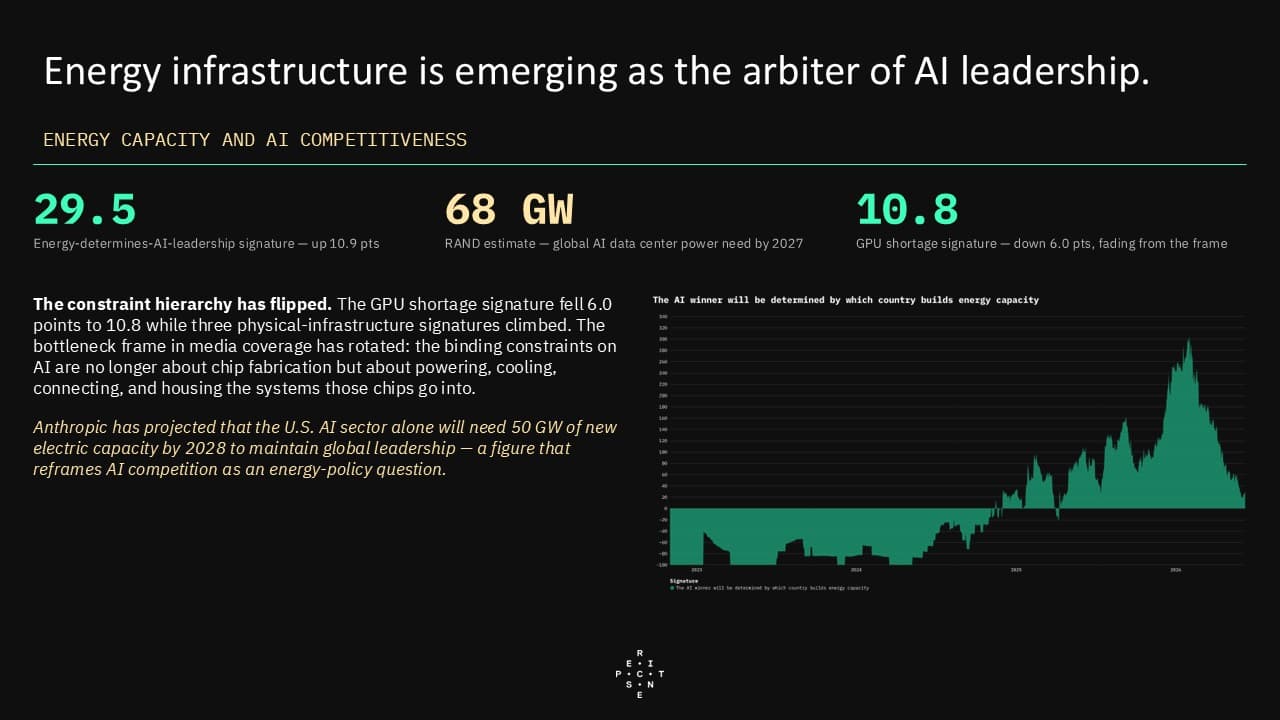
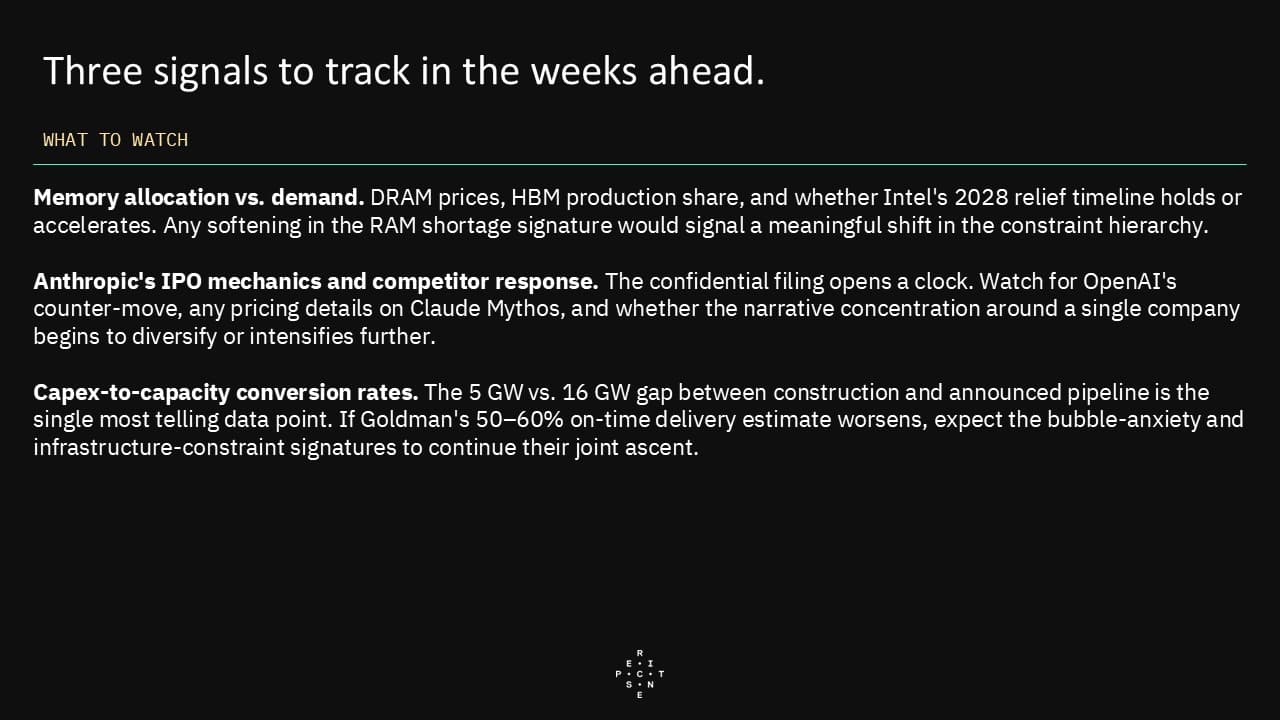
  • The media framing of AI's binding constraints has rotated decisively away from GPU shortages and toward physical infrastructure — memory, power grid interconnects, and data center construction. Three of Perscient's four infrastructure-constraint semantic signatures strengthened this week, all at elevated absolute levels, while the GPU shortage signature declined. Memory now accounts for a far larger share of hyperscaler AI spending than it did even two years ago, DRAM prices have reached record highs, and industry leaders see no relief until 2028. Meanwhile, only a fraction of announced data center capacity is actually under construction, and grid connection timelines of five to seven years dwarf the 12-to-18-month construction cycle — a mismatch that is drawing increasing media attention to the proposition that energy infrastructure will determine AI leadership.
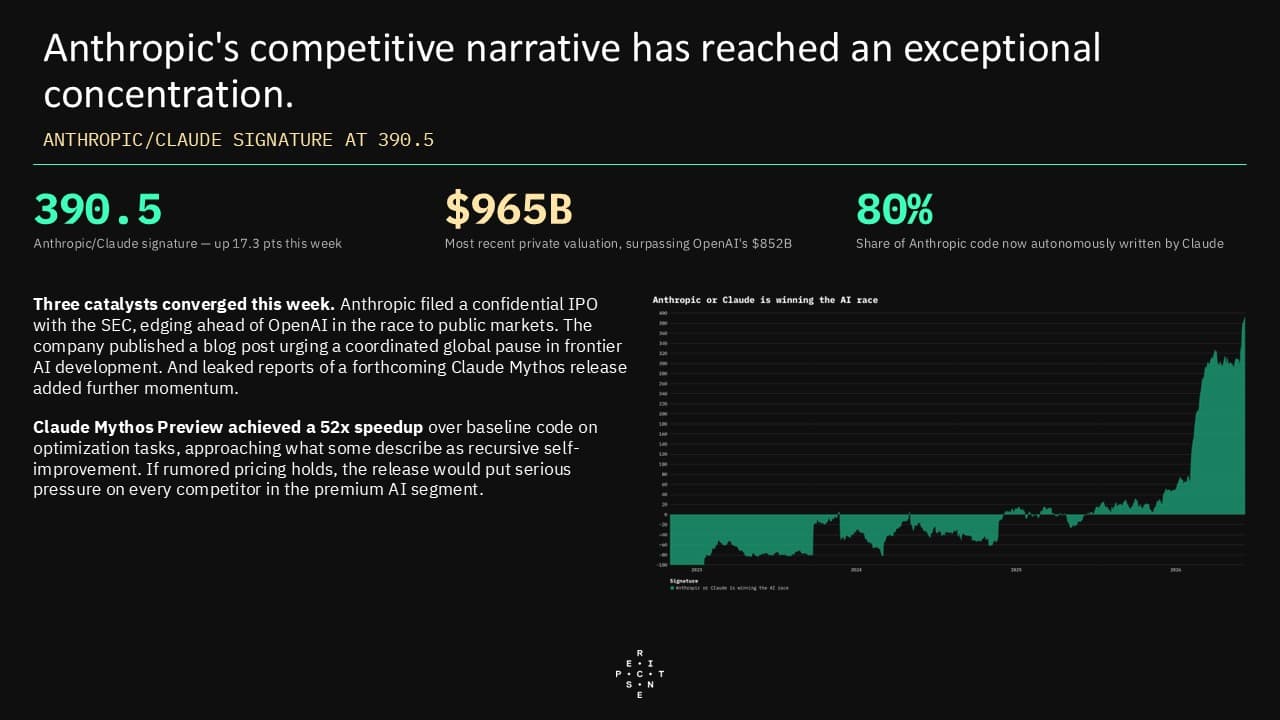
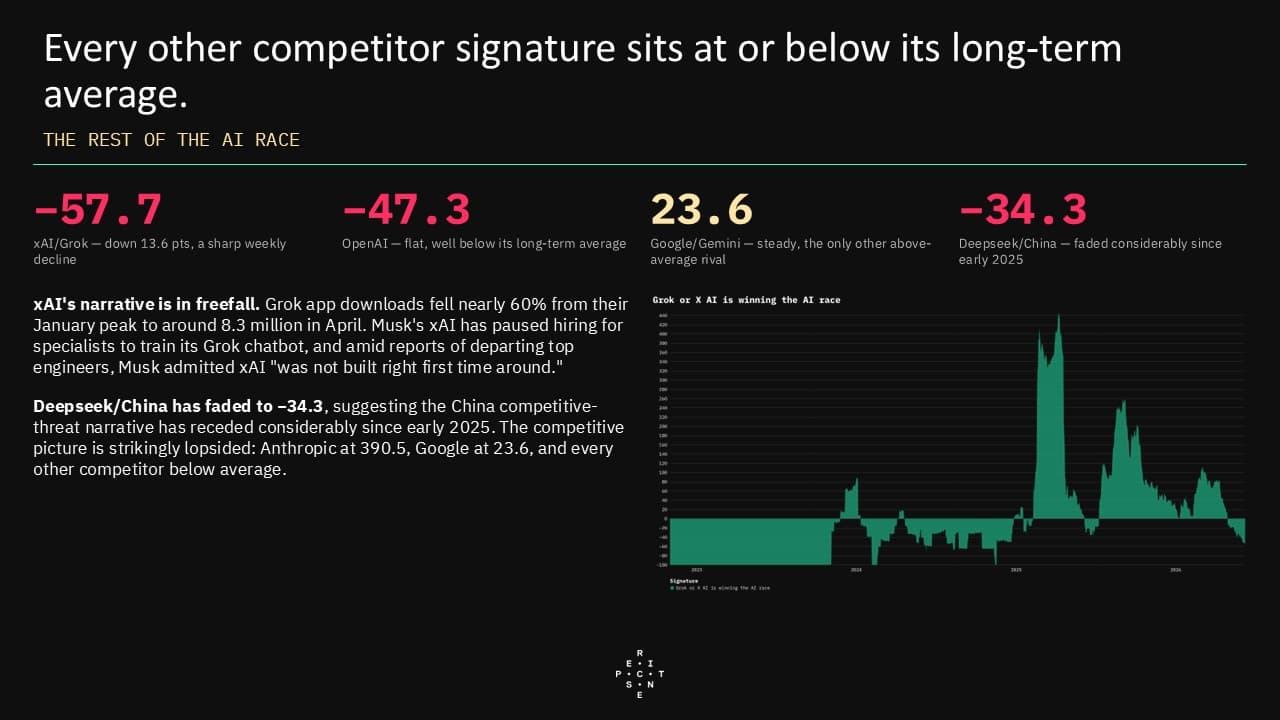
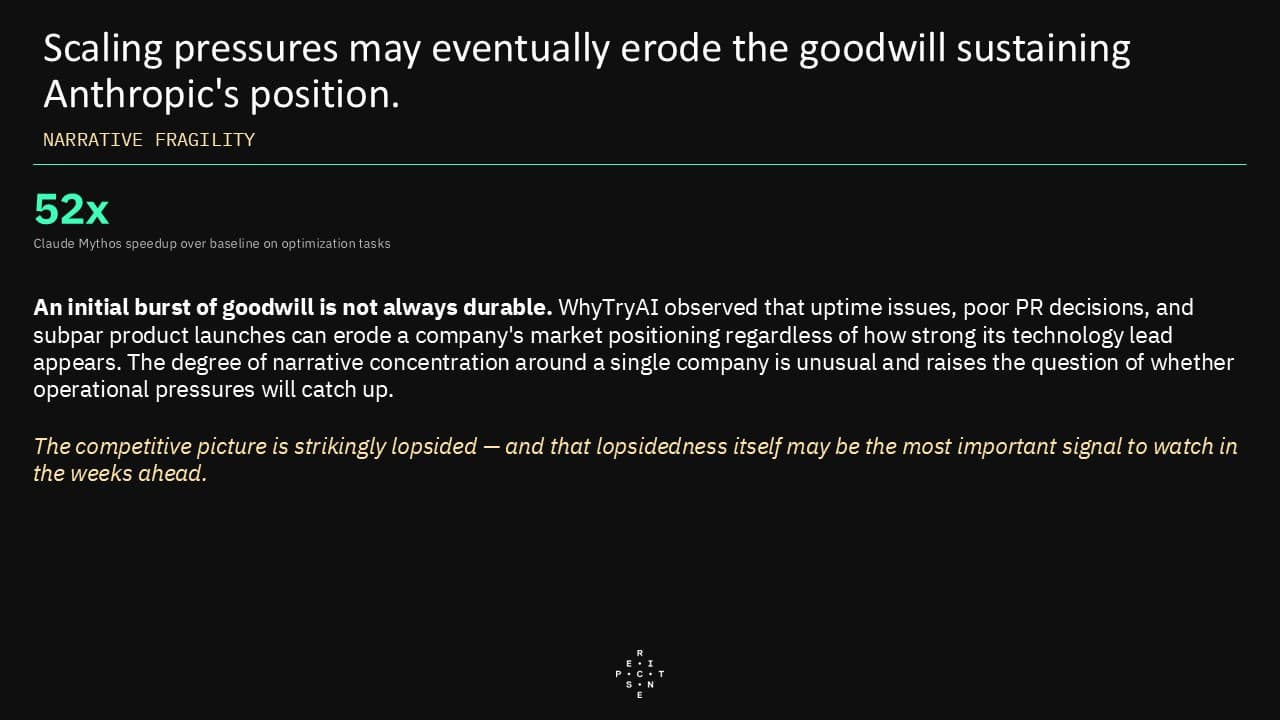
  • Anthropic has consolidated a strikingly lopsided position in the competitive narrative, with its semantic signature at the highest absolute level in the full dataset and strengthening further this week. A confidential IPO filing, a public call for a global pause in frontier development, and leaked reports of a forthcoming Claude Mythos release converged to amplify the frontrunner framing. Every other competitor signature — OpenAI, xAI/Grok, and Deepseek/China — sits at or well below its long-term average, with the xAI/Grok signature posting the single largest weekly decline of any signature in the dataset. The degree of narrative concentration around a single company is unusual and raises the question of whether operational pressures and scaling frictions will eventually erode the goodwill that currently sustains it.
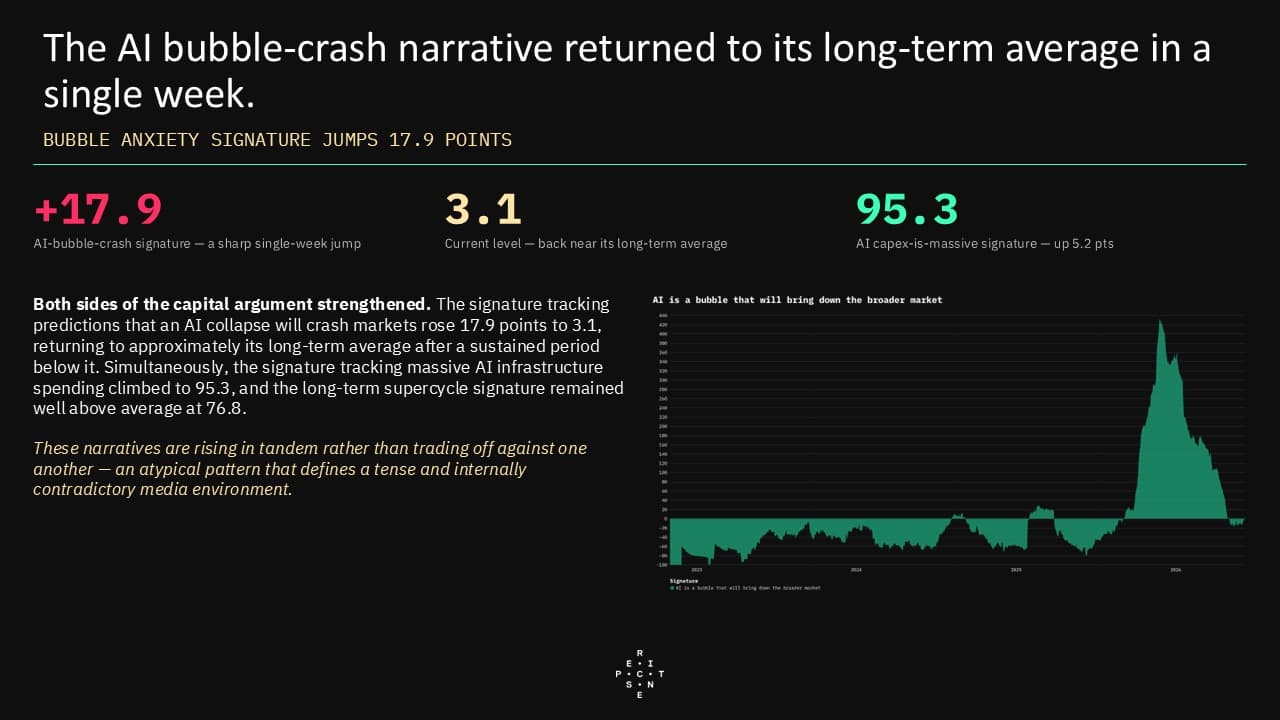
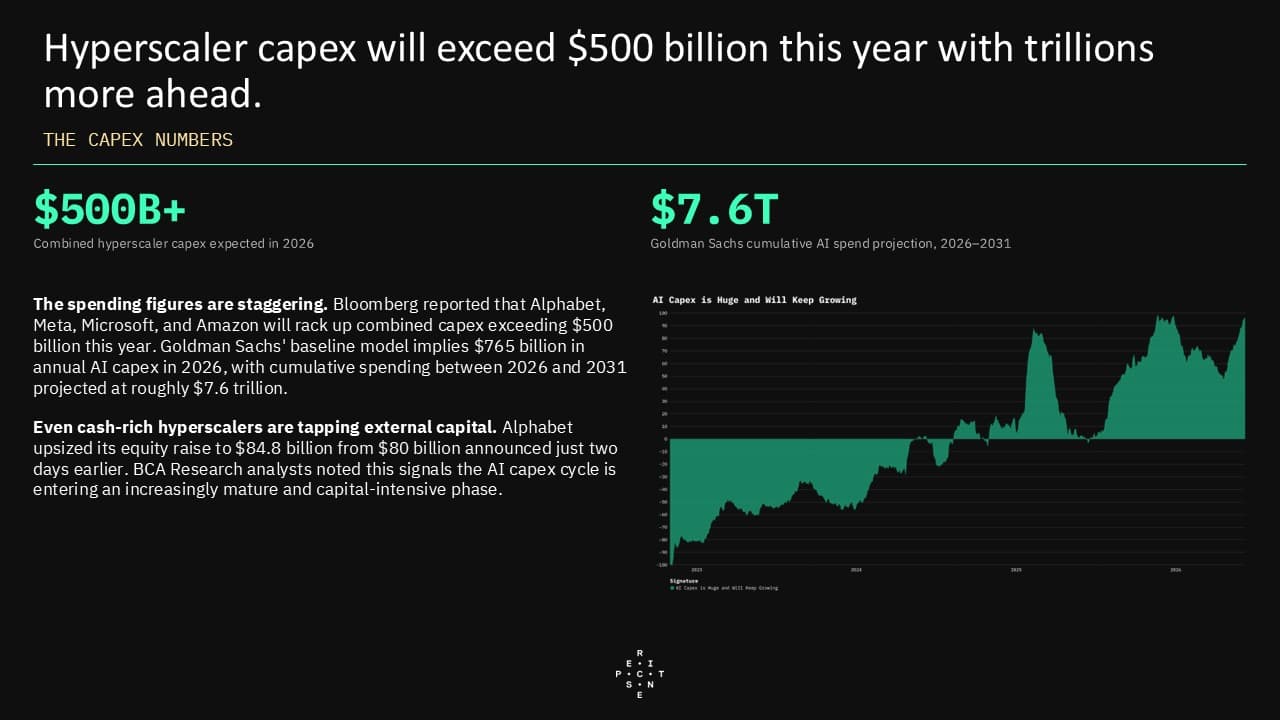
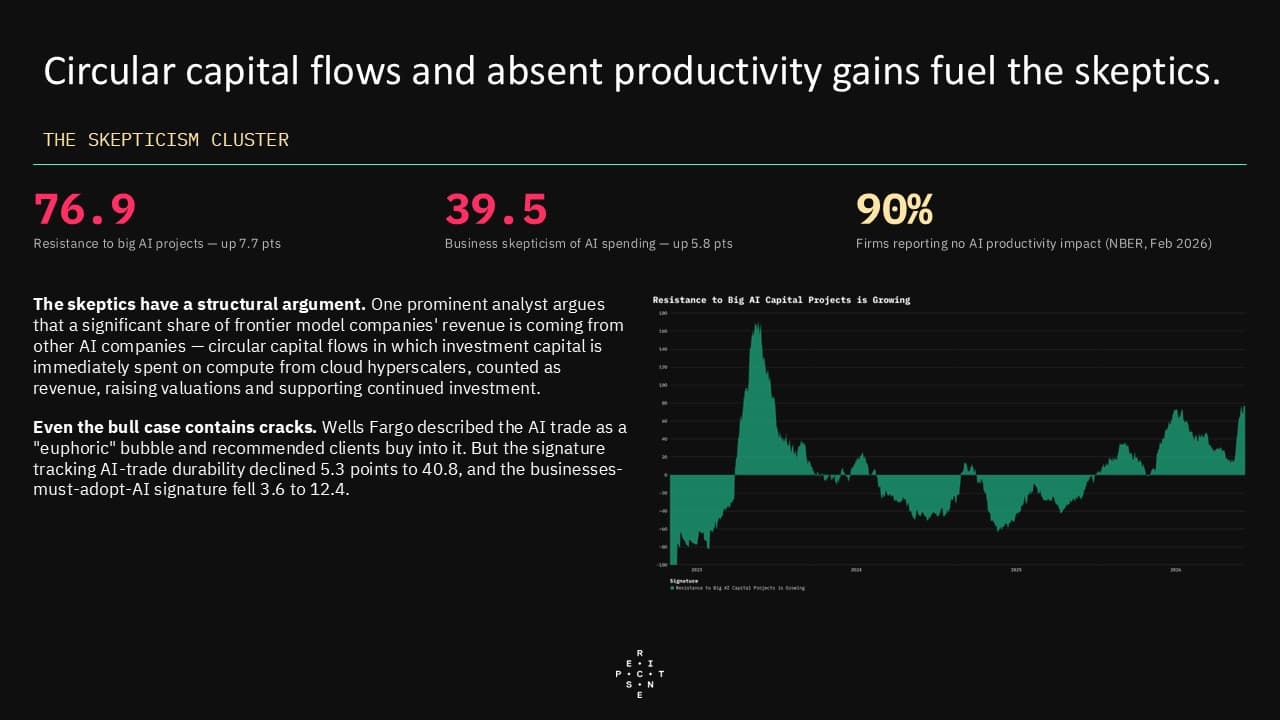
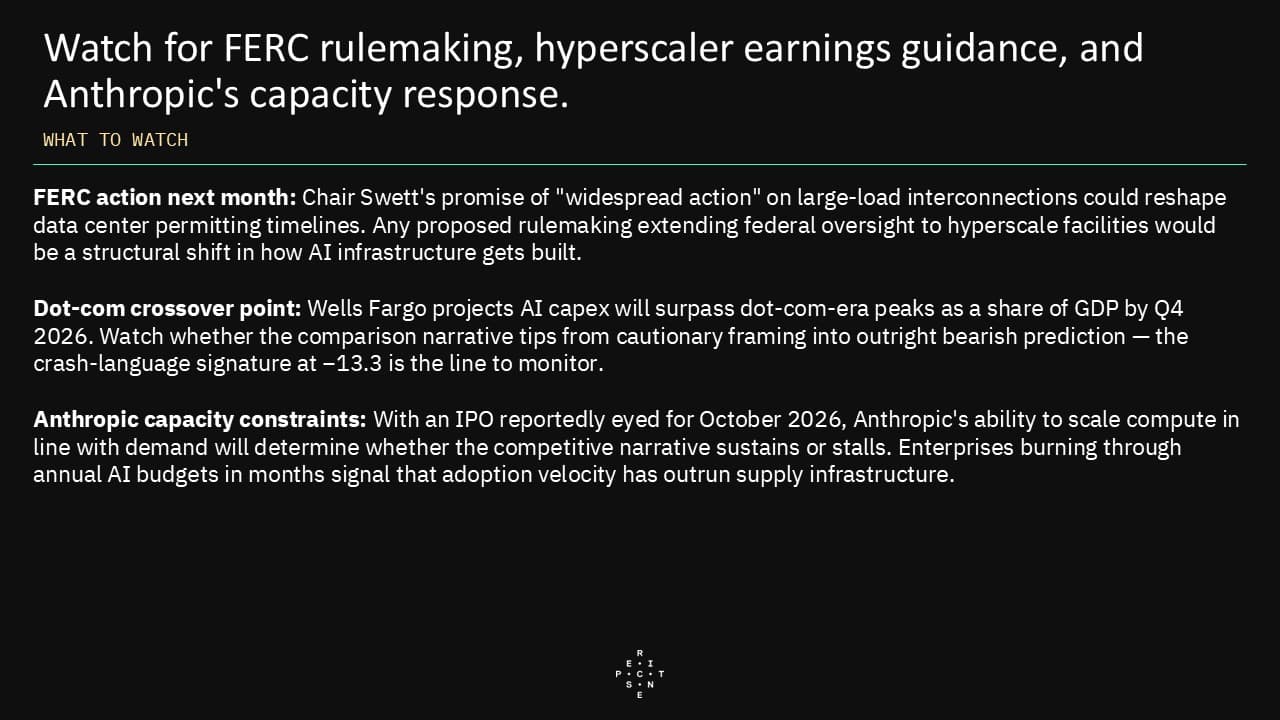
  • Capital commitment and bubble anxiety are rising in tandem — an atypical pattern that defines a tense and internally contradictory media environment. Perscient's semantic signature tracking predictions that an AI investment collapse will crash overall markets recorded the single largest one-week increase of any signature, while signatures tracking massive infrastructure spending and the long-term investment supercycle also strengthened. Combined hyperscaler capex is expected to exceed $500 billion this year, and Goldman Sachs projects cumulative AI spending of roughly $7.6 trillion between 2026 and 2031. Yet critics point to circular capital flows among AI companies, an NBER study that found that 90% of firms report no productivity impact from AI, and growing doubt about whether announced investment will translate into realized returns.
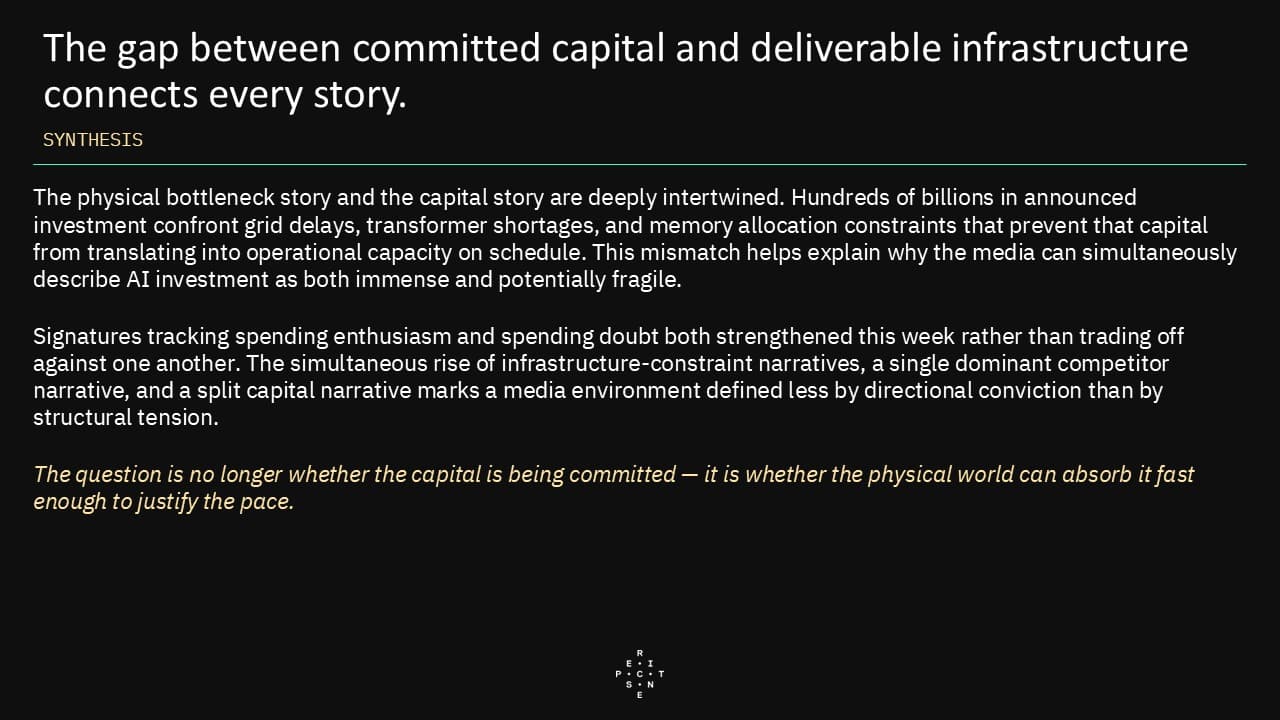
  • The physical bottleneck story and the capital story are deeply intertwined: the widening gap between committed spending and deliverable infrastructure is the thread that connects rising capex figures to rising skepticism. Hundreds of billions in announced investment confront grid delays, transformer shortages, and memory allocation constraints that prevent that capital from translating into operational capacity on schedule. This mismatch helps explain why the media can simultaneously describe AI investment as both immense and potentially fragile — and why signatures tracking spending enthusiasm and spending doubt both strengthened this week rather than trading off against one another.

Recent Pulses

Markets PulseWeeklySep 22, 2026

Markets Pulse September 15, 2026

The regime-change story arrives without any accompanying fear language. Every flight-to-safety signature — Treasurys, Swiss franc, yen, gold, money market funds — sits deep in negative territory, geopolitical and monetary policy uncertainty signatures were flat, and risk-on and risk-off readings have converged to nearly the same level just below zero. Media are narrating a supply shock, a five-percent ten-year, and a first hike since 2023 while conspicuously declining to counsel defensive positioning. Election-season transfer proposals collided with a hardening sovereign-risk story, and media asserted both outcomes at once. The helicopter-money signature registered the largest single move in the file, and stimulus-check predictions rose with it, yet signatures tracking debt paydown, deficit reduction, and austerity legislation also strengthened in the same week, while fiscal policy uncertainty remained flat. Commentators are expressing conviction about incompatible fiscal futures rather than doubt. Simultaneously, signatures tying runaway spending to higher Treasury yields, and those linking bond weakness to deficits and unfunded tax cuts, all gained, and claims that Treasurys are pricing genuine default risk moved into positive territory. Taken together, Sections 1 and 2 describe a media framework in which monetary and fiscal policy are pulling in opposite directions. Coverage pairs a hawkish Fed responding to oil-driven inflation with a proposed trillion-dollar household giveaway, and the reserve-currency channel sharpened alongside it: the signature tying dollar-status threats specifically to debt sustainability rose while the generic version held flat. Claims that White House pressure on foreign Treasury holders is deterring buyers remain the densest reading in the entire file, even as it eased slightly, and official-sector gold substitution language stayed elevated without accelerating further. Tariff politics are running in reverse, and the war has been absorbed into the same affordability argument. The signature tracking broad public opposition to tariffs climbed to one of the highest standings in the file while claims of public support weakened further, and the stated rationale rotated decisively: reshoring-manufacturing arguments dropped hard while "make other countries pay their fair share" and negotiating-leverage framings gained. Directional language turned two-sided for the first time in months. Bridging Sections 1 and 3, voter coverage now treats tariffs and the conflict as a single price story, which the K-shaped-economy framing organizes into a midterm affordability fight — notably, the market version of that bifurcation narrative eased even as chip stocks sold off, and the argument that investors have no alternative to US large-cap growth has effectively vanished from coverage.

Markets PulseWeeklySep 22, 2026

Markets Pulse

Next release: September 29, 2026

Private Credit PulseBiweeklySep 22, 2026

Private Credit Pulse

Next release: October 06, 2026