
Markets Pulse
AI Pulse June 2, 2026


EXECUTIVE SUMMARY
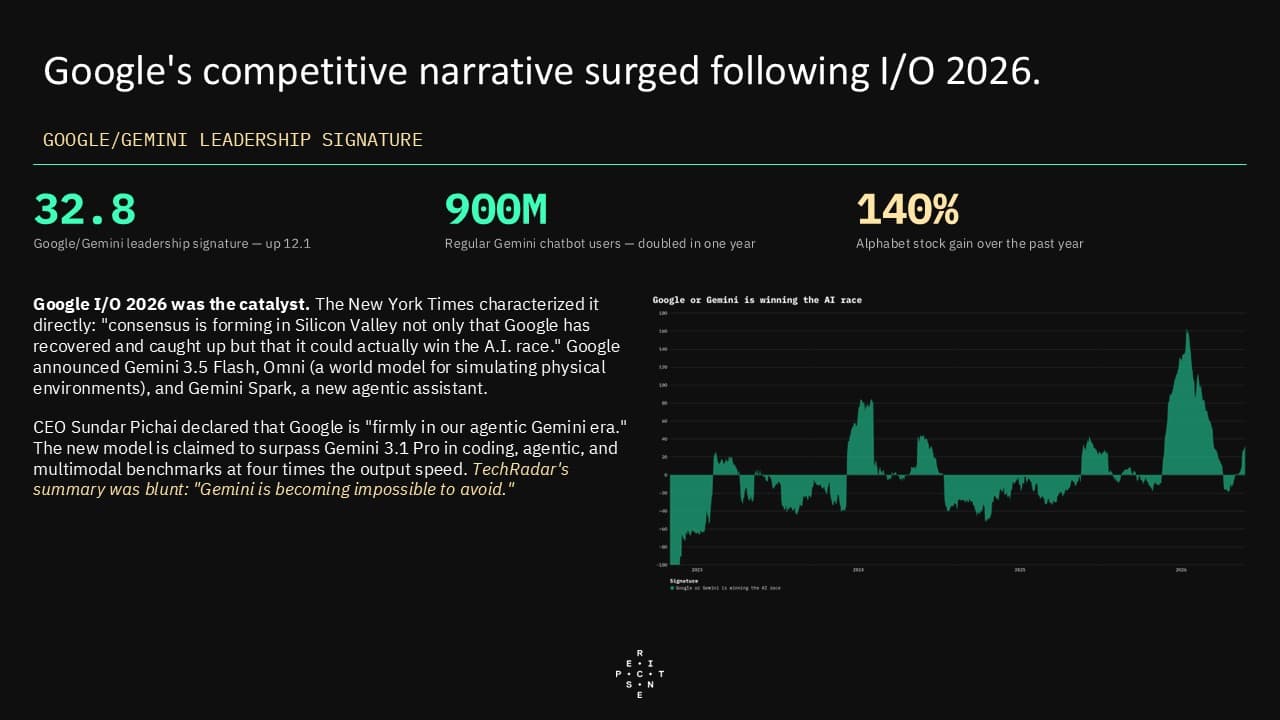
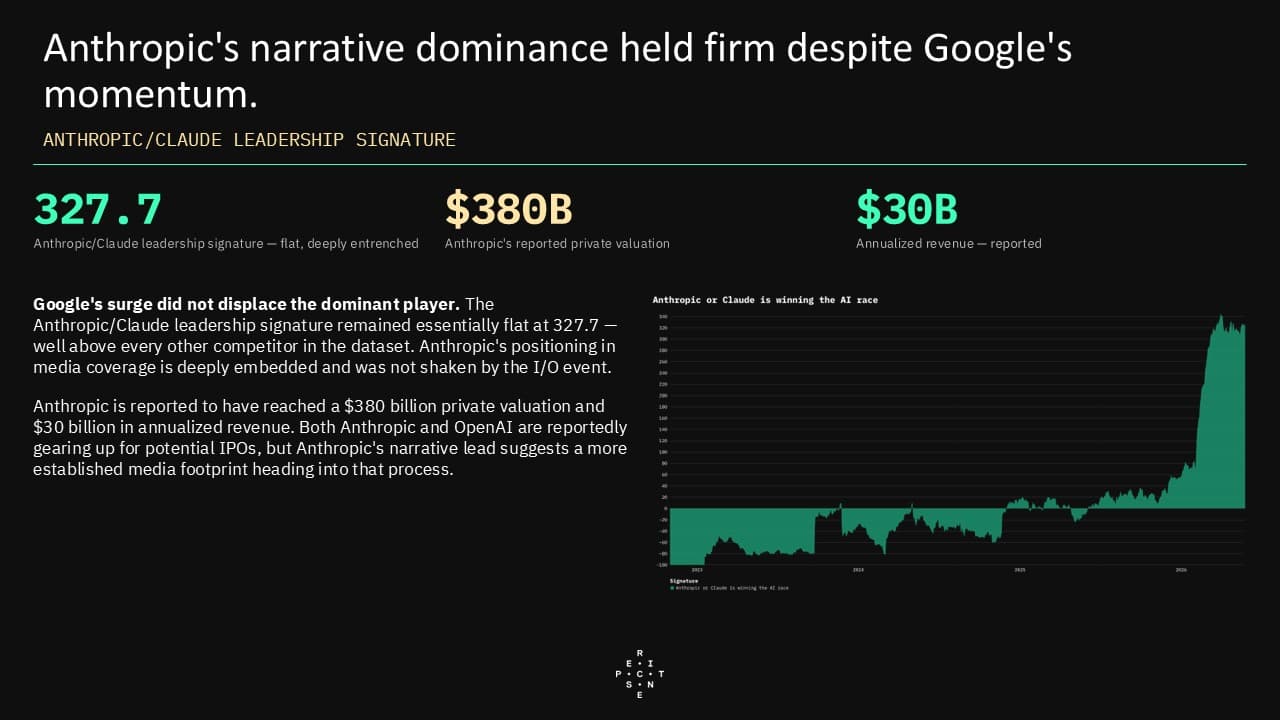
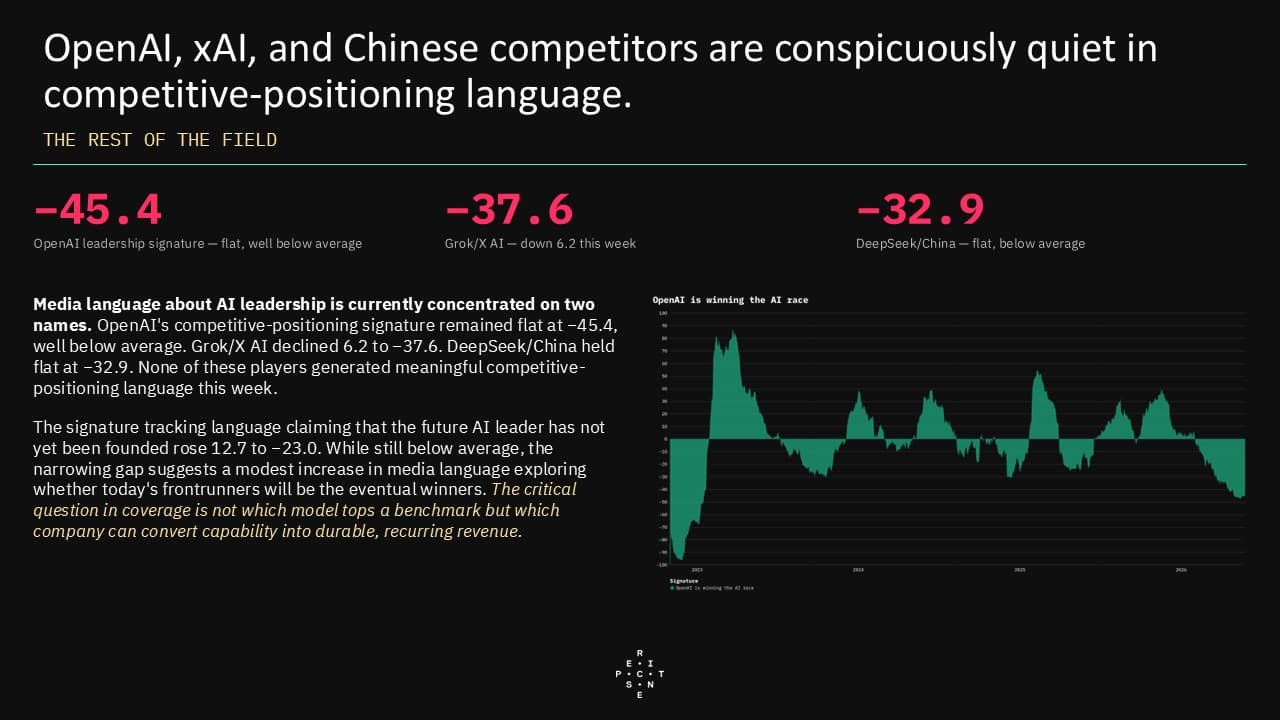
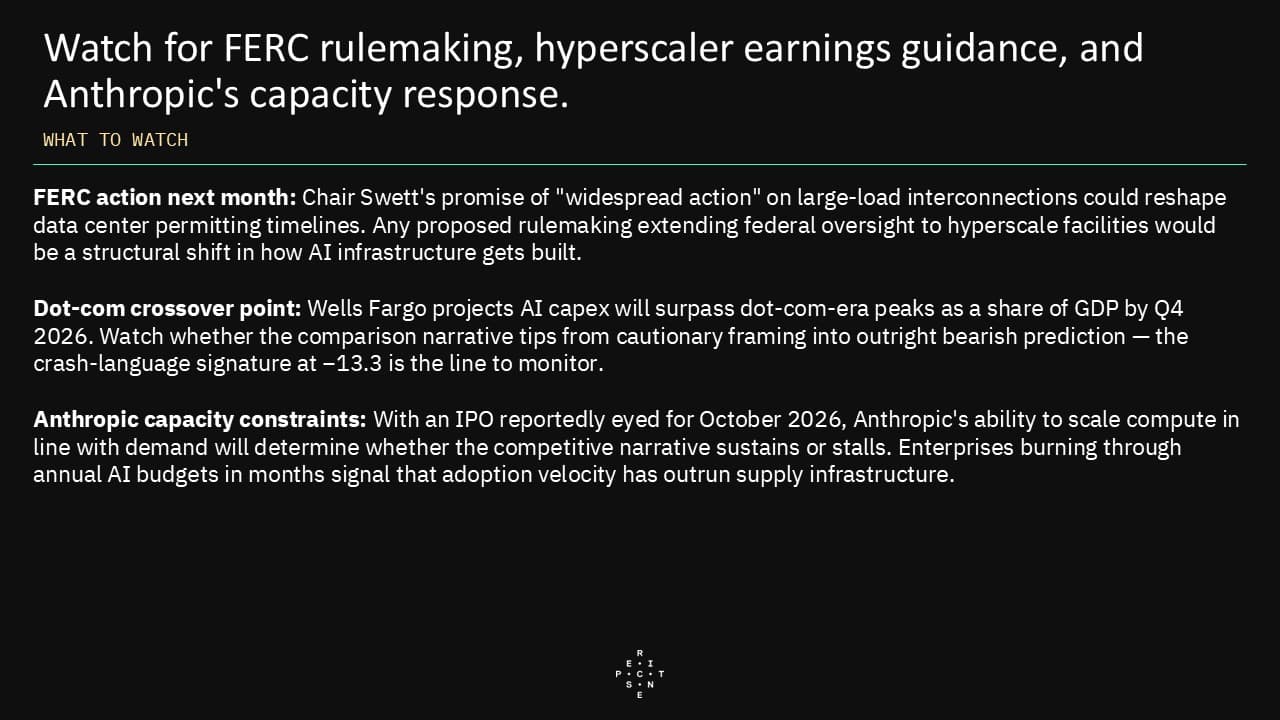
- Anthropic's confidential IPO filing triggered a rare moment of near-total media consensus around a single company's competitive leadership. Coverage of the filing — following a $965 billion valuation and fivefold revenue growth — pushed Perscient's semantic signature for Anthropic leadership to the highest absolute reading of any signature tracked this week, while every rival competitive-positioning signature (OpenAI, Google, DeepSeek, Grok) simultaneously declined. This convergence is unusual; media covering AI competition rarely coalesce this decisively around one player.
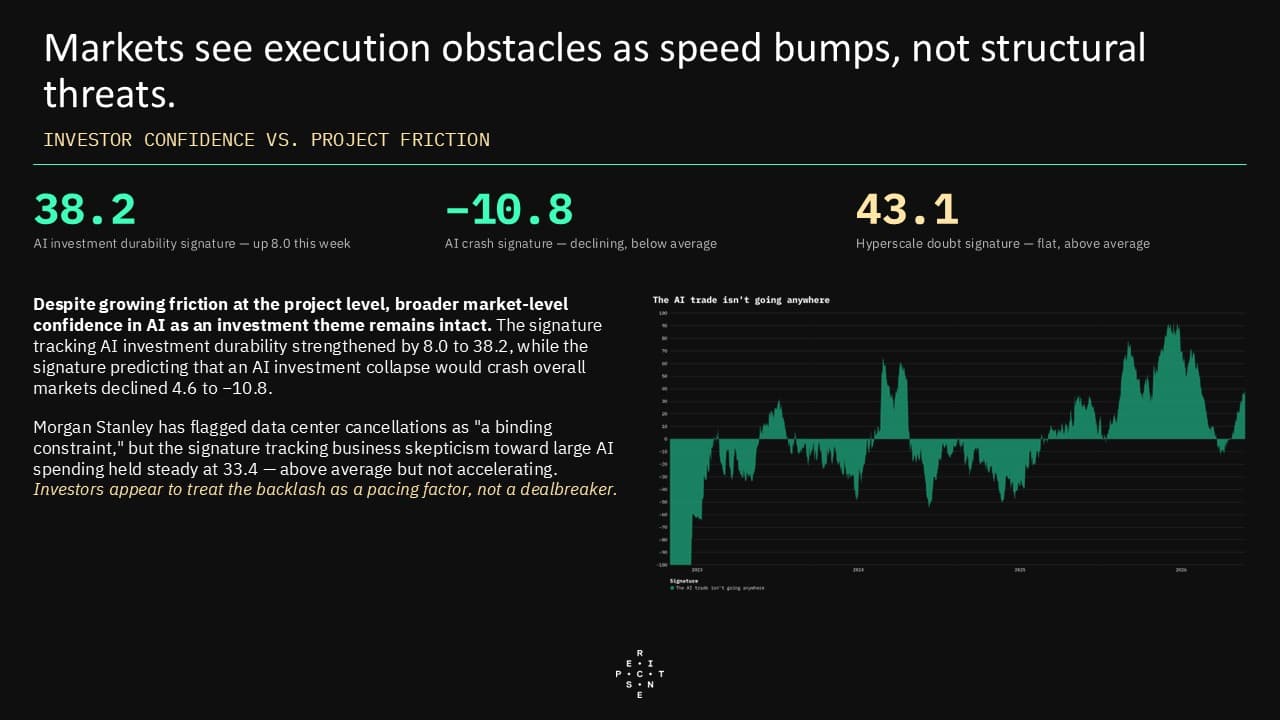
- The AI investment narrative is pivoting from speculative conviction toward claims of demonstrated profitability, a qualitative shift that intensified this week. Language predicting that AI will create a long-term supercycle surged, but the more meaningful development was that language connecting AI advances to actual company profits swung from below average to above average in a single week — the third-largest weekly move in the entire dataset. Institutional voices from J.P. Morgan, IDC, and Janus Henderson reinforced this framing, while skeptical signatures tracking fears of an investment bubble or a disappointment phase remained flat or suppressed. The unified bullish posture across supercycle, profitability, and growth signatures — paired with dormant skepticism — represents a more consolidated optimistic media stance than at any point in recent weeks.
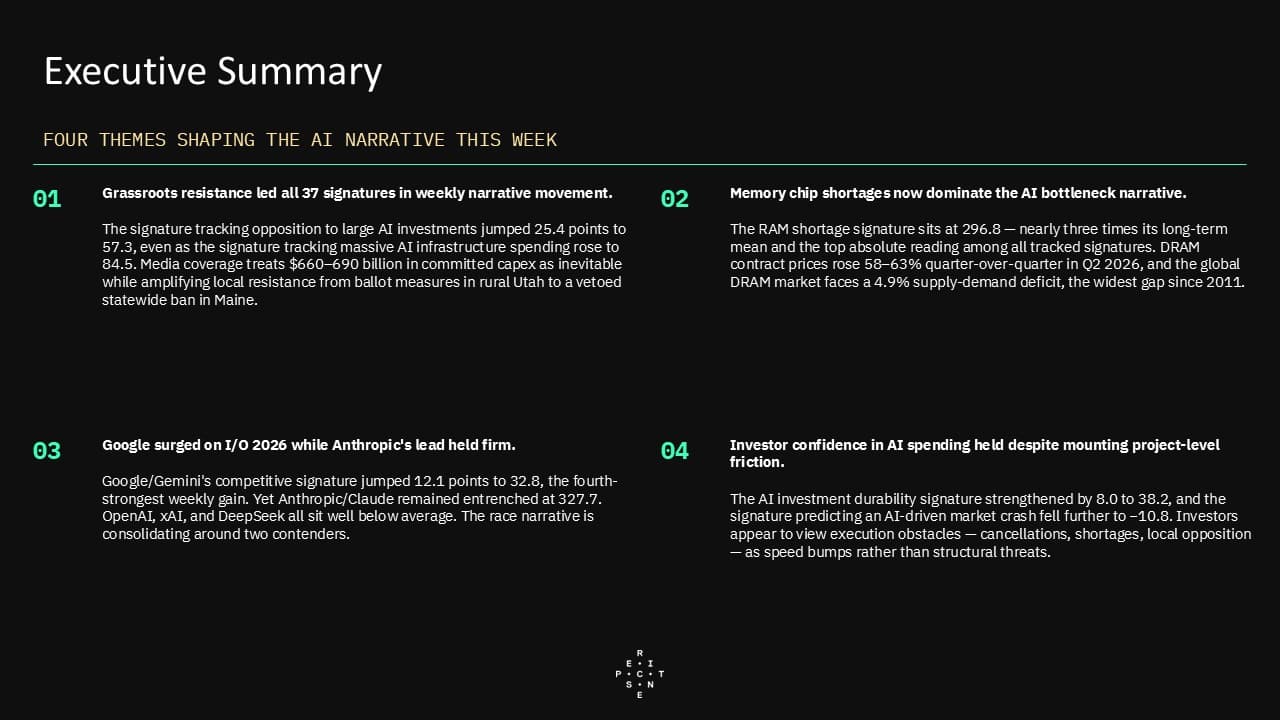
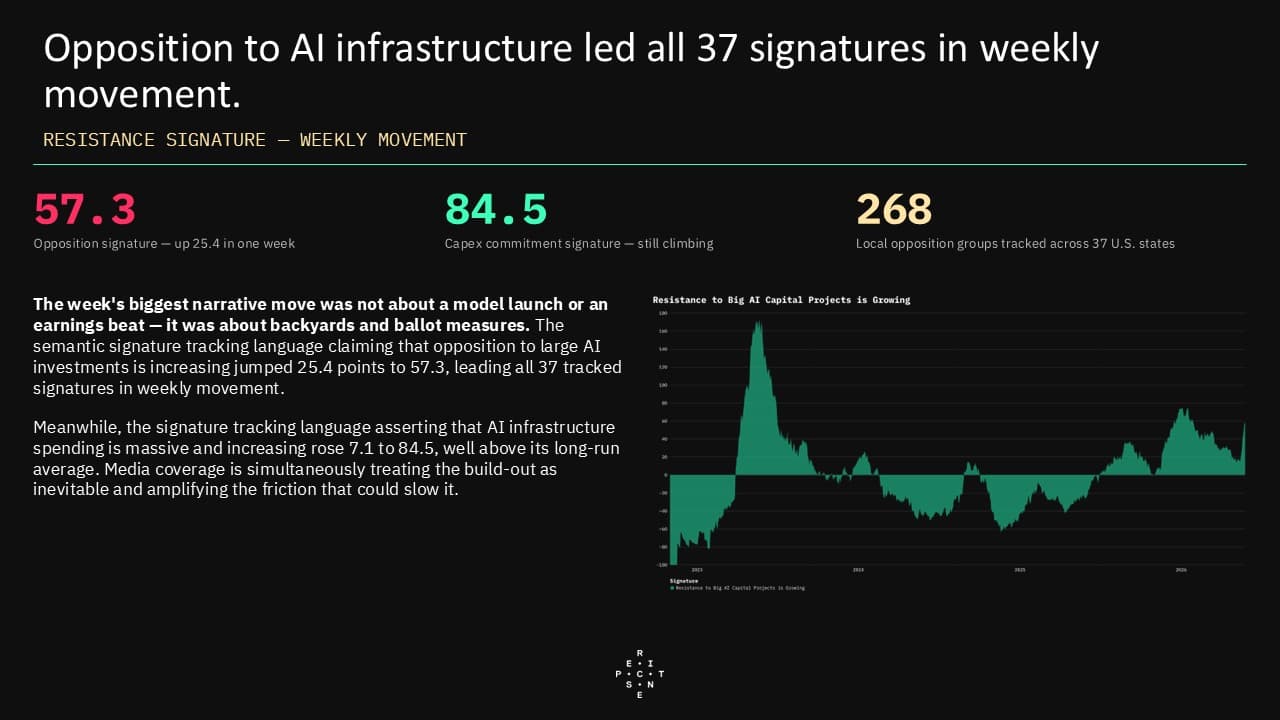
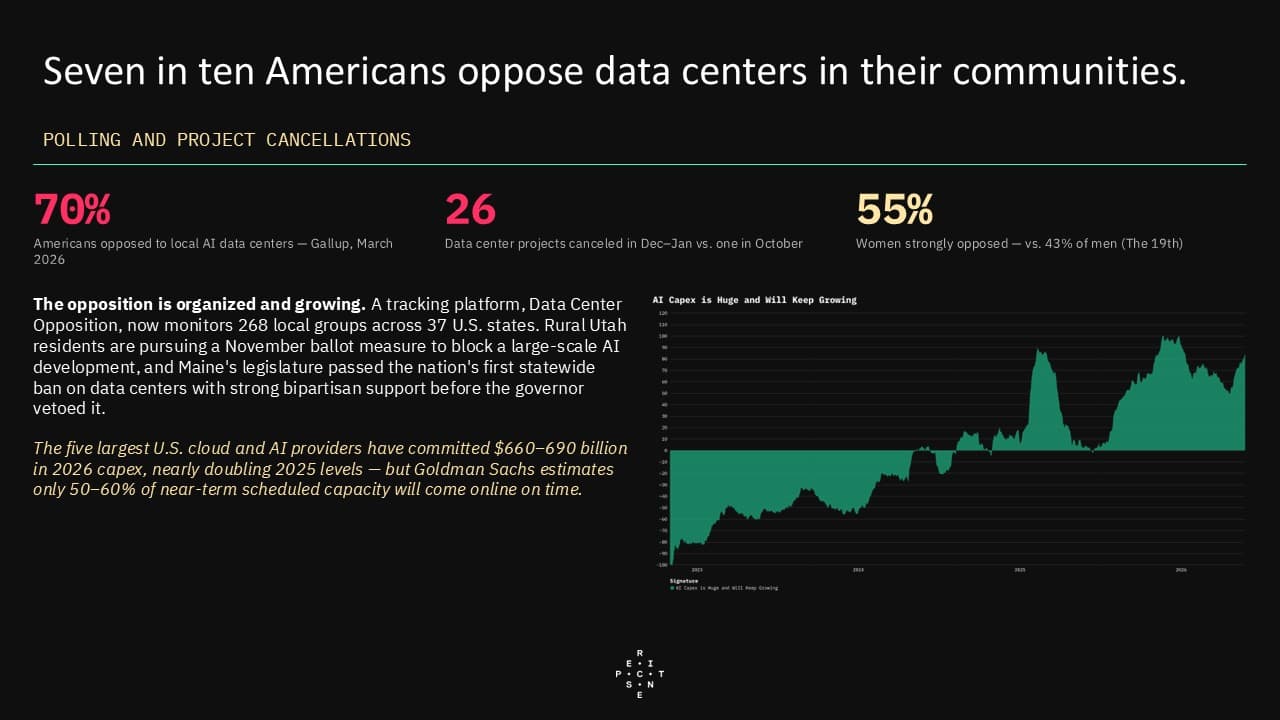
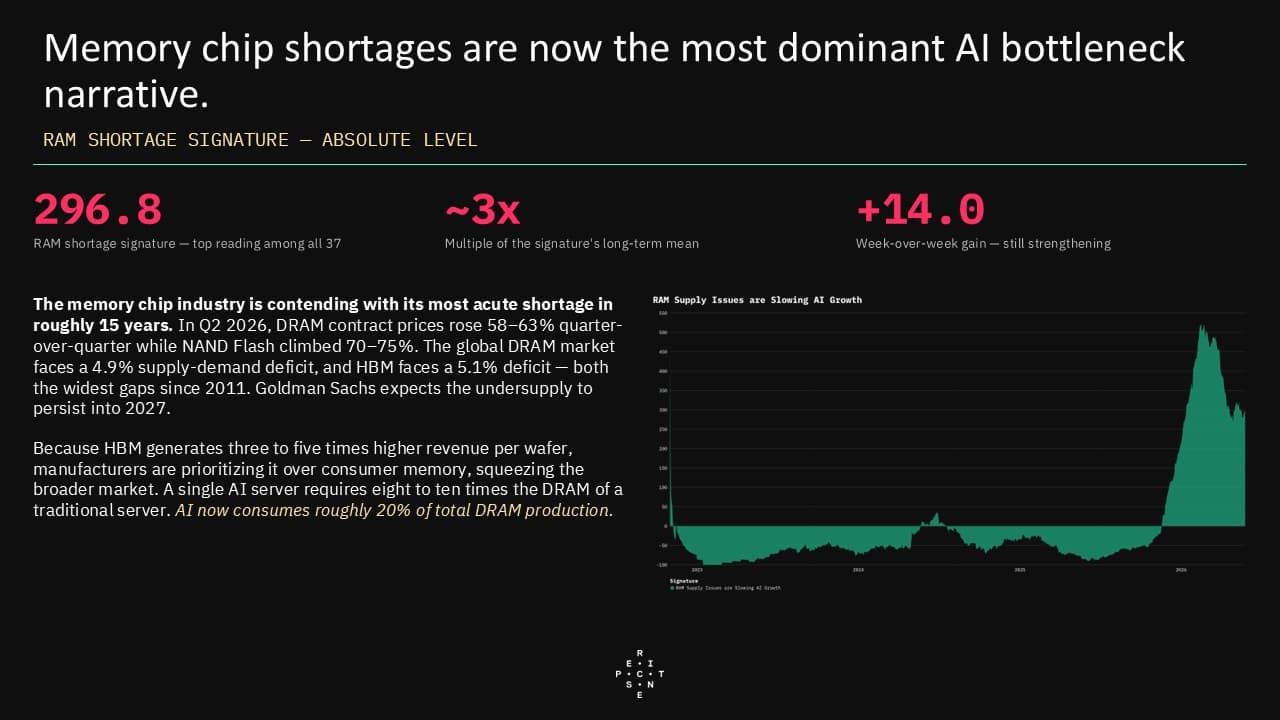
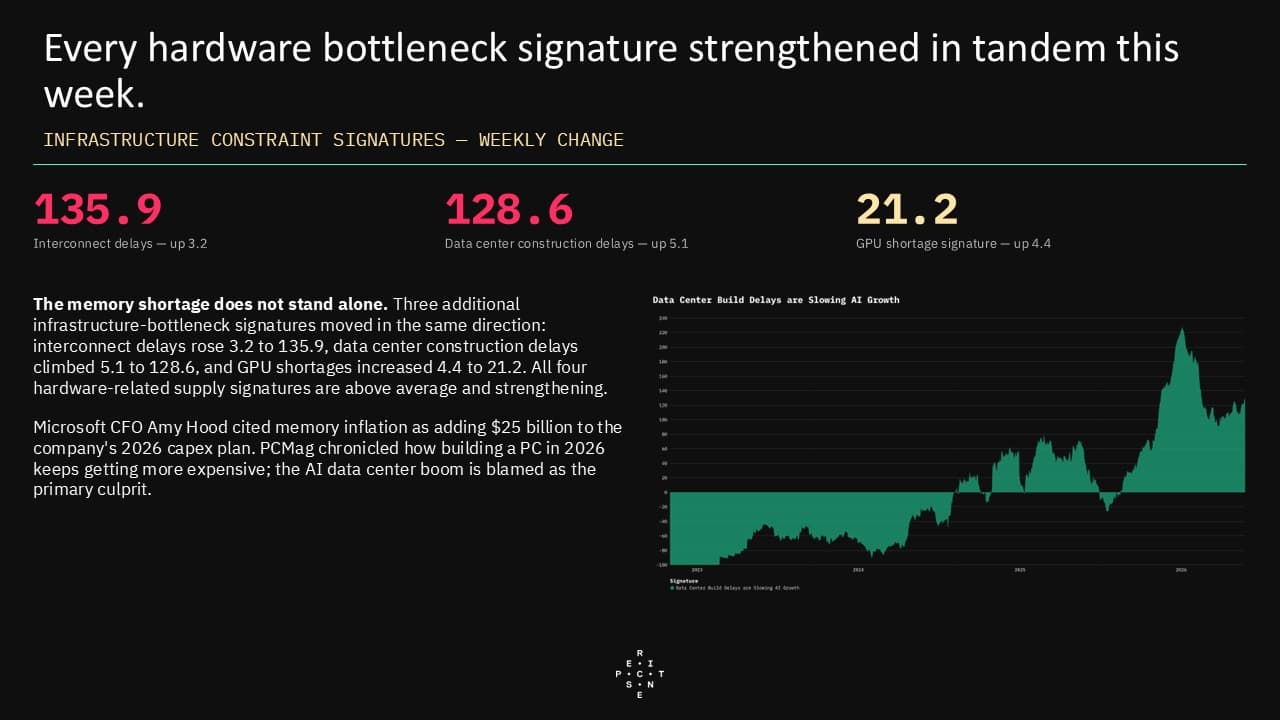
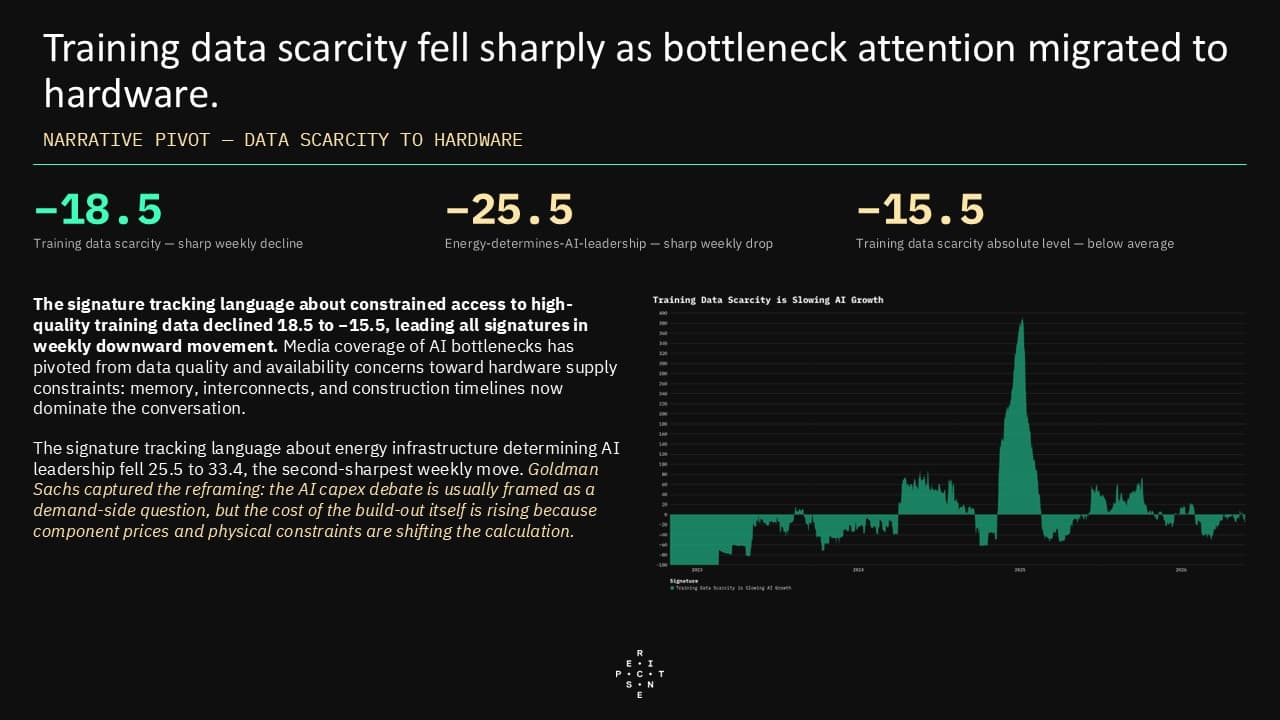
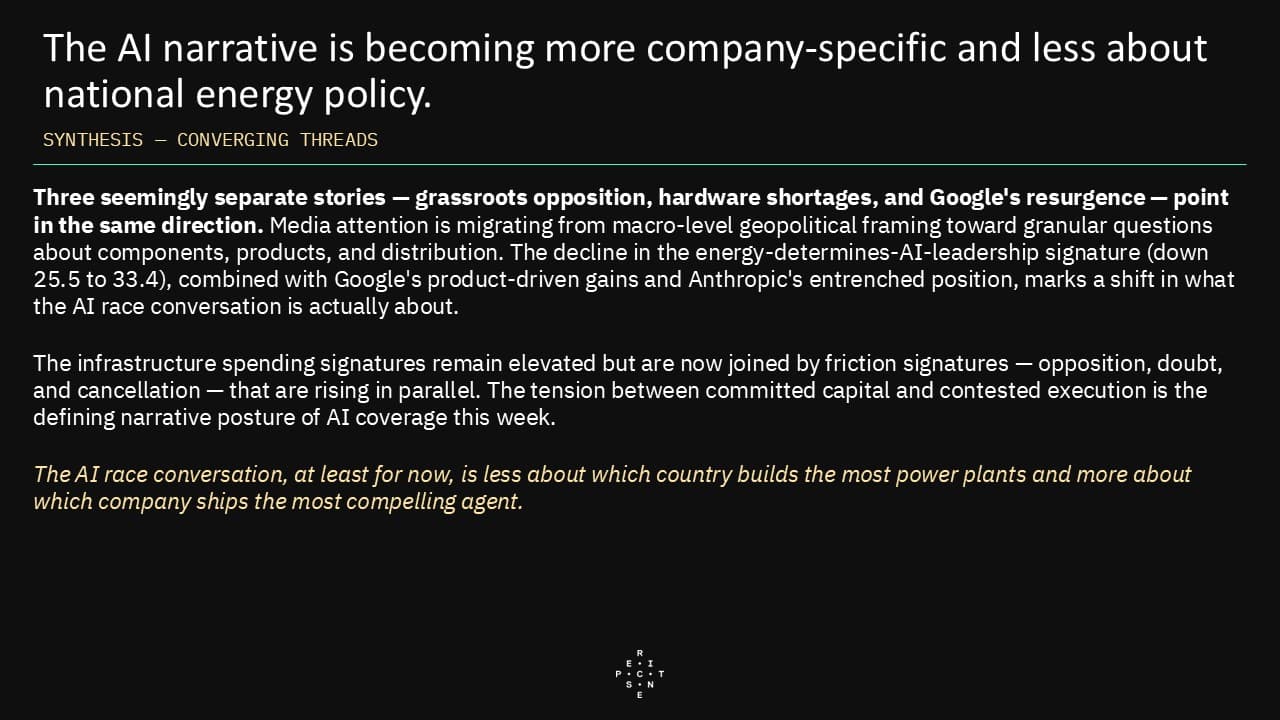
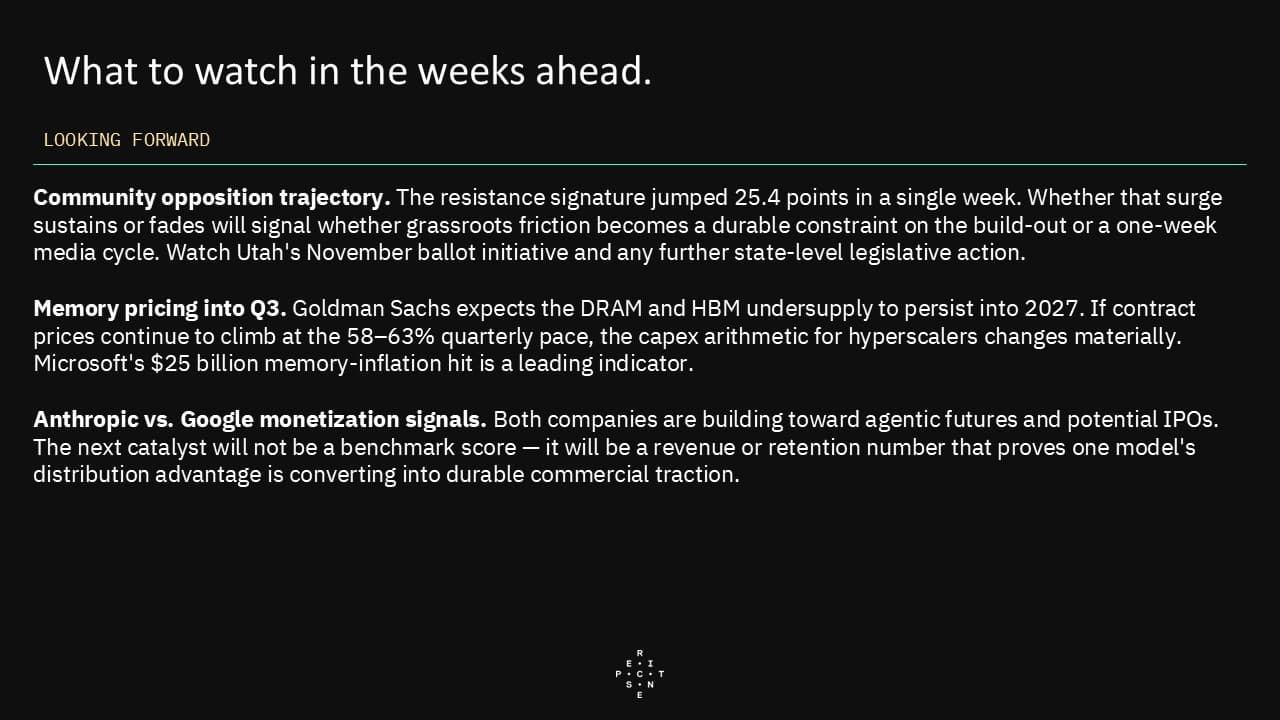
- Physical infrastructure constraints — particularly memory chip shortages and power grid interconnect delays — now represent the dominant tension in AI media coverage, overshadowing GPU supply concerns. The semantic signature tracking RAM shortages reached more than four times its long-term mean, and the signature for interconnect delays sits at nearly one and a half times its mean. Community opposition to data center construction is also hardening: local moratoria are spreading, and polling shows that more Americans would oppose than support a data center in their community. Media attention has shifted from asking whether the AI buildout will happen to questioning whether it can physically be executed at the pace that capital markets are demanding.
- The widening gap between accelerating financial commitments and constrained physical capacity is becoming the central organizing tension in AI media coverage. Supercycle language, profitability claims, and infrastructure spending signatures all strengthened this week, yet memory supply growth remains well below historical norms, transformer lead times exceed three years, and roughly a third to half of planned 2026 U.S. data center projects face delays or cancellation. The media story is evolving from "who wins the AI race" toward "what stands in the way of building it" — a structural reframing that could reshape how investors, policymakers, and the public assess the feasibility of the AI buildout itself.