
Markets Pulse
WeeklyJune 23, 2026

AI Pulse June 16, 2026

6.16AIPulse1.jpg
6.16AIPulse2.jpg
6.16AIPulse3.jpg
6.16AIPulse4.jpg
6.16AIPulse5.jpg
6.16AIPulse6.jpg
6.16AIPulse7.jpg
6.16AIPulse8.jpg
6.16AIPulse9.jpg
6.16AIPulse10.jpg
6.16AIPulse11.jpg
6.16AIPulse12.jpg
6.16AIPulse13.jpg
6.16AIPulse14.jpg
6.16AIPulse15.jpg
6.16AIPulse16.jpg
6.16AIPulse17.jpg
6.16AIPulse18.jpg

EXECUTIVE SUMMARY

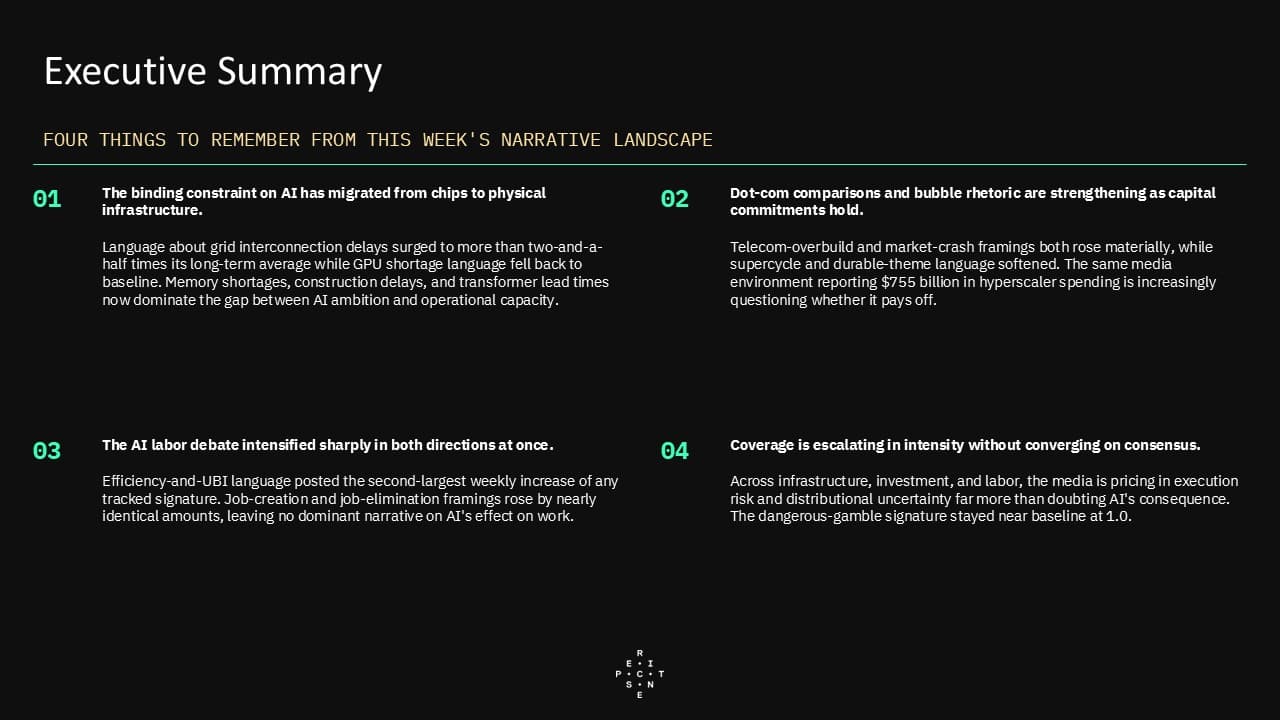
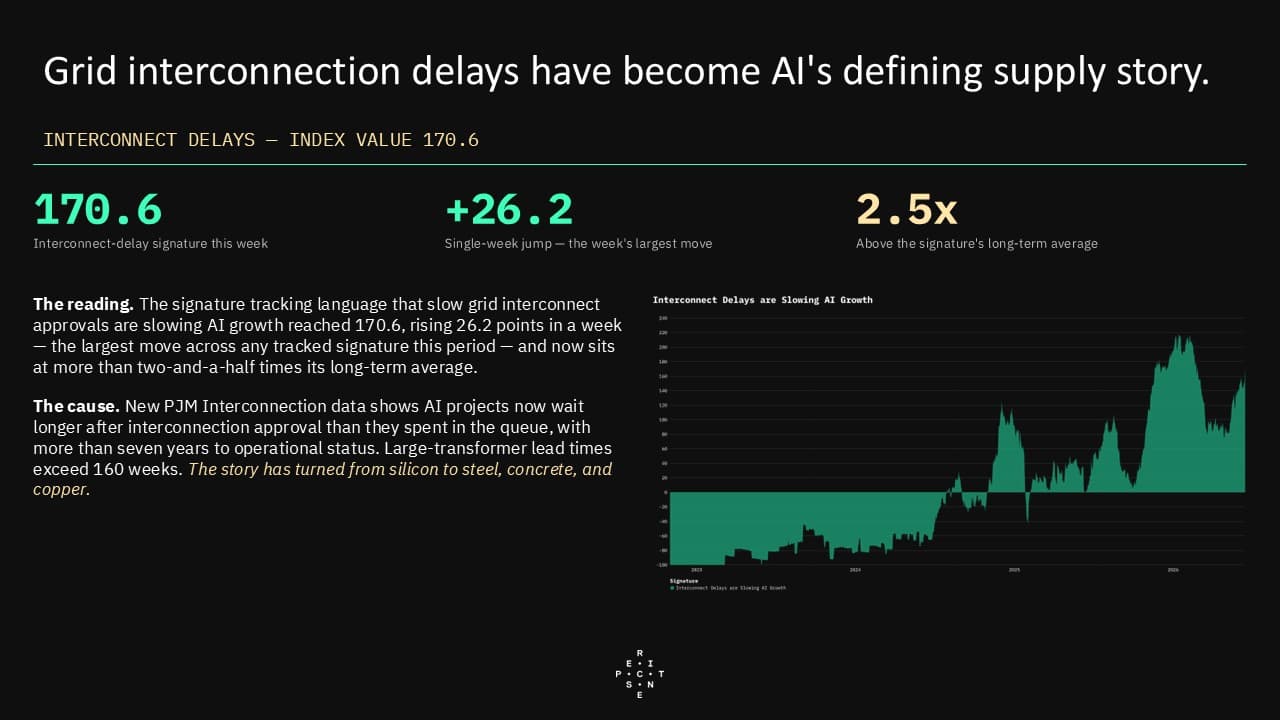
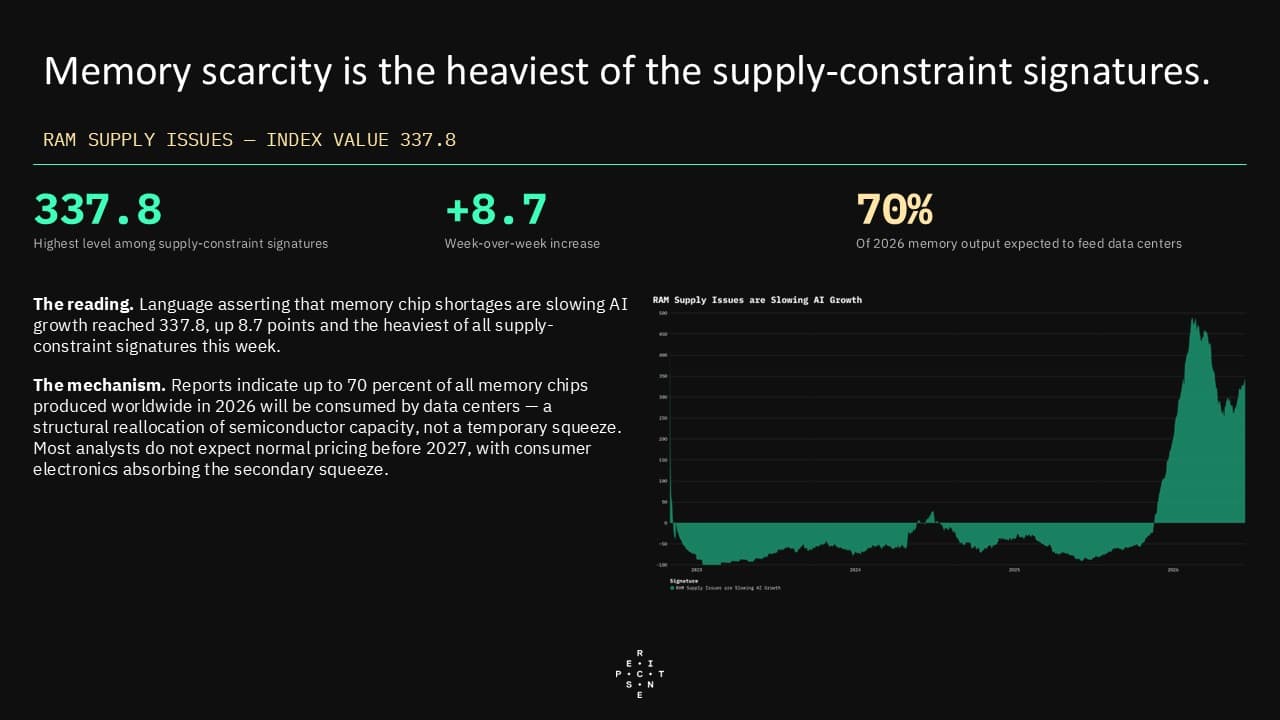
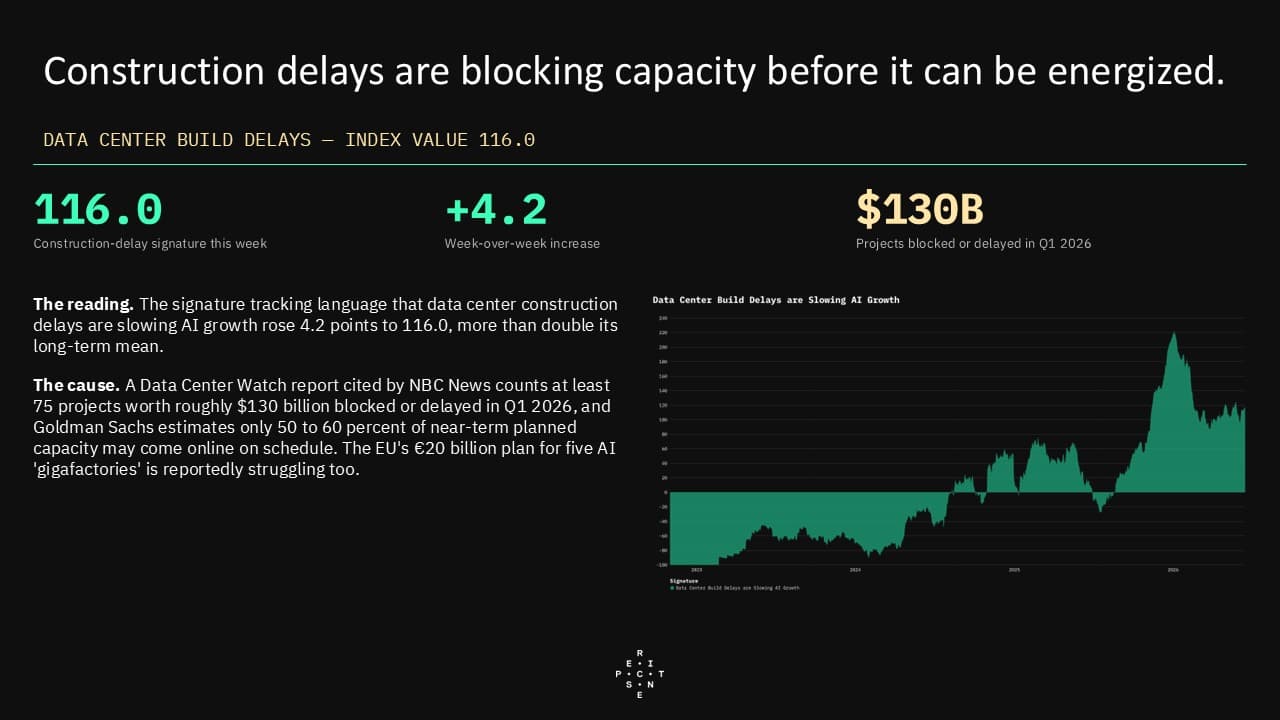
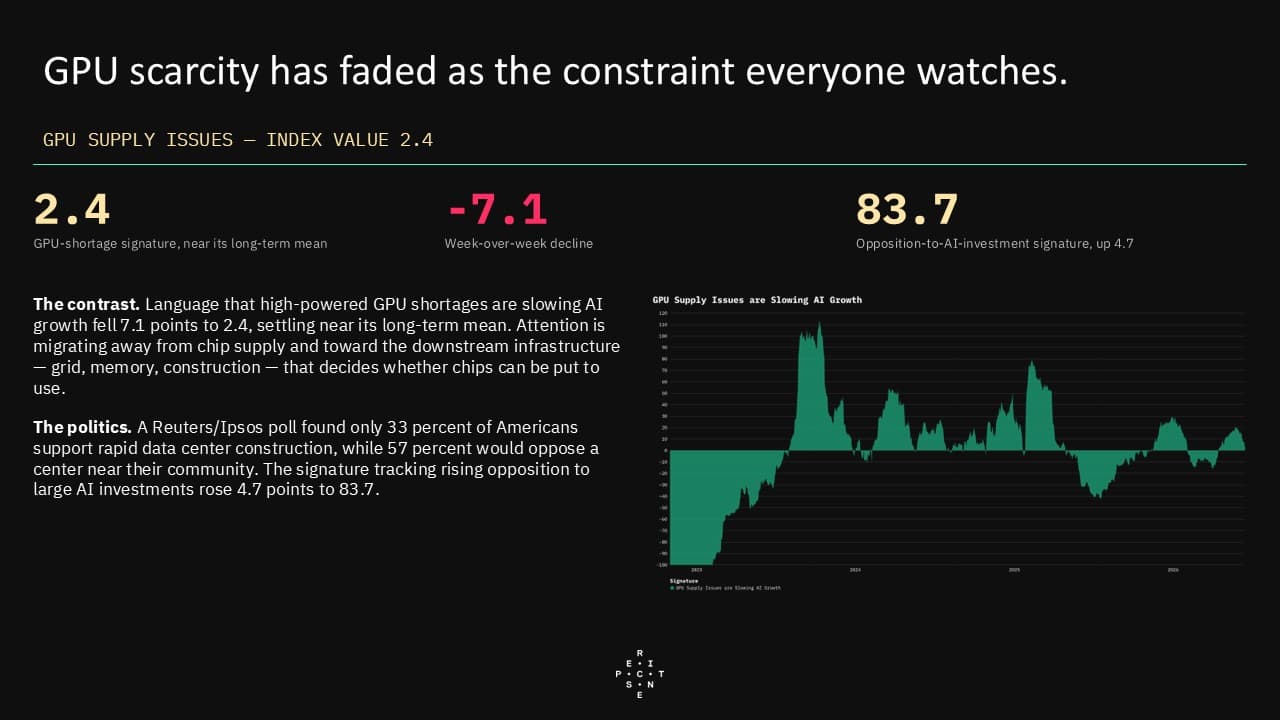
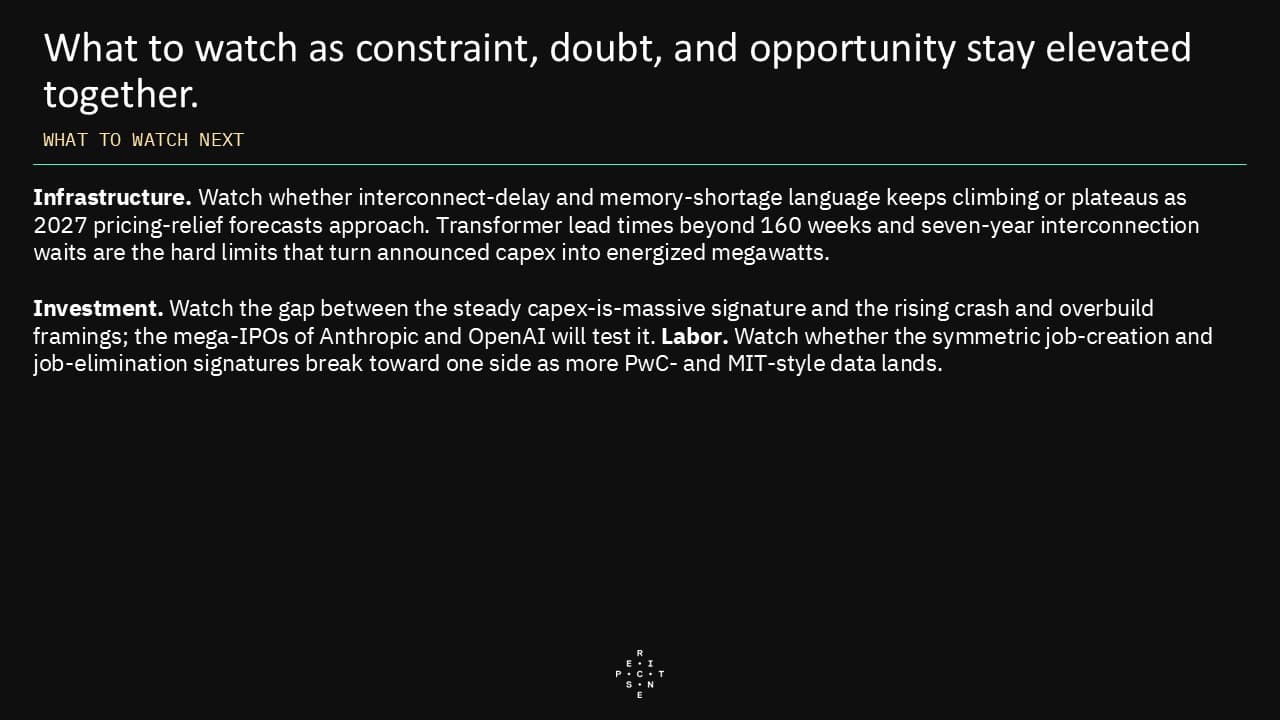
  • The binding constraint on AI expansion has migrated from chip supply to physical infrastructure. Media language about grid interconnection delays surged to more than two-and-a-half times its long-term average, recording the largest single-week increase across all tracked signatures, while GPU shortage language fell back to baseline levels. Memory chip shortages, data center construction delays, power transformer lead times exceeding 160 weeks, and public opposition to data center siting now dominate coverage of the gap between announced AI ambitions and operational capacity—a shift that reframes the AI growth story from a semiconductor narrative to an energy, construction, and permitting narrative.
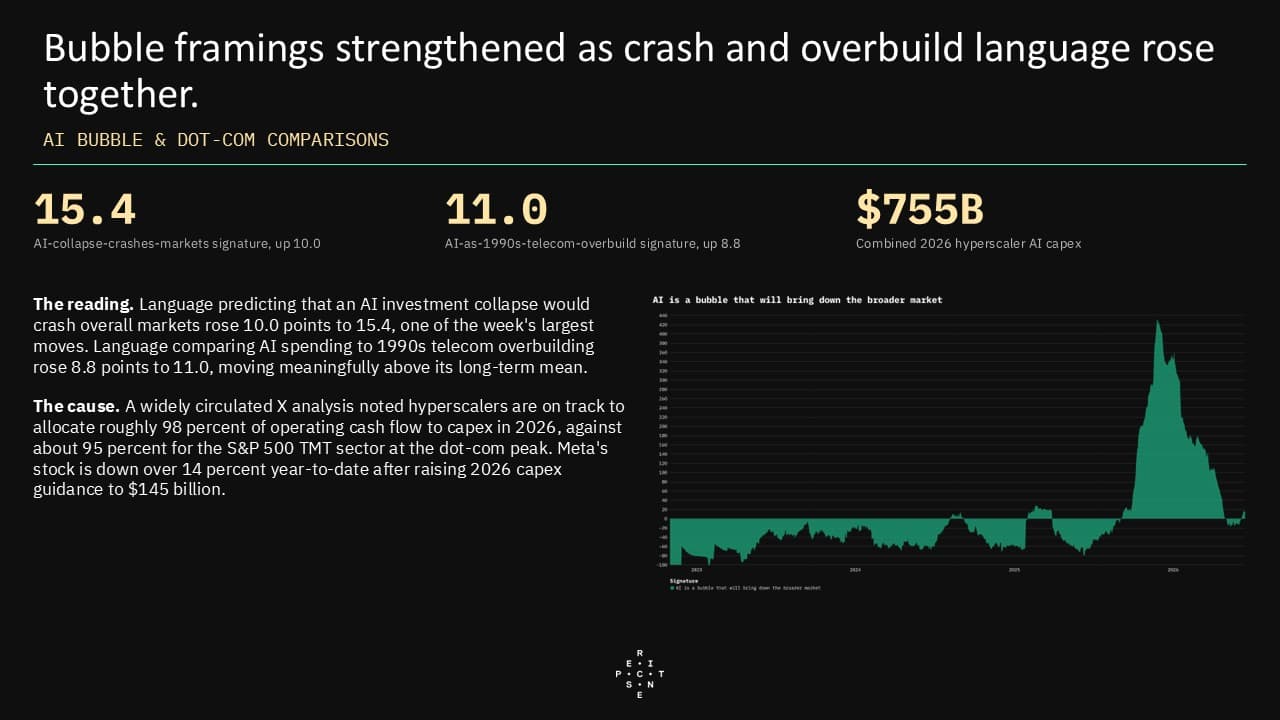
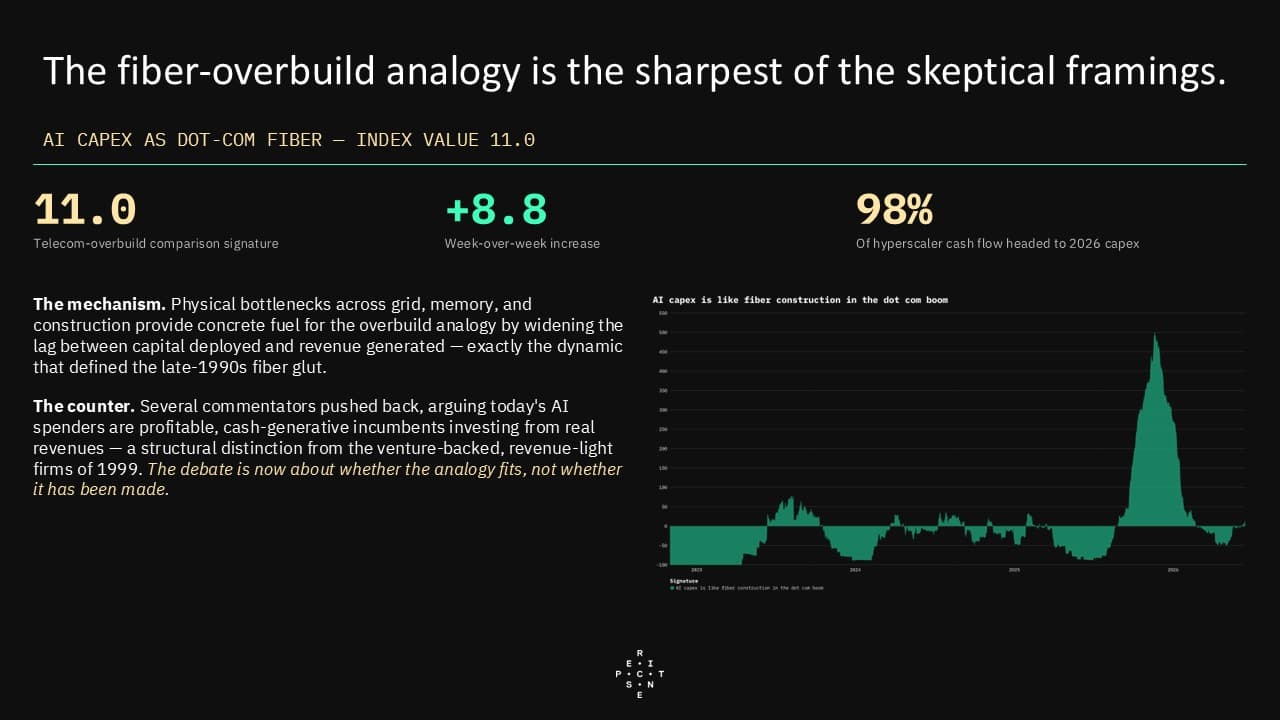
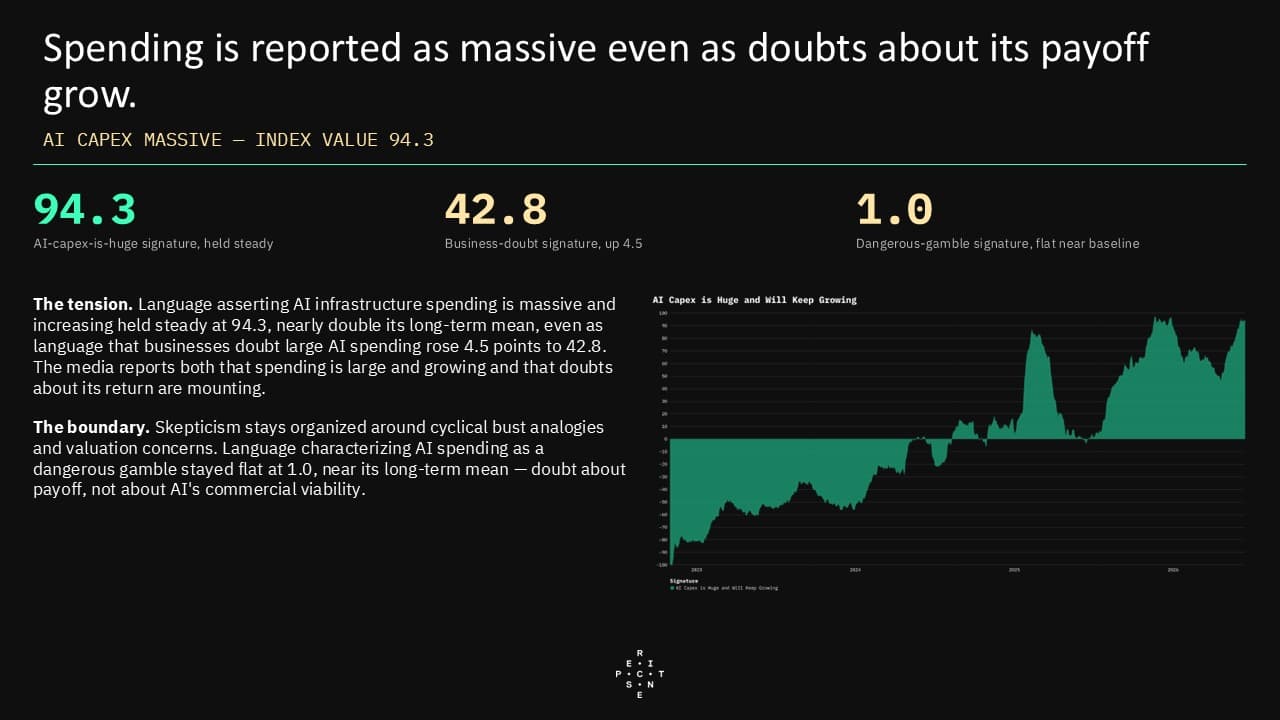
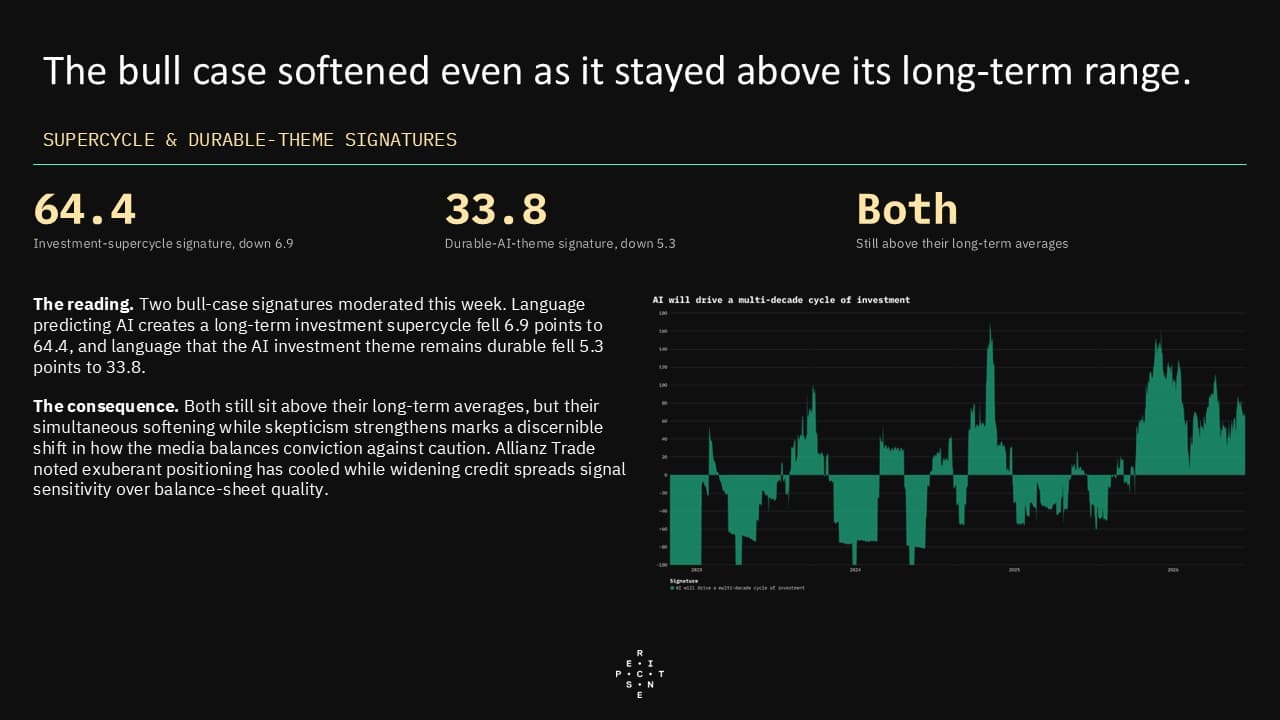
  • Dot-com comparisons and bubble rhetoric are strengthening in tandem, even as media coverage continues to characterize AI spending as massive and growing. Language comparing current AI capital expenditure to 1990s telecom overbuilding and language predicting that an AI investment collapse could crash broader markets both rose materially, while bull-case signatures tracking "supercycle" and "durable investment theme" language softened. This creates a pronounced narrative tension: the same media environment that reports $755 billion in combined hyperscaler spending is increasingly questioning whether that spending will produce commensurate returns. The physical infrastructure bottlenecks documented across grid, memory, and construction signatures provide concrete fuel for these skeptical framings by widening the lag between capital deployed and revenue generated.
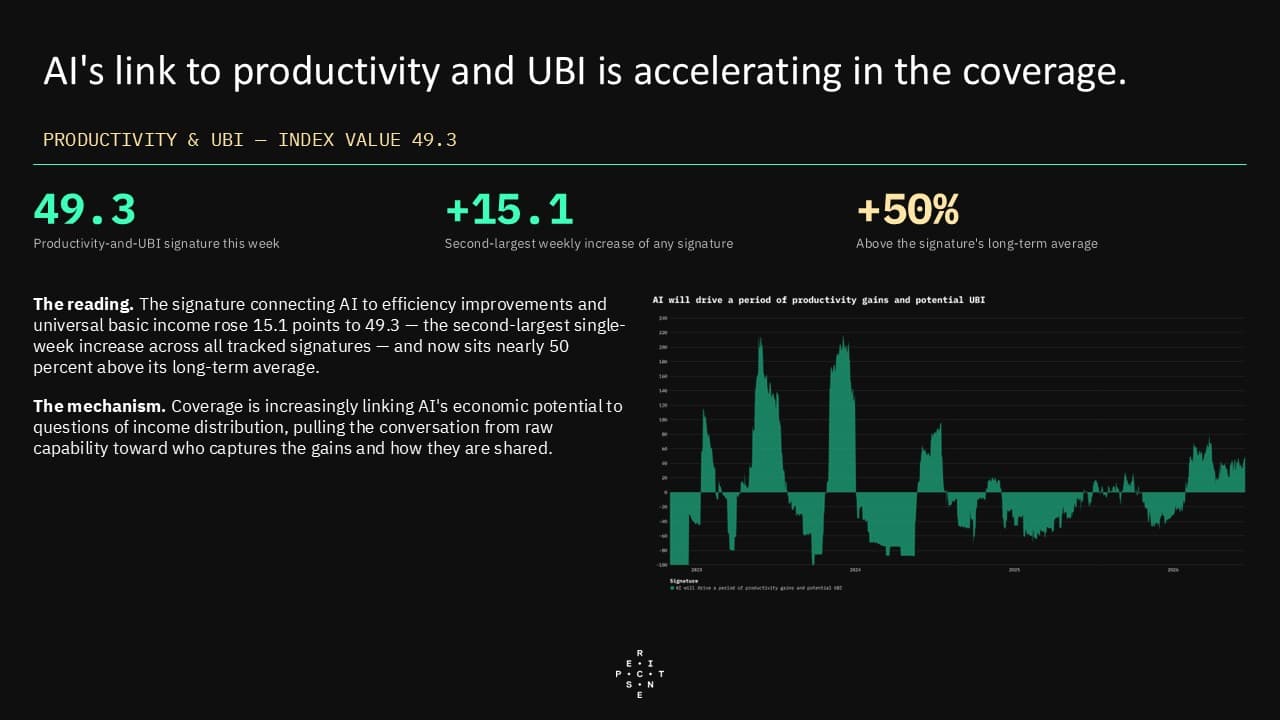
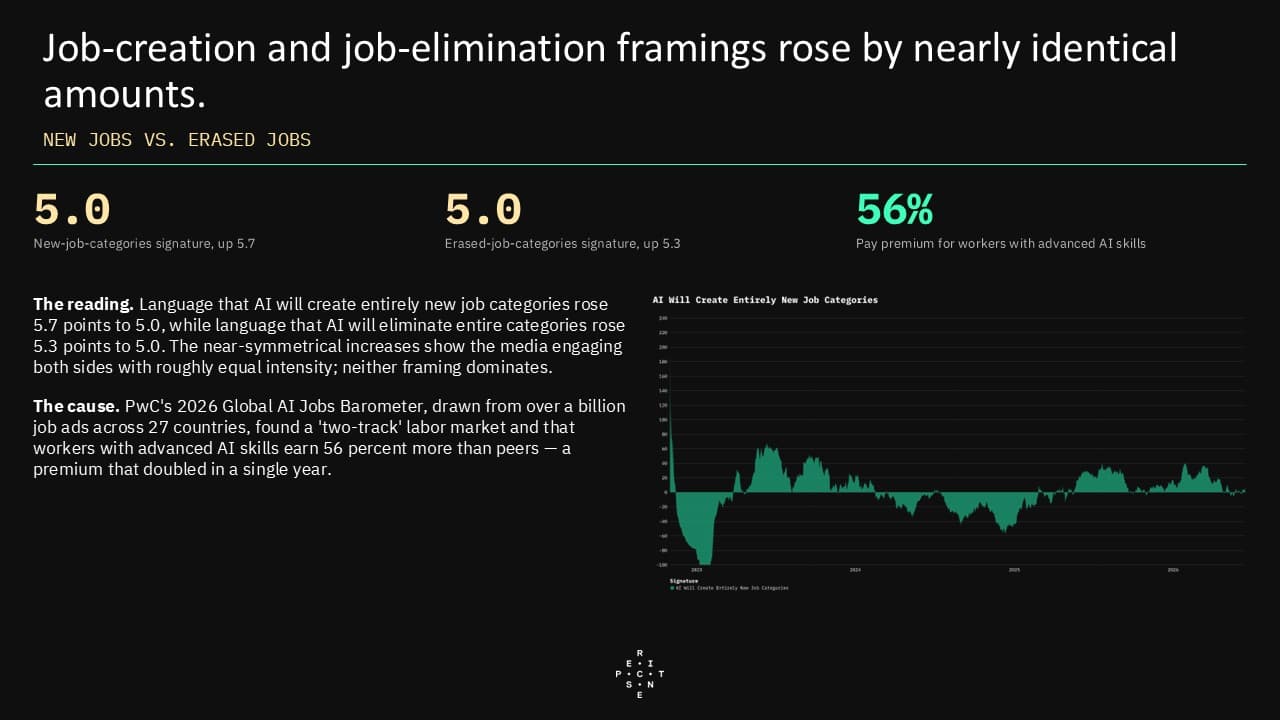
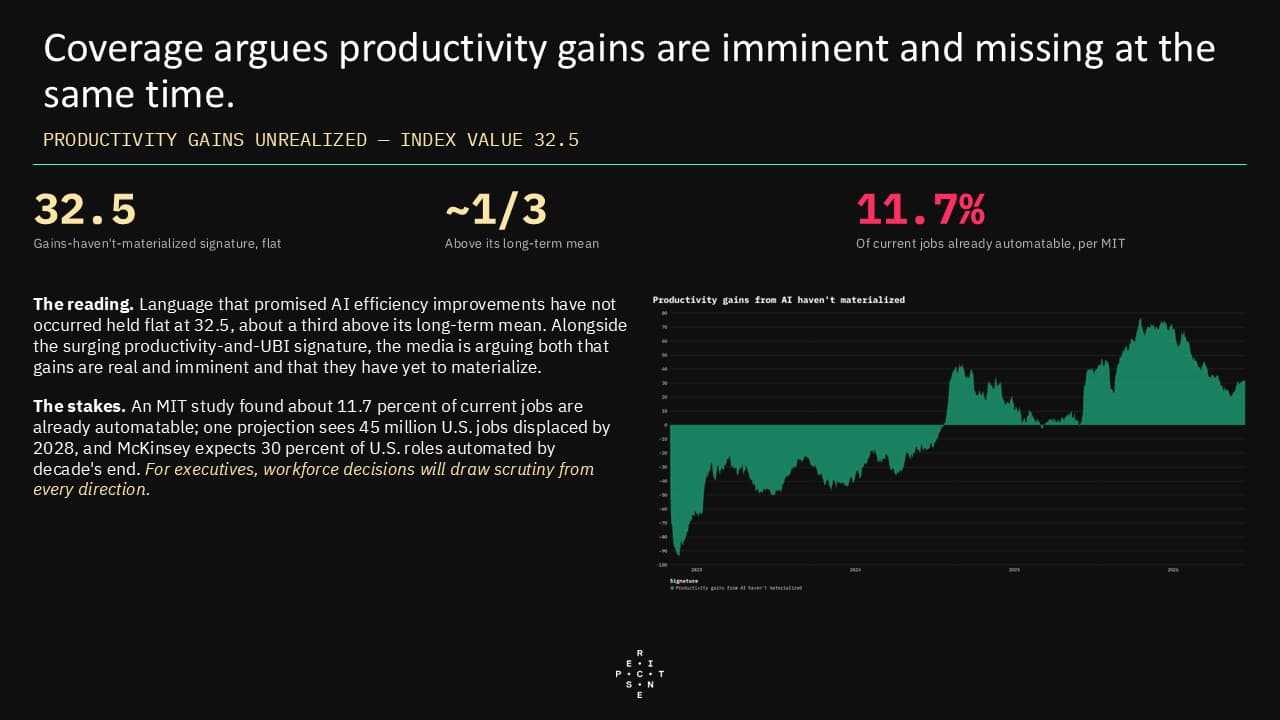
  • The labor market debate around AI intensified sharply in both directions, with no dominant framing emerging. Language linking AI to efficiency gains and universal basic income recorded the second-largest weekly increase of any tracked signature, while language predicting that AI will create entirely new job categories and language predicting that AI will eliminate entire categories rose by nearly identical amounts. PwC data showing that workers with advanced AI skills earn a 56 percent premium coexists with projections that tens of millions of jobs face displacement—an unresolved tension that leaves corporate workforce decisions exposed to scrutiny regardless of direction.
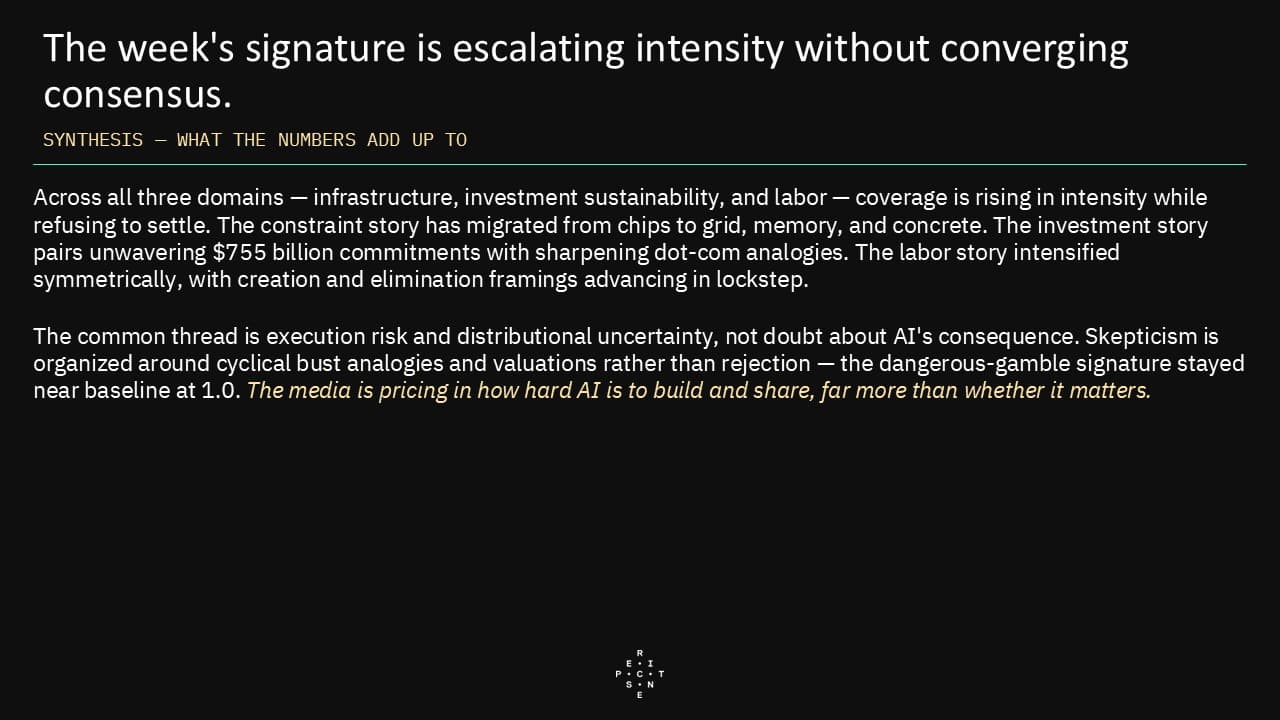
  • Across all three major narrative domains—infrastructure, investment sustainability, and labor—media coverage is escalating intensity without converging on consensus. Skepticism remains organized around cyclical bust analogies and valuation concerns rather than outright rejection of AI's commercial viability; language characterizing AI infrastructure spending as a dangerous gamble stayed near baseline. The simultaneous elevation of constraint, doubt, and opportunity signatures suggests that the media environment is pricing in execution risk and distributional uncertainty far more than it is questioning whether AI itself will prove consequential.

Recent Pulses

Markets PulseWeeklySep 22, 2026

Markets Pulse September 15, 2026

The regime-change story arrives without any accompanying fear language. Every flight-to-safety signature — Treasurys, Swiss franc, yen, gold, money market funds — sits deep in negative territory, geopolitical and monetary policy uncertainty signatures were flat, and risk-on and risk-off readings have converged to nearly the same level just below zero. Media are narrating a supply shock, a five-percent ten-year, and a first hike since 2023 while conspicuously declining to counsel defensive positioning. Election-season transfer proposals collided with a hardening sovereign-risk story, and media asserted both outcomes at once. The helicopter-money signature registered the largest single move in the file, and stimulus-check predictions rose with it, yet signatures tracking debt paydown, deficit reduction, and austerity legislation also strengthened in the same week, while fiscal policy uncertainty remained flat. Commentators are expressing conviction about incompatible fiscal futures rather than doubt. Simultaneously, signatures tying runaway spending to higher Treasury yields, and those linking bond weakness to deficits and unfunded tax cuts, all gained, and claims that Treasurys are pricing genuine default risk moved into positive territory. Taken together, Sections 1 and 2 describe a media framework in which monetary and fiscal policy are pulling in opposite directions. Coverage pairs a hawkish Fed responding to oil-driven inflation with a proposed trillion-dollar household giveaway, and the reserve-currency channel sharpened alongside it: the signature tying dollar-status threats specifically to debt sustainability rose while the generic version held flat. Claims that White House pressure on foreign Treasury holders is deterring buyers remain the densest reading in the entire file, even as it eased slightly, and official-sector gold substitution language stayed elevated without accelerating further. Tariff politics are running in reverse, and the war has been absorbed into the same affordability argument. The signature tracking broad public opposition to tariffs climbed to one of the highest standings in the file while claims of public support weakened further, and the stated rationale rotated decisively: reshoring-manufacturing arguments dropped hard while "make other countries pay their fair share" and negotiating-leverage framings gained. Directional language turned two-sided for the first time in months. Bridging Sections 1 and 3, voter coverage now treats tariffs and the conflict as a single price story, which the K-shaped-economy framing organizes into a midterm affordability fight — notably, the market version of that bifurcation narrative eased even as chip stocks sold off, and the argument that investors have no alternative to US large-cap growth has effectively vanished from coverage.

Markets PulseWeeklySep 22, 2026

Markets Pulse

Next release: September 29, 2026

Private Credit PulseBiweeklySep 22, 2026

Private Credit Pulse

Next release: October 06, 2026