
Markets Pulse
AI Pulse July 14, 2026



EXECUTIVE SUMMARY
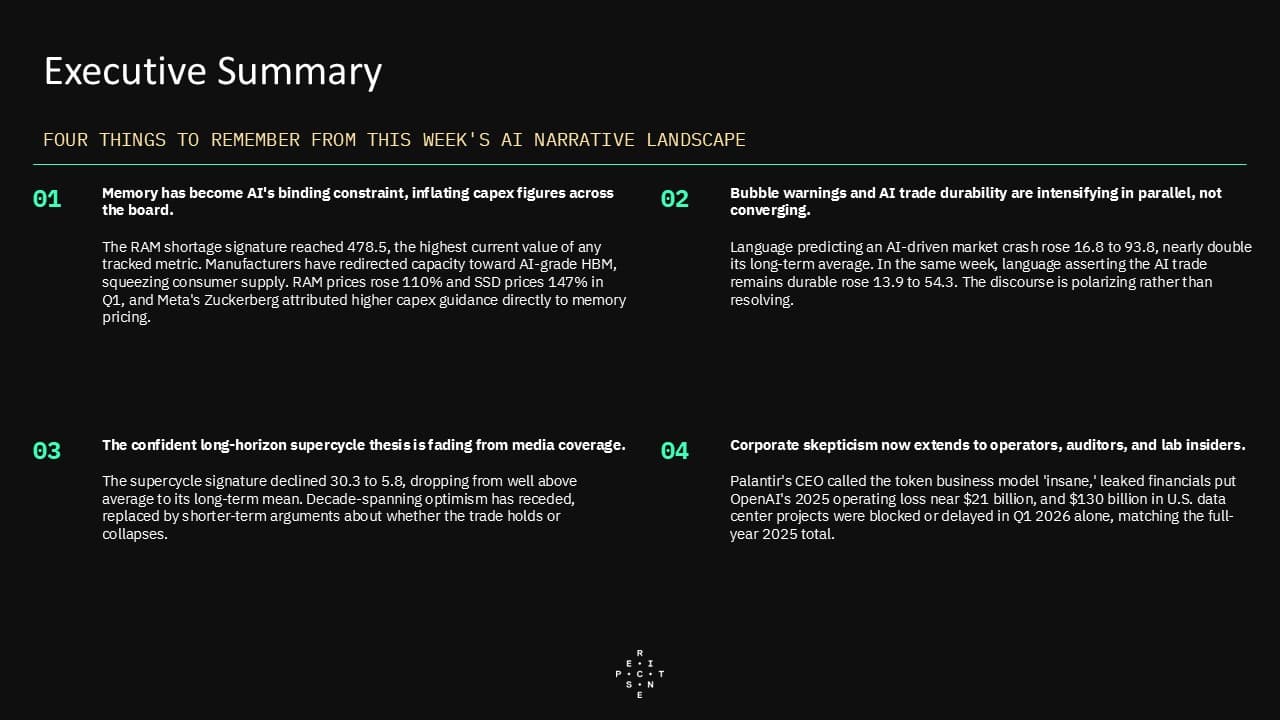
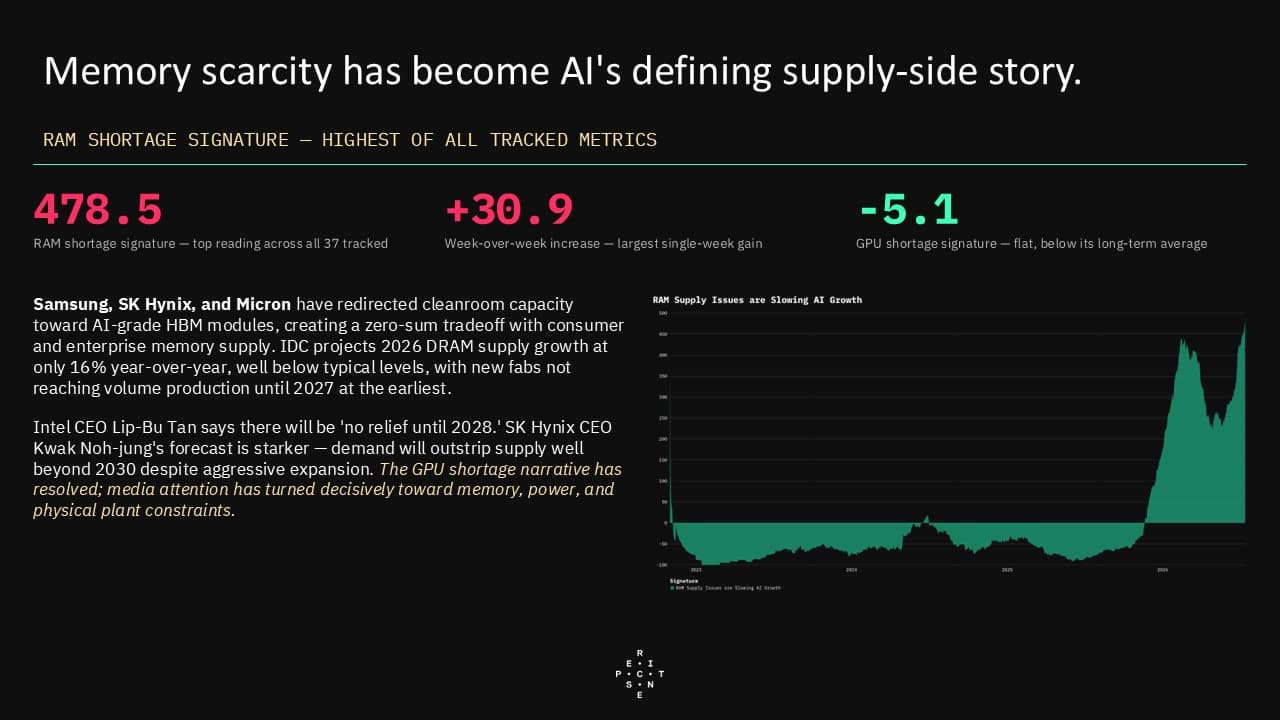
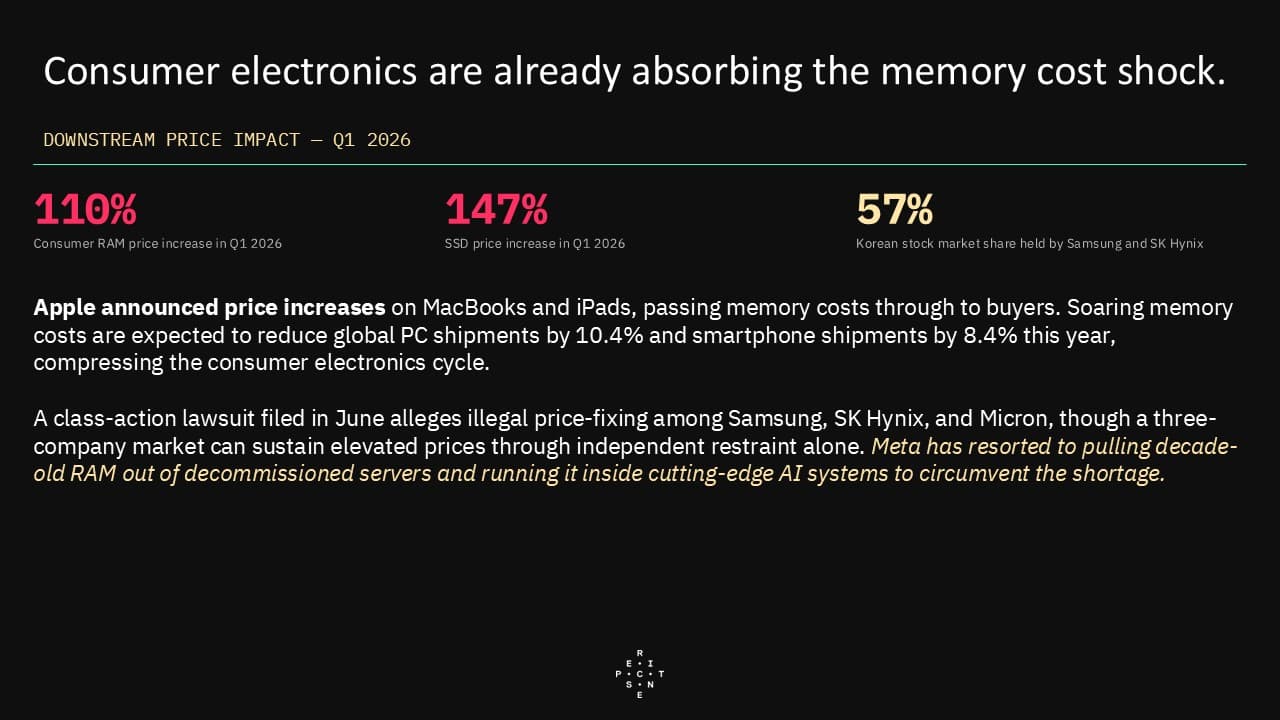
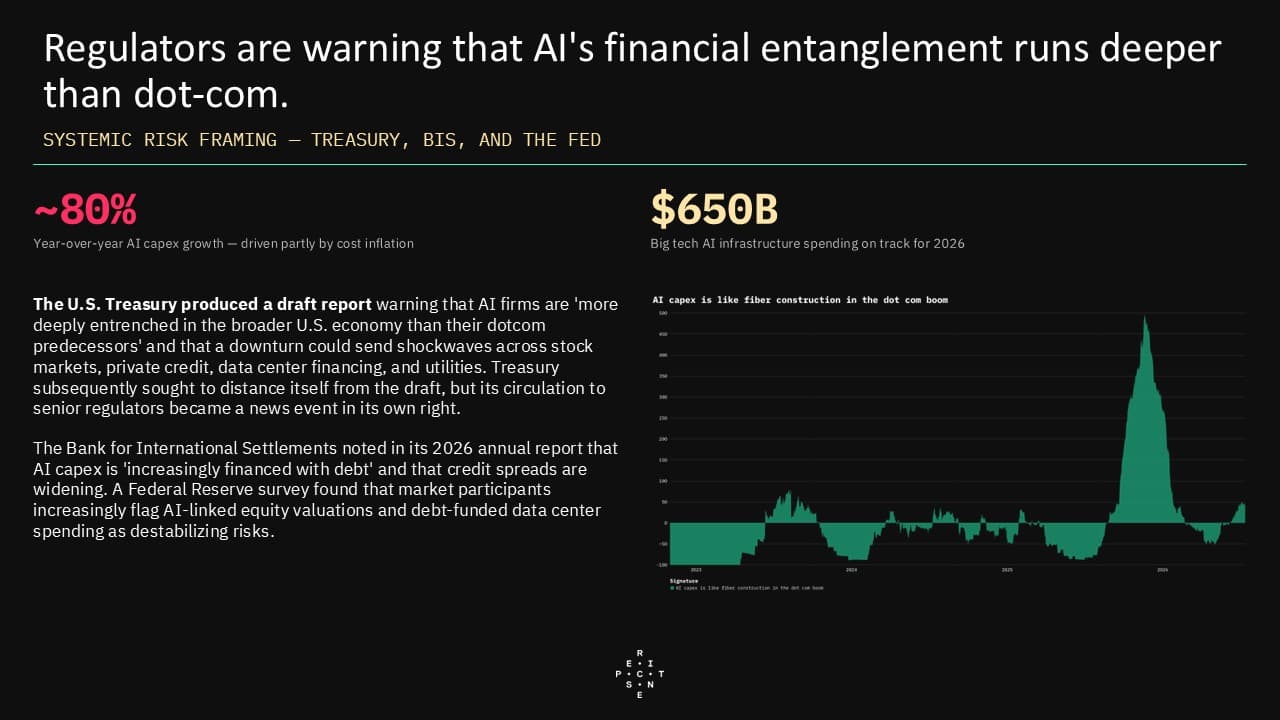
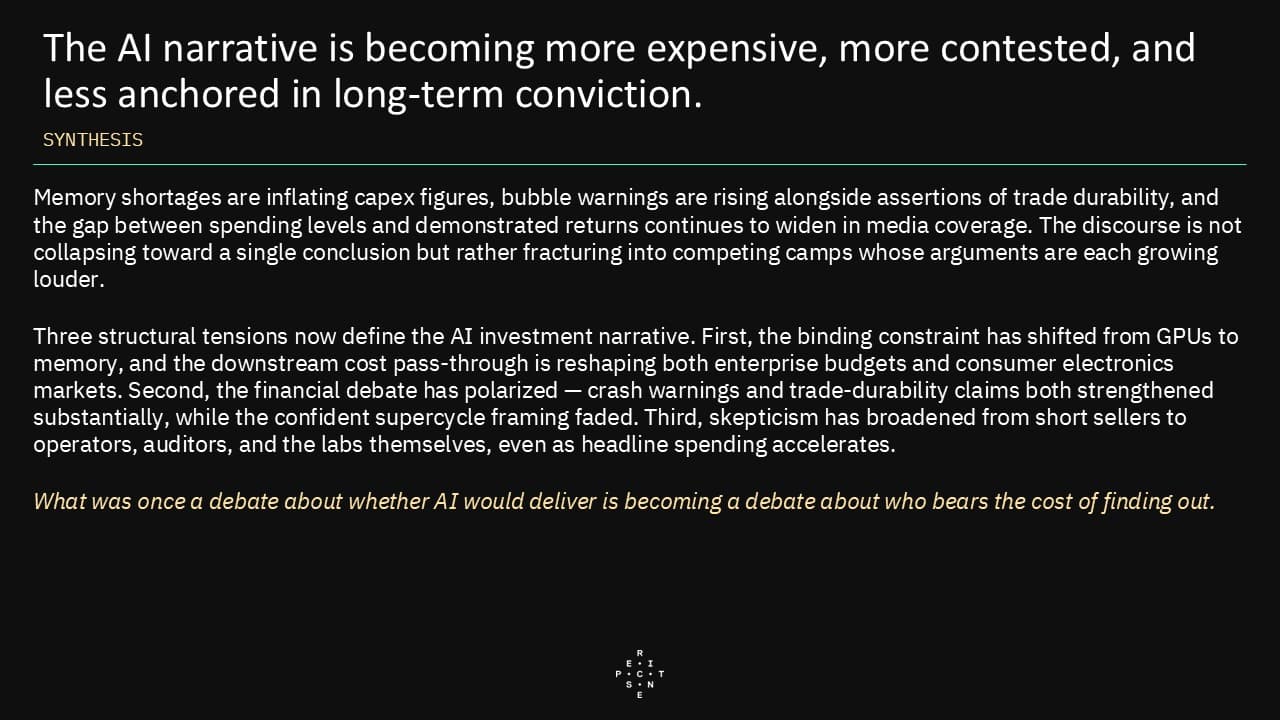
- The binding constraint on AI growth has shifted decisively from GPU availability to memory chip shortages, and the associated semantic signature now stands at the highest value of any tracked metric. This shift carries financial consequences beyond the supply chain itself: memory cost inflation is directly swelling the headline capital expenditure figures that dominate AI investment coverage, meaning that an undetermined share of the reported ~80% year-over-year spending surge reflects rising input costs rather than expanded physical capacity. Consumer electronics markets are already absorbing the downstream impact, with RAM and SSD prices roughly doubling and major OEMs passing costs through to buyers.
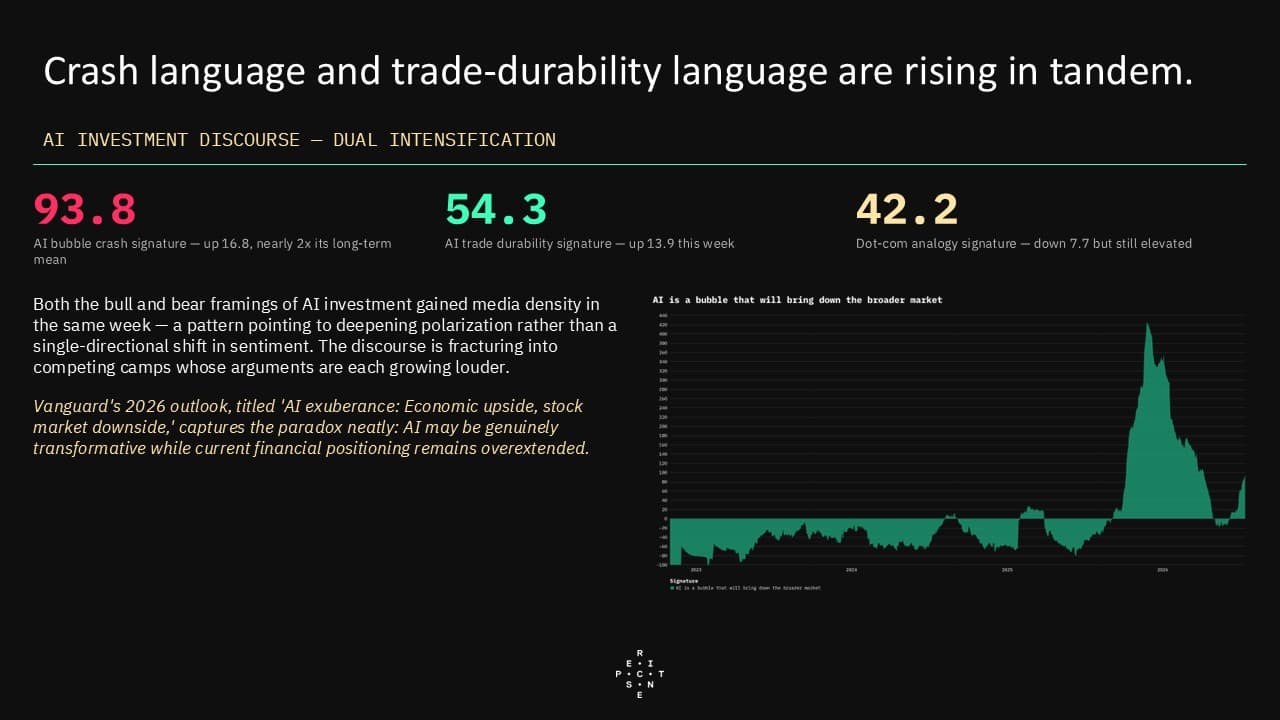
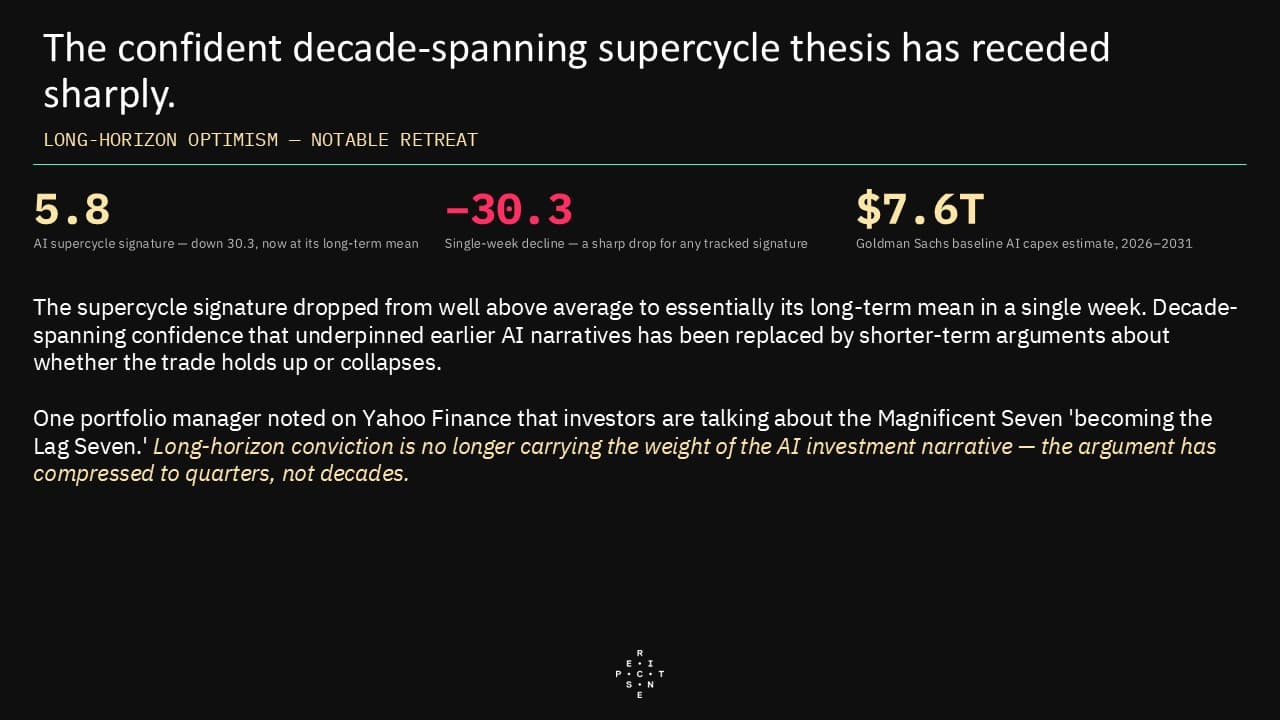
- AI investment discourse has fractured into dueling camps rather than converging on a single verdict. Language predicting that an AI investment collapse will crash broader markets and language asserting that the AI trade remains durable both strengthened substantially in the same week—a pattern pointing to deepening polarization rather than directional consensus. At the same time, the long-horizon "supercycle" framing experienced the sharpest single-week decline of any tracked signature, suggesting that confident decade-spanning optimism is receding from media coverage and being replaced by shorter-term arguments about whether the trade holds or breaks.
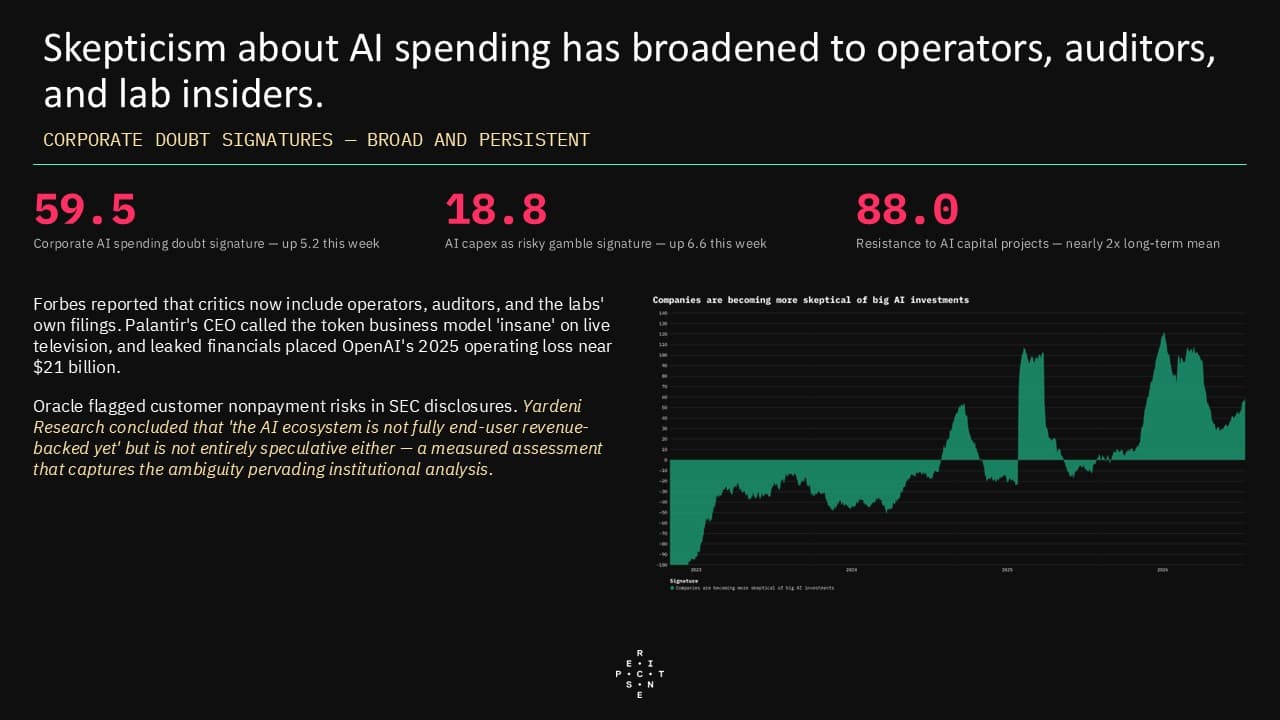
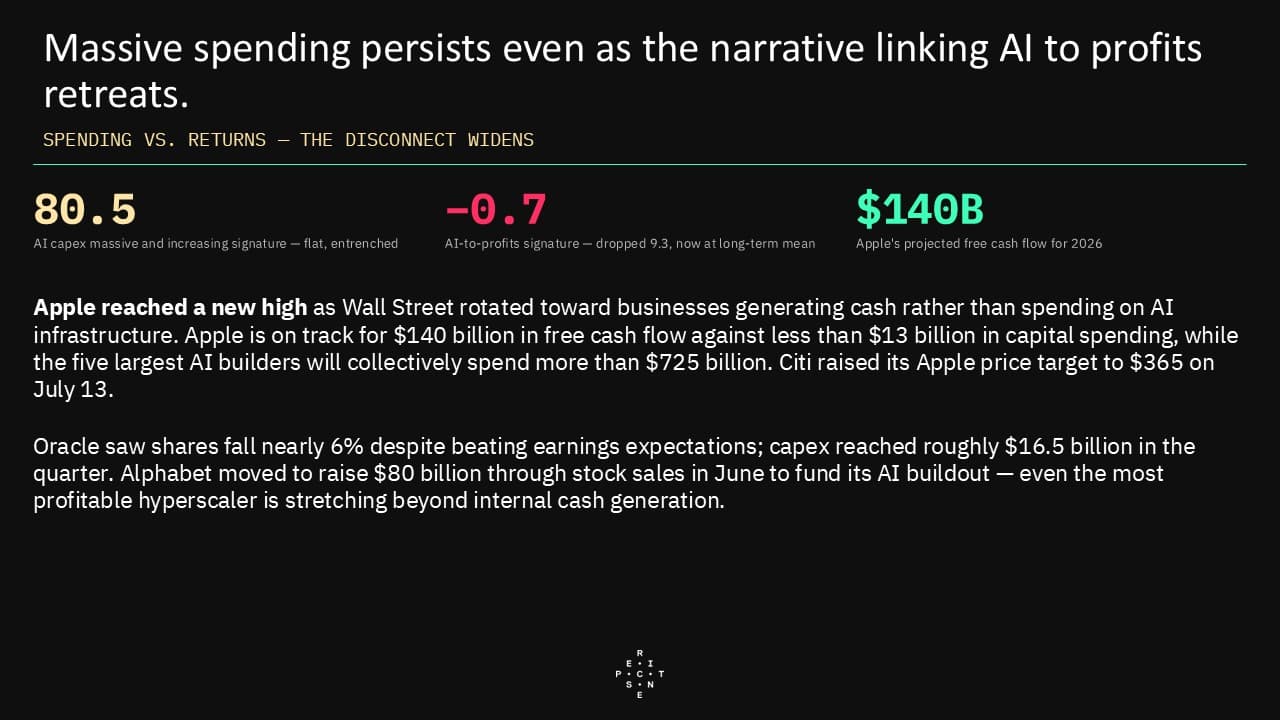
- Corporate skepticism about large AI expenditures has broadened well beyond short sellers to include operators, auditors, and lab insiders, even as the narrative that spending is massive and increasing remains firmly entrenched. The simultaneous retreat in language asserting that AI advances translate to company profits sharpens this tension. Markets appear to be registering the disconnect: Apple reached a record high on the strength of cash generation and capital discipline, while Oracle declined despite beating earnings expectations amid elevated spending and rising debt concerns.
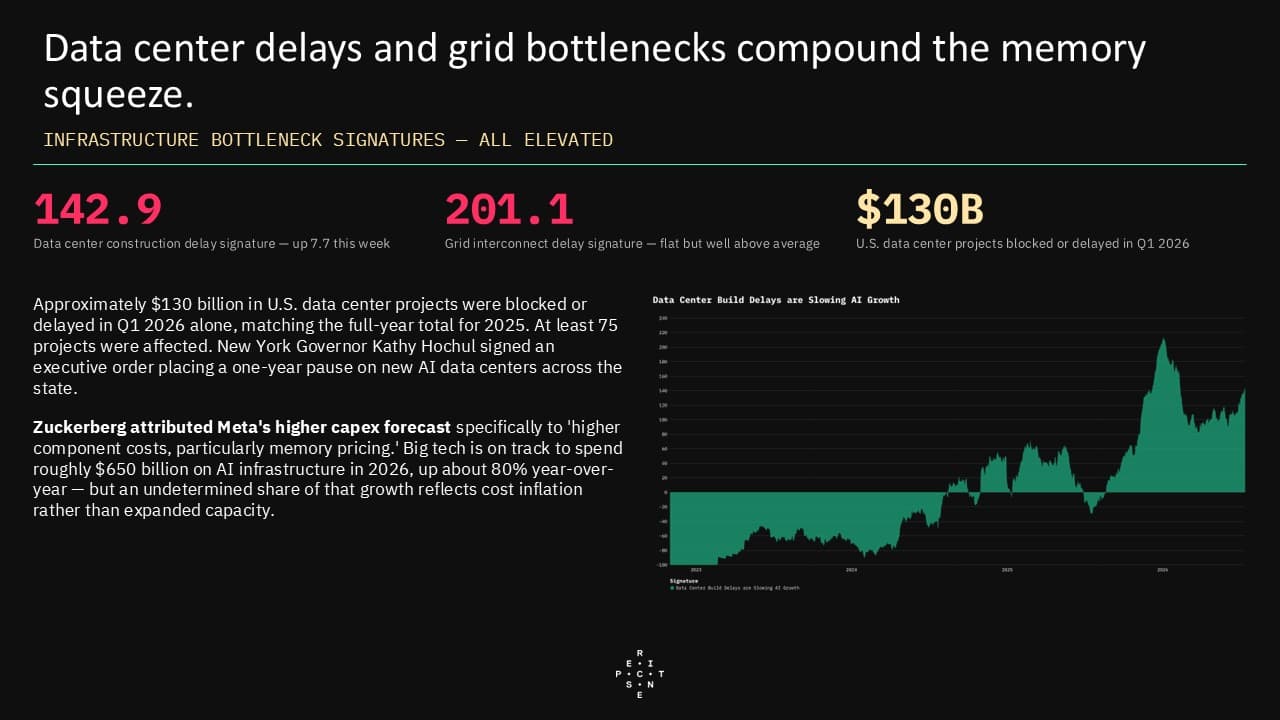
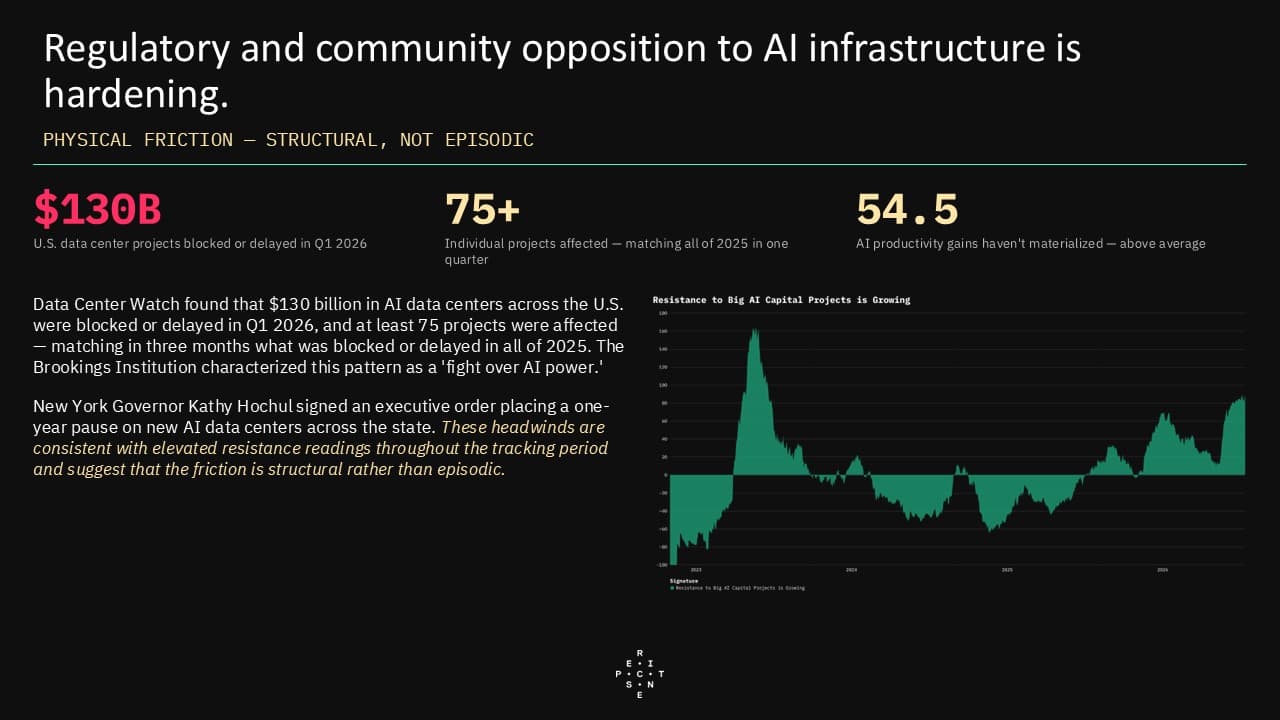
- Physical infrastructure bottlenecks—including data center construction delays, power grid interconnection backlogs, and mounting regulatory resistance—compound the memory shortage and reinforce the narrative that the AI buildout faces structural friction across multiple dimensions simultaneously. Approximately $130 billion in U.S. data center projects were blocked or delayed in the first quarter of 2026 alone, matching the full-year total for 2025, and state-level moratoria signal that community and governmental opposition is hardening rather than dissipating.