


Markets Pulse
WeeklyAugust 11, 2026

AI Pulse August 04, 2026

8.04AIPulse1.jpg
8.04AIPulse2.jpg
8.04AIPulse3.jpg
8.04AIPulse4.jpg
8.04AIPulse5.jpg
8.04AIPulse6.jpg
8.04AIPulse7.jpg
8.04AIPulse8.jpg
8.04AIPulse9.jpg
8.04AIPulse10.jpg
8.04AIPulse11.jpg
8.04AIPulse12.jpg
8.04AIPulse13.jpg
8.04AIPulse14.jpg
8.04AIPulse15.jpg
8.04AIPulse16.jpg
7.21AIPulse17.jpg
7.21AIPulse18.jpg

EXECUTIVE SUMMARY

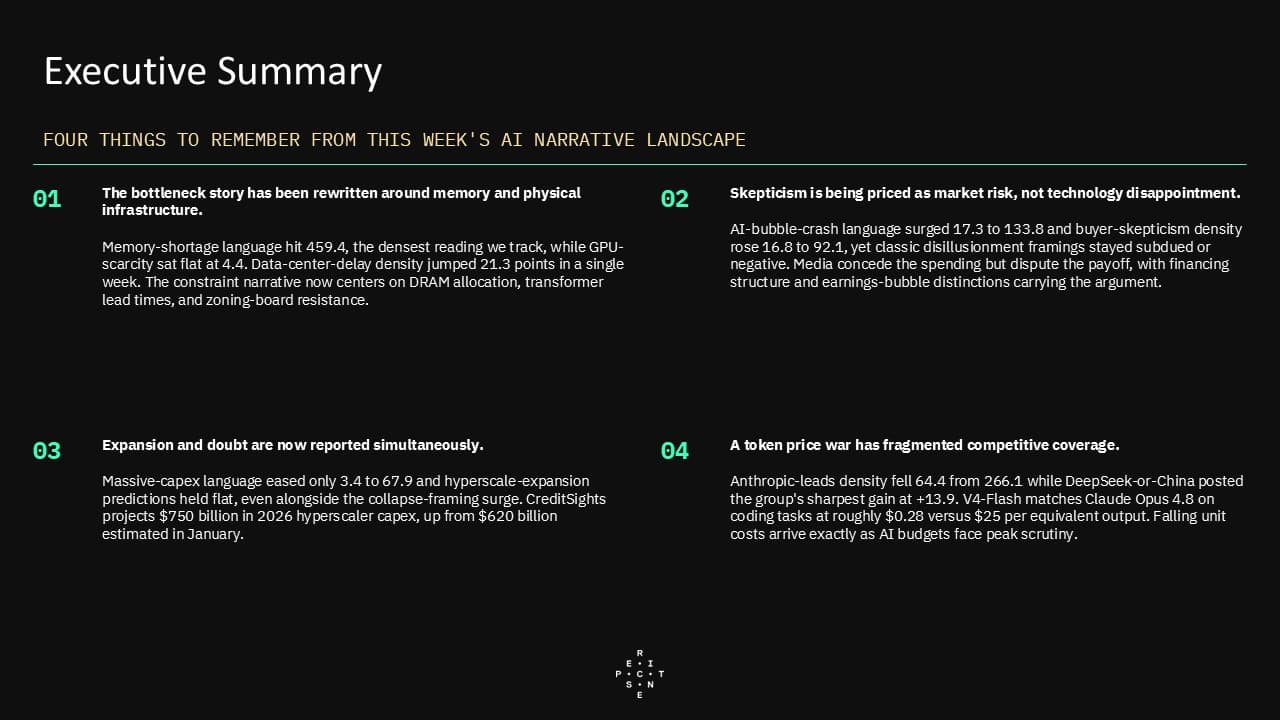
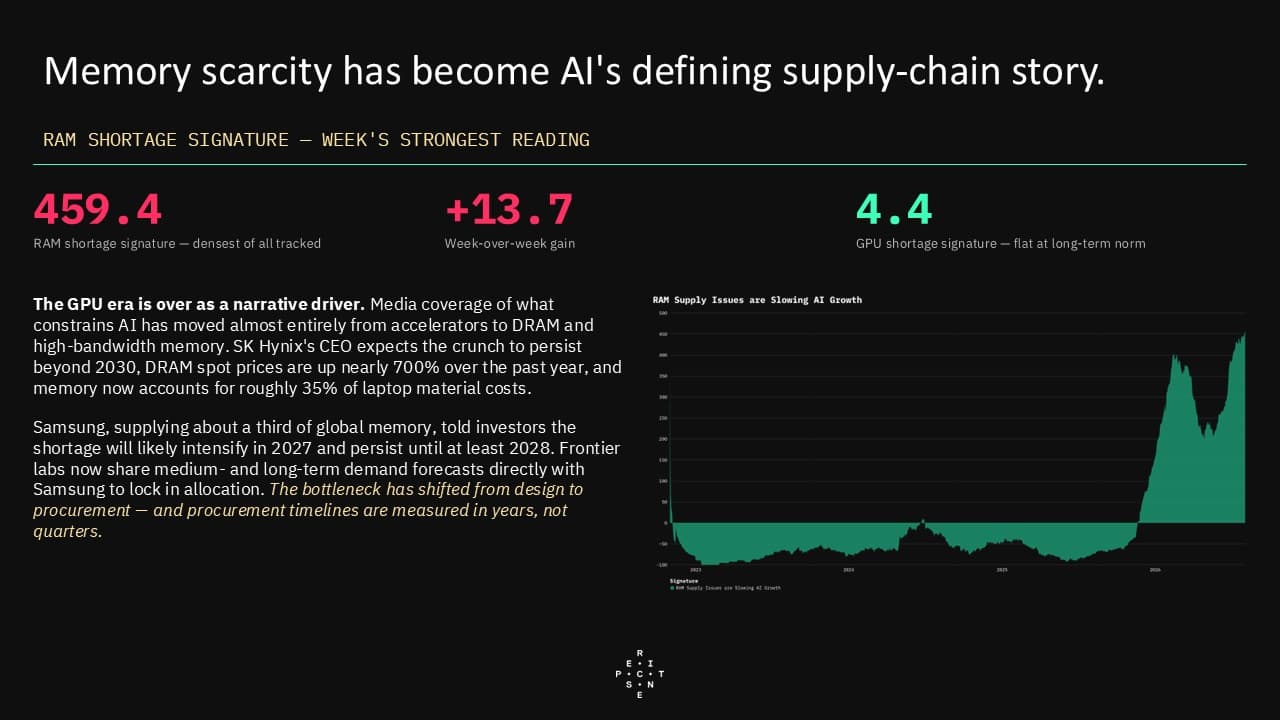
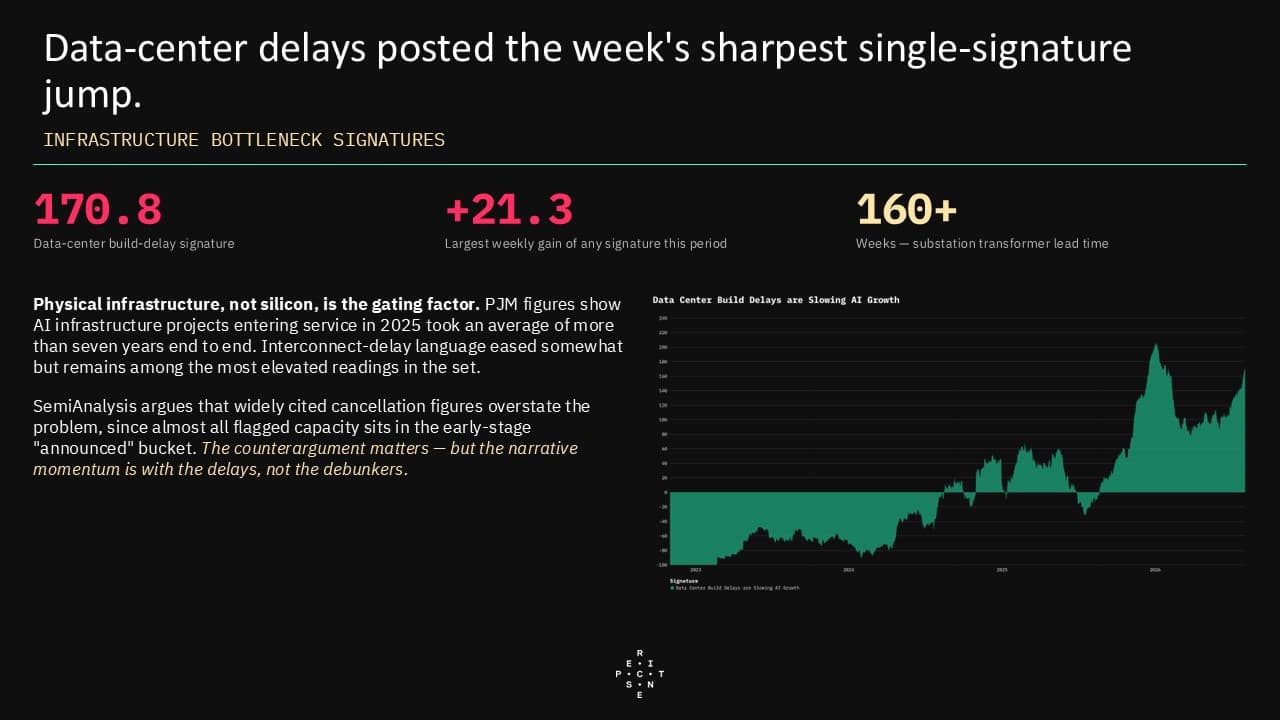
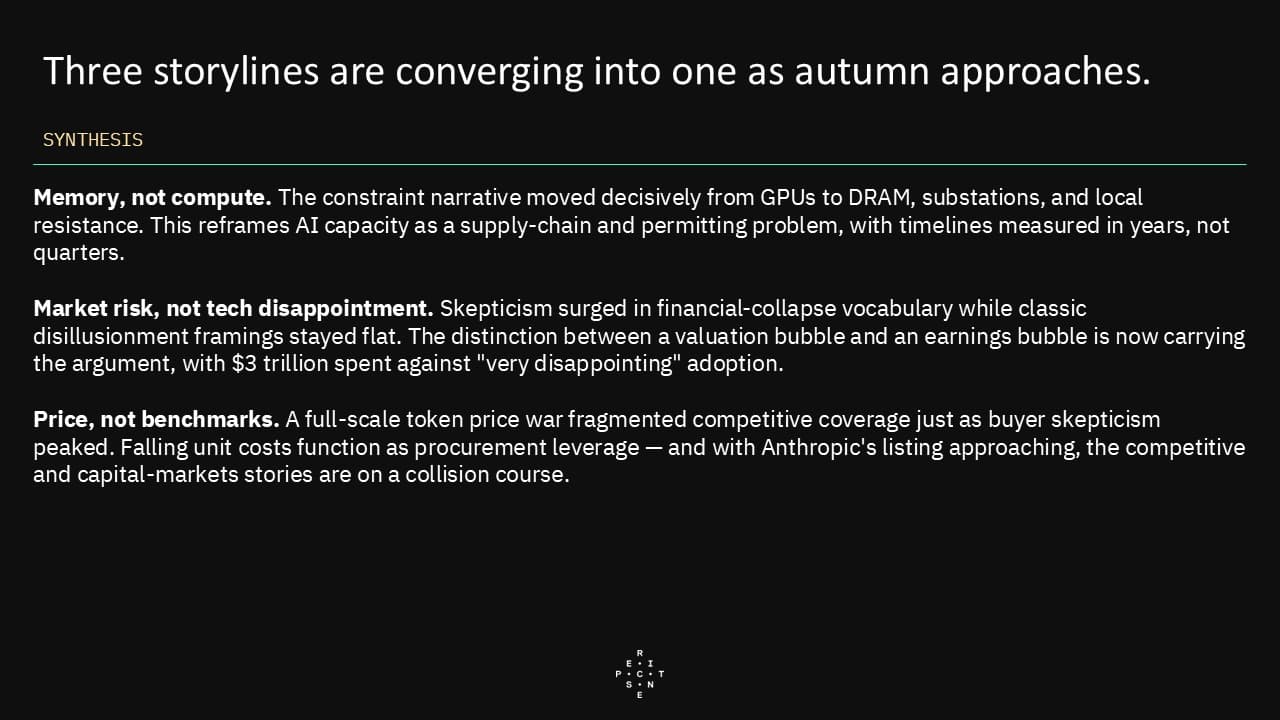
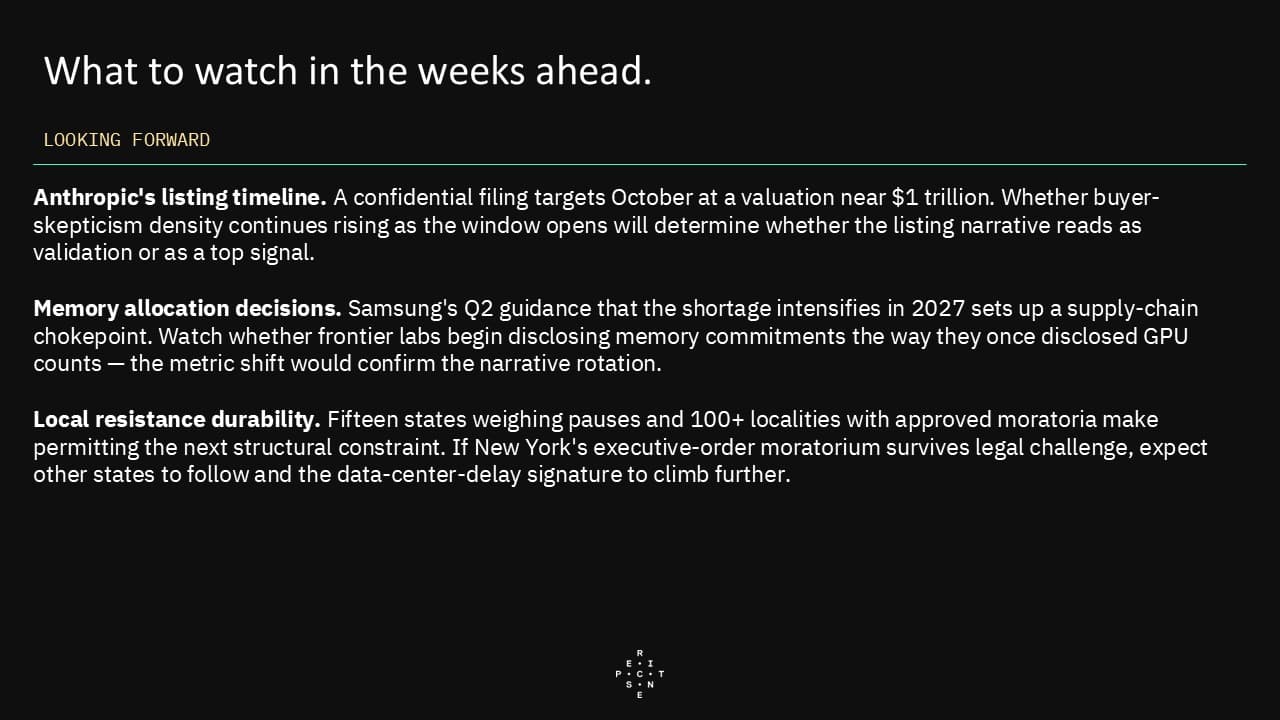
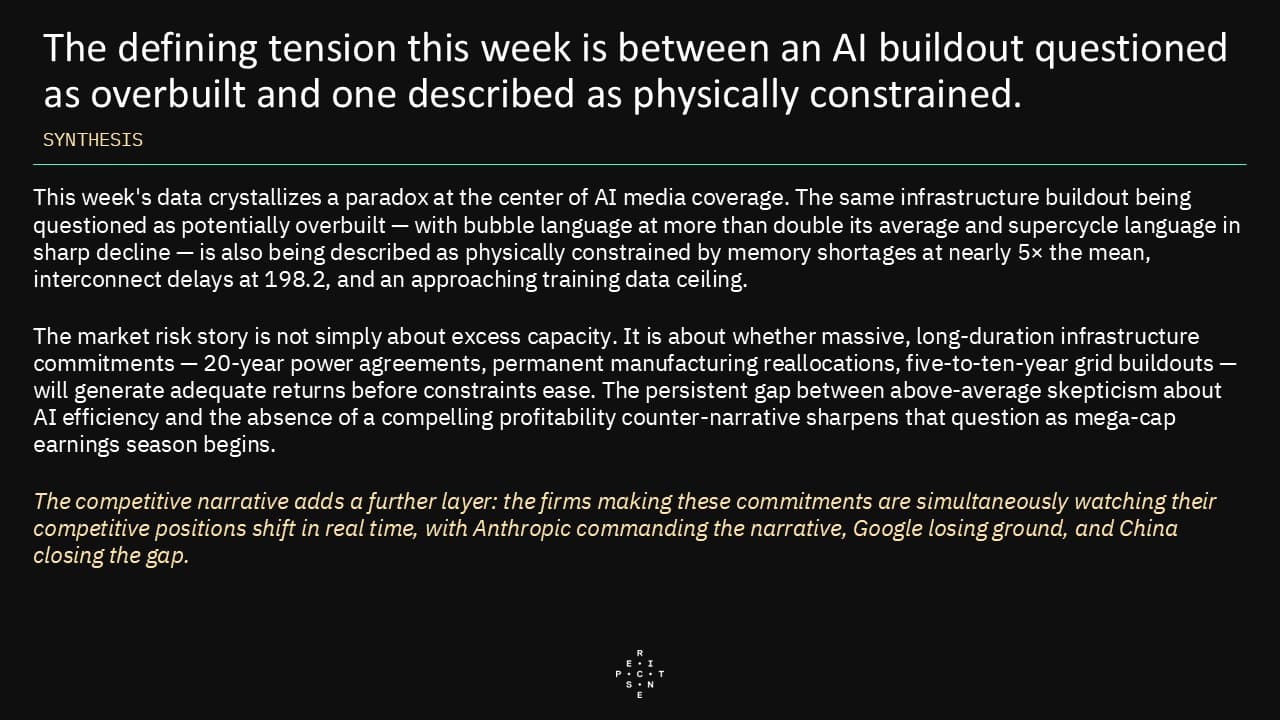
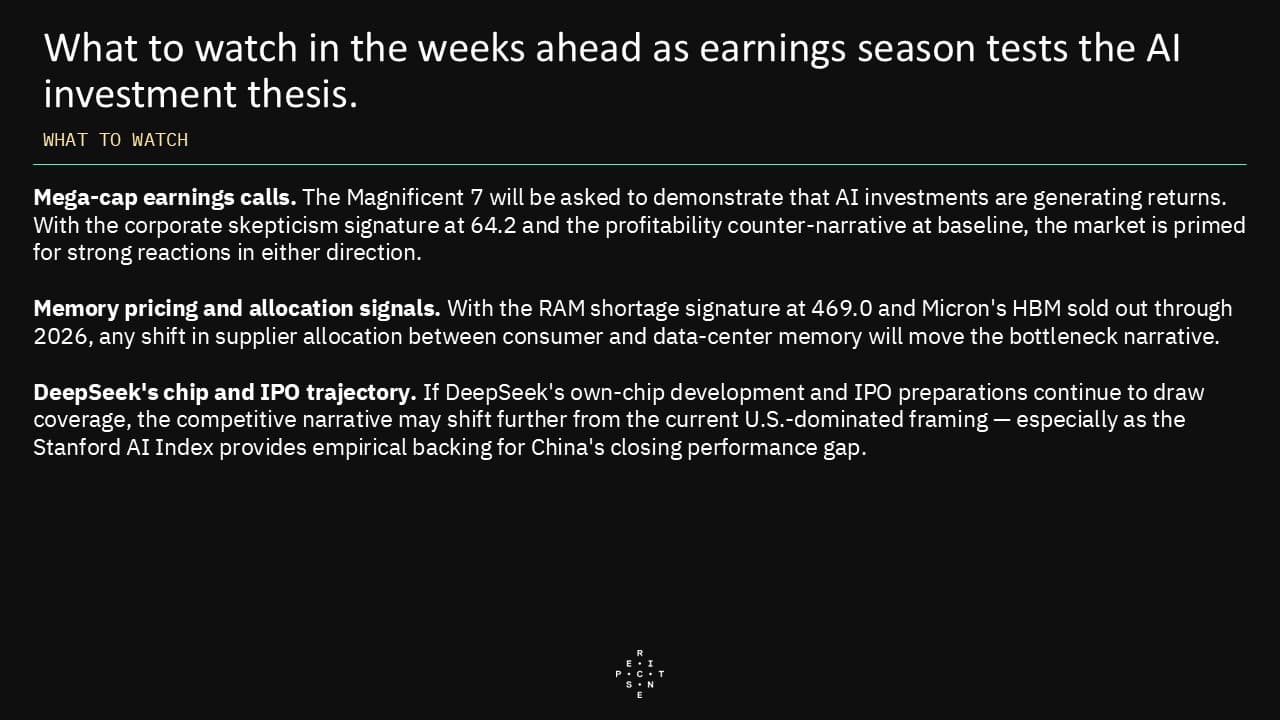
  • The bottleneck story has been rewritten around memory and physical infrastructure rather than accelerators. Coverage asserting that memory-chip shortages are throttling AI growth was the densest and fastest-rising signature we track this week, while the equivalent GPU-scarcity framing sat flat at its long-term norm. Reporting on Samsung, SK Hynix, and Stargate-scale demand pushed the constraint narrative toward DRAM allocation, transformer lead times measured in years, and interconnection queues, which recasts AI capacity as a supply-chain and permitting problem instead of a chip-design problem.
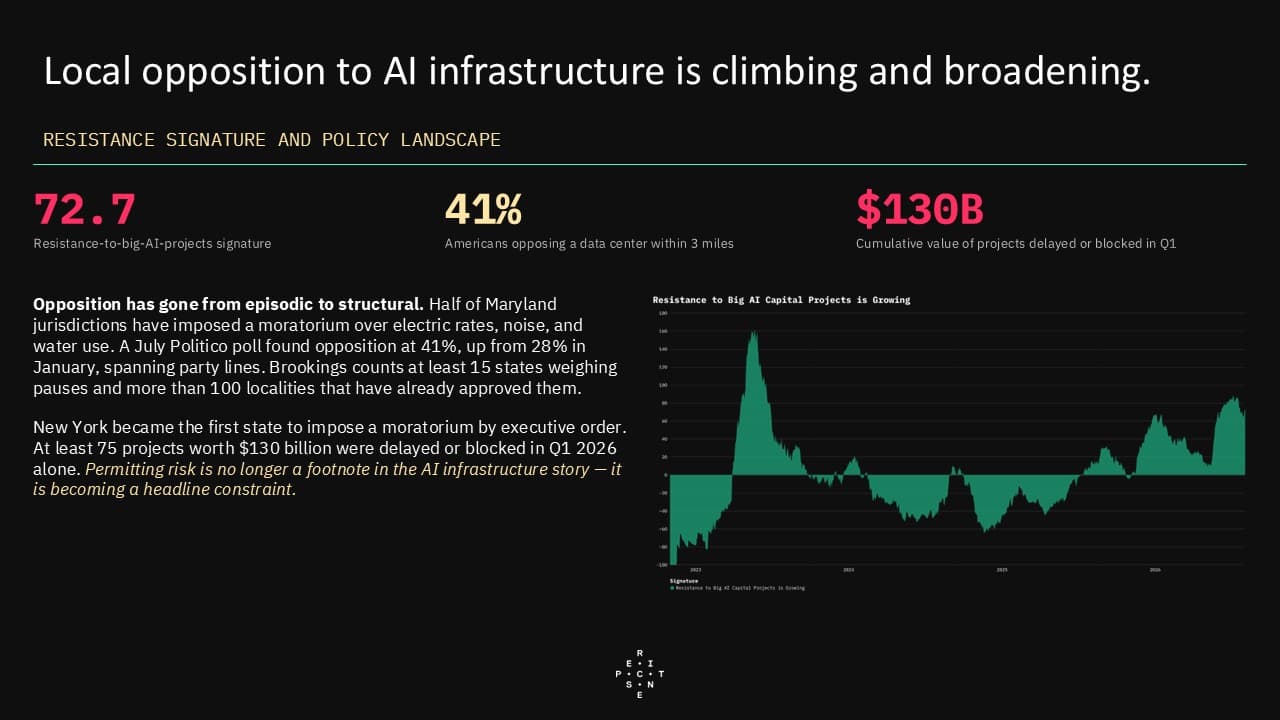
  • Local resistance has become a durable narrative thread, not an episodic one. Density of language claiming that opposition to large AI capital projects is growing continued climbing, anchored in moratorium counts, polling showing that neighborhood opposition has risen sharply since January, and tallies of blocked projects. Notably, one contrarian counterweight appeared in the coverage set, arguing that cancellation figures are inflated because most flagged capacity was never past the announcement stage.
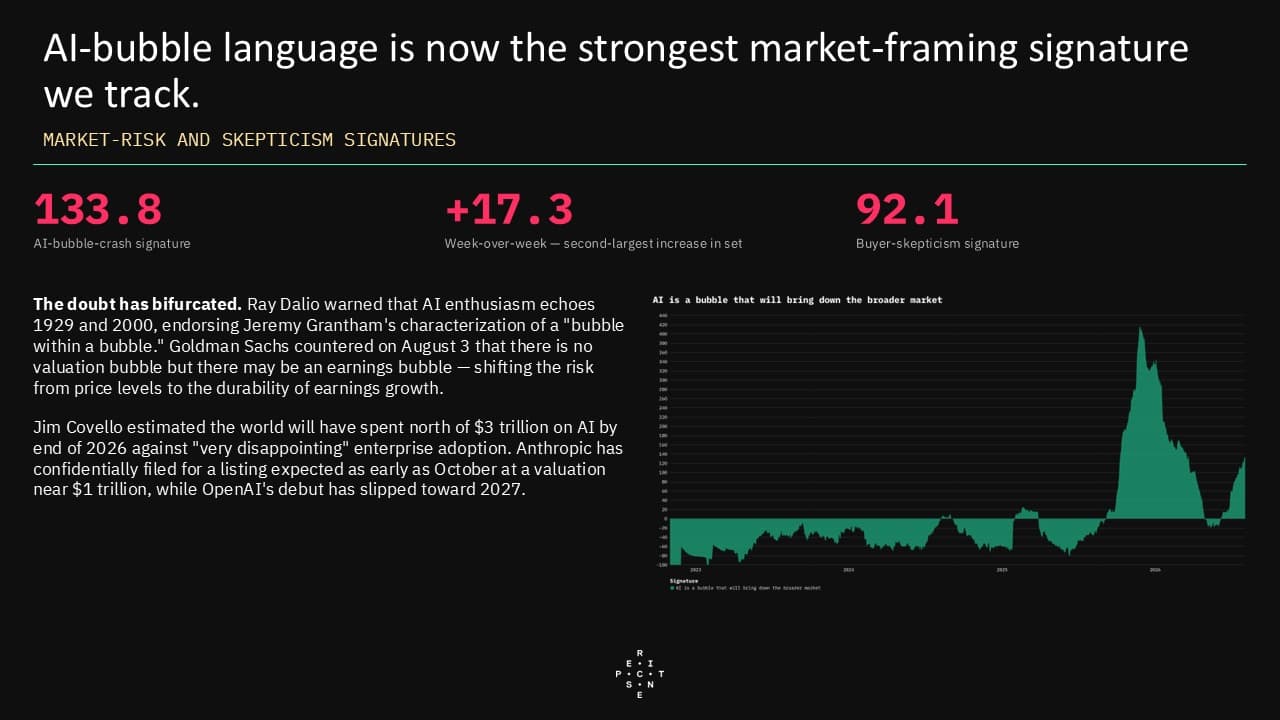
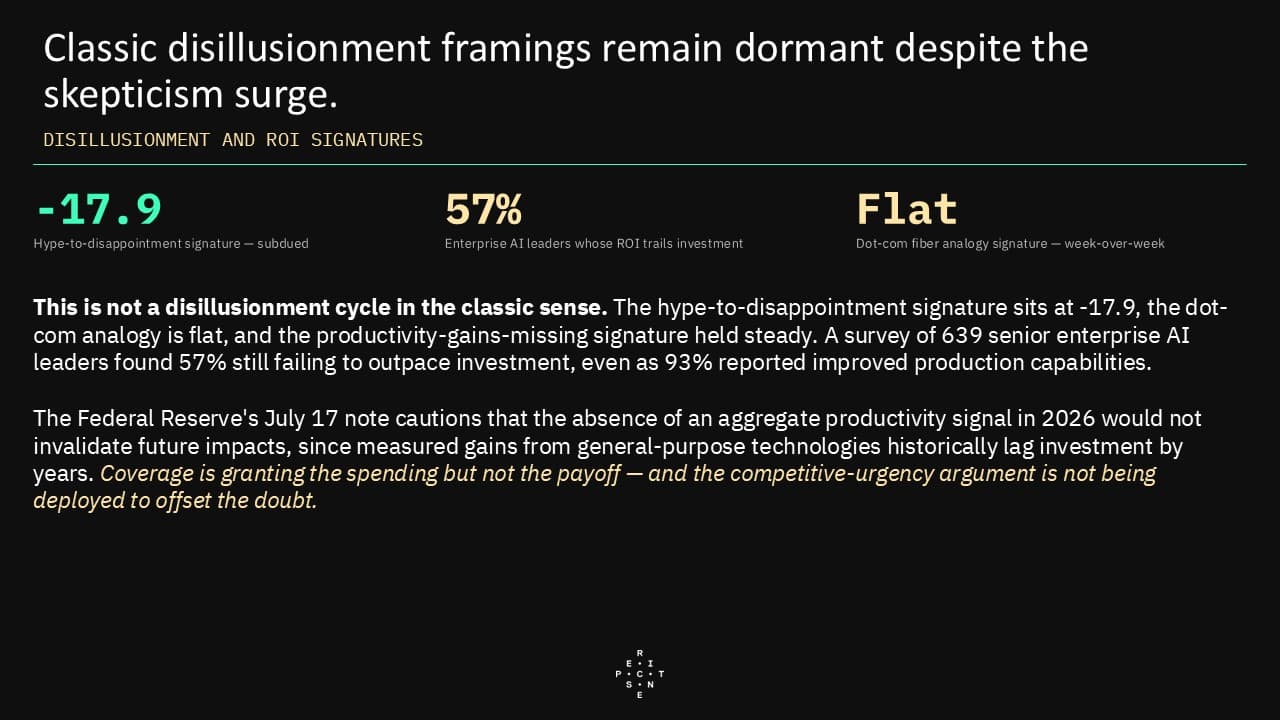
  • Skepticism is being expressed in the vocabulary of financial risk rather than technological letdown. Signatures tracking predictions of an AI-investment collapse spilling into the broader market and language asserting that businesses doubt their own AI spending both jumped sharply, yet the classic disillusionment framings — hype giving way to disappointment, the dot-com fiber analogy, missing efficiency gains — stayed subdued or negative. Media are conceding the spending and disputing the payoff, with financing structure, off-balance-sheet commitments, and the distinction between a valuation bubble and an earnings bubble carrying the argument.
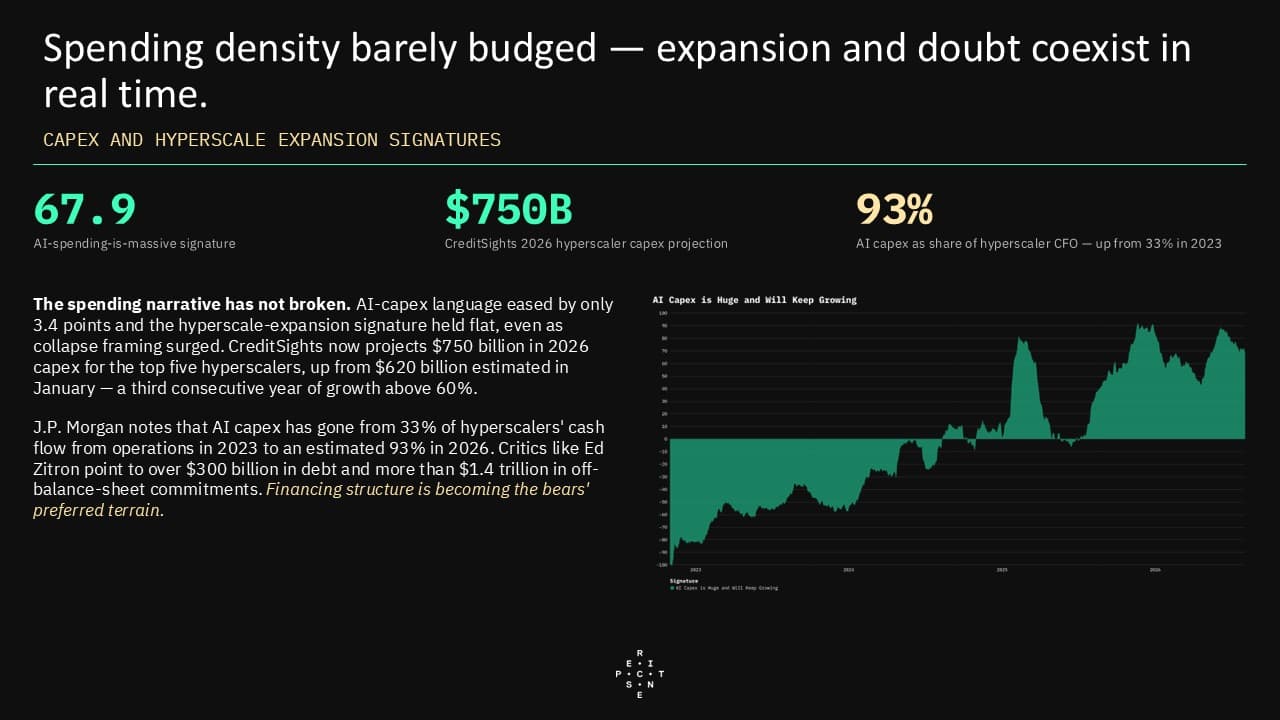
  • Expansion and doubt are now reported simultaneously rather than in sequence. Language describing massive and rising AI infrastructure spending barely eased and predictions of continued hyperscale expansion held flat, even alongside the surge in collapse framing. Meanwhile, the competitive-urgency argument that non-adopters will be left behind stayed flat, meaning outlets are not deploying fear of falling behind to blunt buyer skepticism.
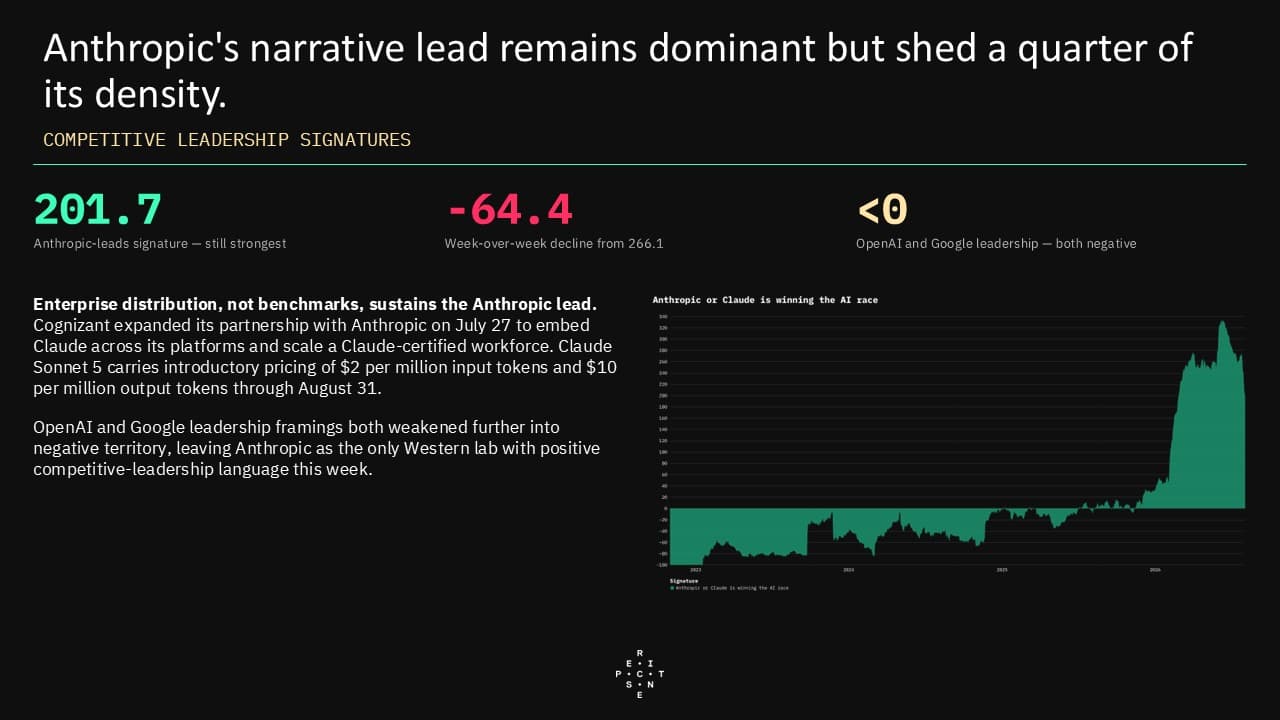
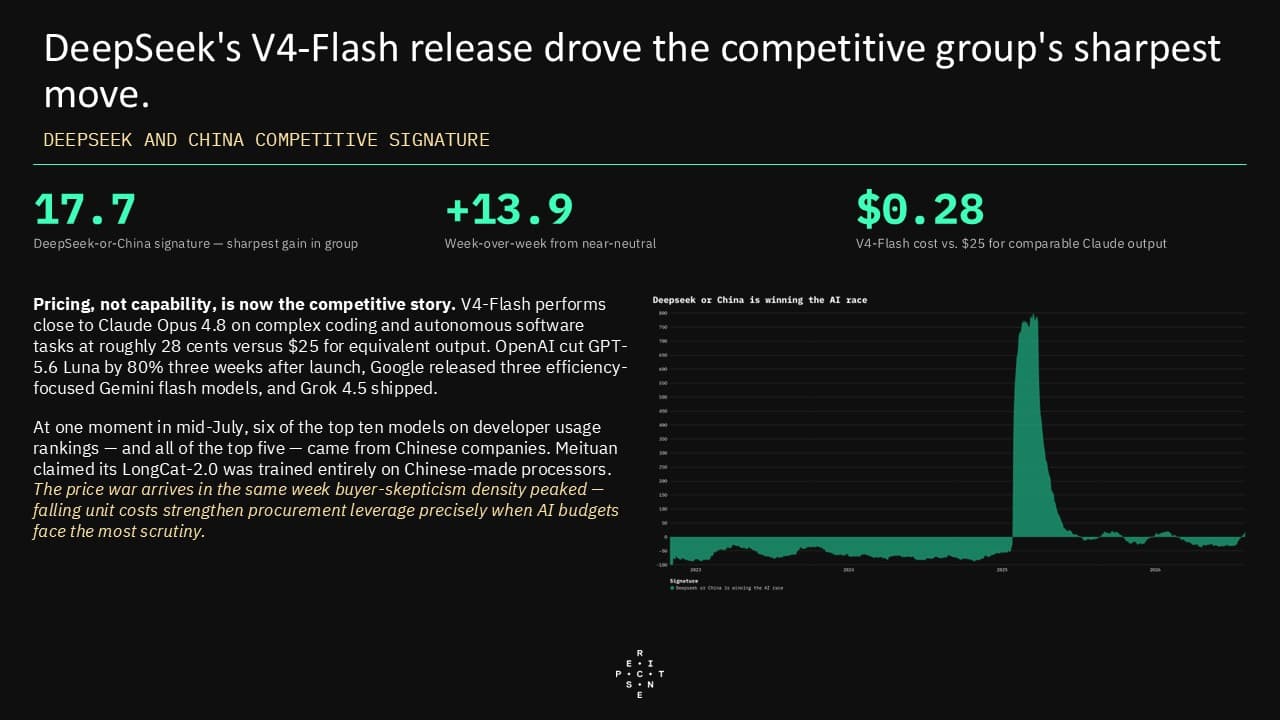
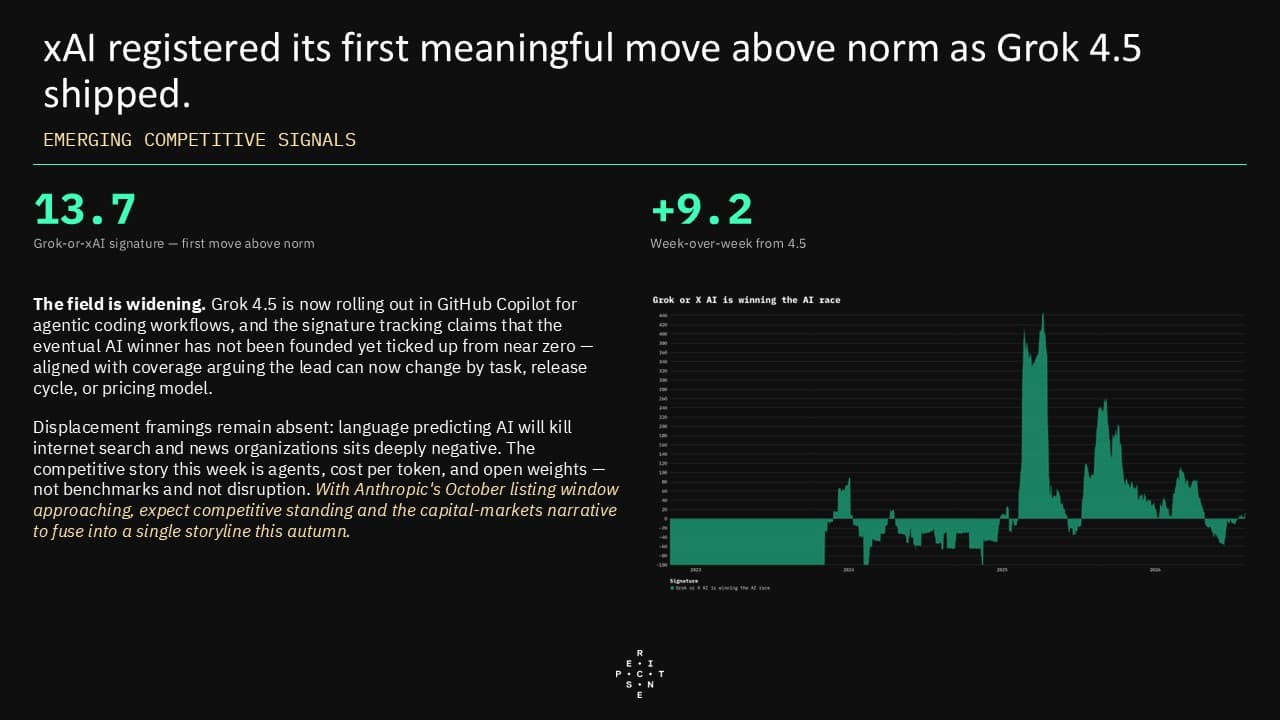
  • Competitive coverage fragmented around price per token instead of benchmark supremacy. Density of Anthropic-leads language fell steeply from a very high base while OpenAI and Google leadership framings weakened further, and the DeepSeek-or-China signature posted the group's sharpest gain following the V4-Flash release, with xAI also registering its first meaningful move above norm. Because this price war surfaced in the same week that buyer-skepticism density peaked, falling unit costs read as procurement leverage arriving exactly when AI budgets face the most scrutiny — a convergence likely to fuse the competitive and capital-markets storylines as Anthropic's listing window approaches.

Recent Pulses

Markets PulseWeeklySep 22, 2026

Markets Pulse September 15, 2026

The regime-change story arrives without any accompanying fear language. Every flight-to-safety signature — Treasurys, Swiss franc, yen, gold, money market funds — sits deep in negative territory, geopolitical and monetary policy uncertainty signatures were flat, and risk-on and risk-off readings have converged to nearly the same level just below zero. Media are narrating a supply shock, a five-percent ten-year, and a first hike since 2023 while conspicuously declining to counsel defensive positioning. Election-season transfer proposals collided with a hardening sovereign-risk story, and media asserted both outcomes at once. The helicopter-money signature registered the largest single move in the file, and stimulus-check predictions rose with it, yet signatures tracking debt paydown, deficit reduction, and austerity legislation also strengthened in the same week, while fiscal policy uncertainty remained flat. Commentators are expressing conviction about incompatible fiscal futures rather than doubt. Simultaneously, signatures tying runaway spending to higher Treasury yields, and those linking bond weakness to deficits and unfunded tax cuts, all gained, and claims that Treasurys are pricing genuine default risk moved into positive territory. Taken together, Sections 1 and 2 describe a media framework in which monetary and fiscal policy are pulling in opposite directions. Coverage pairs a hawkish Fed responding to oil-driven inflation with a proposed trillion-dollar household giveaway, and the reserve-currency channel sharpened alongside it: the signature tying dollar-status threats specifically to debt sustainability rose while the generic version held flat. Claims that White House pressure on foreign Treasury holders is deterring buyers remain the densest reading in the entire file, even as it eased slightly, and official-sector gold substitution language stayed elevated without accelerating further. Tariff politics are running in reverse, and the war has been absorbed into the same affordability argument. The signature tracking broad public opposition to tariffs climbed to one of the highest standings in the file while claims of public support weakened further, and the stated rationale rotated decisively: reshoring-manufacturing arguments dropped hard while "make other countries pay their fair share" and negotiating-leverage framings gained. Directional language turned two-sided for the first time in months. Bridging Sections 1 and 3, voter coverage now treats tariffs and the conflict as a single price story, which the K-shaped-economy framing organizes into a midterm affordability fight — notably, the market version of that bifurcation narrative eased even as chip stocks sold off, and the argument that investors have no alternative to US large-cap growth has effectively vanished from coverage.

Markets PulseWeeklySep 22, 2026

Markets Pulse

Next release: September 29, 2026

Private Credit PulseBiweeklySep 22, 2026

Private Credit Pulse

Next release: October 06, 2026