
Markets Pulse
AI Pulse August 25, 2026

EXECUTIVE SUMMARY
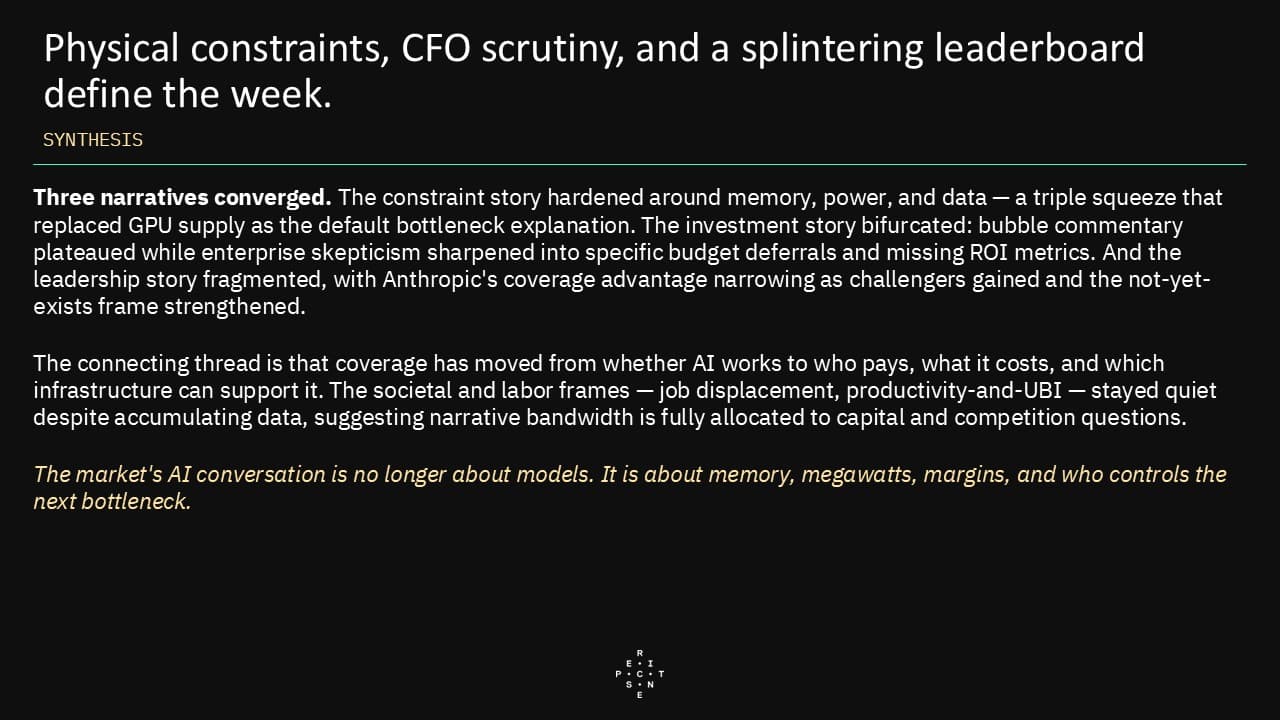
- The bottleneck story has migrated from silicon to everything around it. Perscient's semantic signature tracking the density of language asserting that memory chip shortages are slowing AI growth remains the densest reading in the set, while GPU-scarcity language has receded to ordinary levels. Reporters explaining delayed AI timelines now reach for DRAM pricing, interconnect queues, and construction schedules rather than model capability, and the sharpest single weekly increase came from language about scarce high-quality training data — a frame given a concrete price tag by Google's $10 million purchase of a defunct airline's corporate email archive.
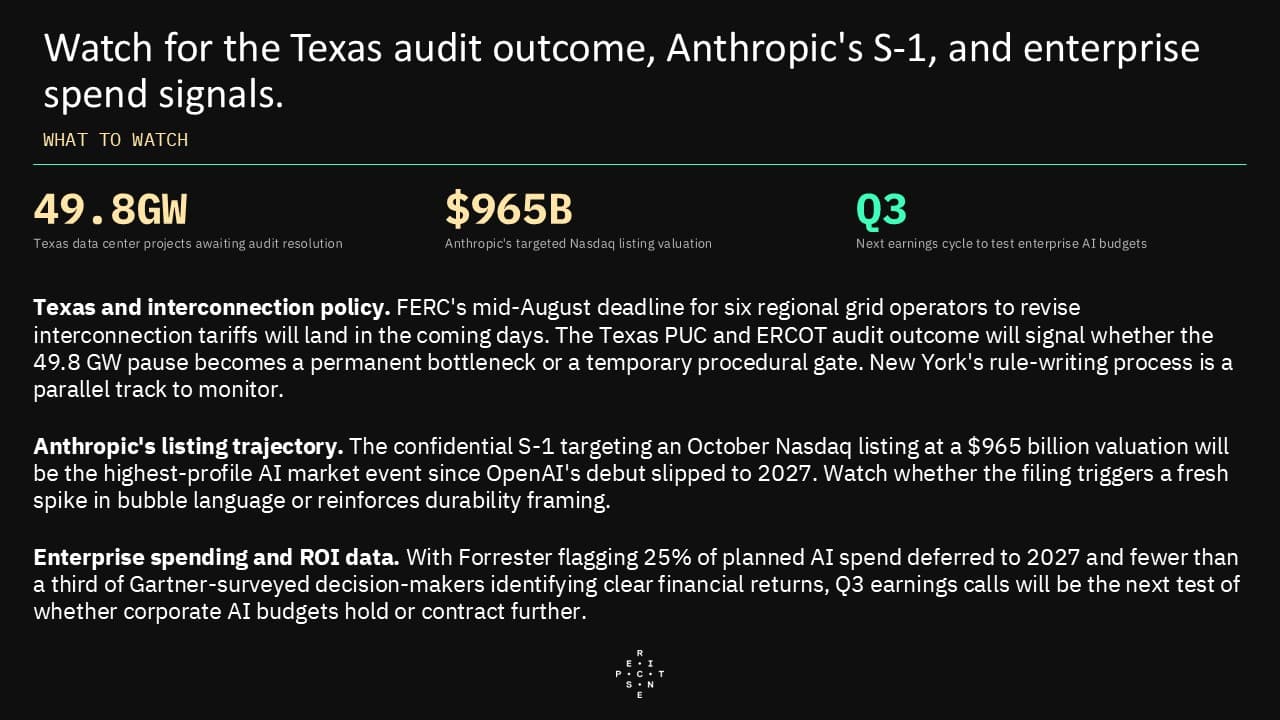
- Texas turned a permitting decision into a national narrative hinge. Governor Abbott's audit directive and ERCOT's delayed Batch Zero review simultaneously drove up our signatures tracking grid-interconnect and construction-delay language in Section 1 and the opposition-is-increasing language in Section 3. Physical constraint and political consent are no longer separate storylines in coverage; the queue itself has become the venue where local resistance is expressed.
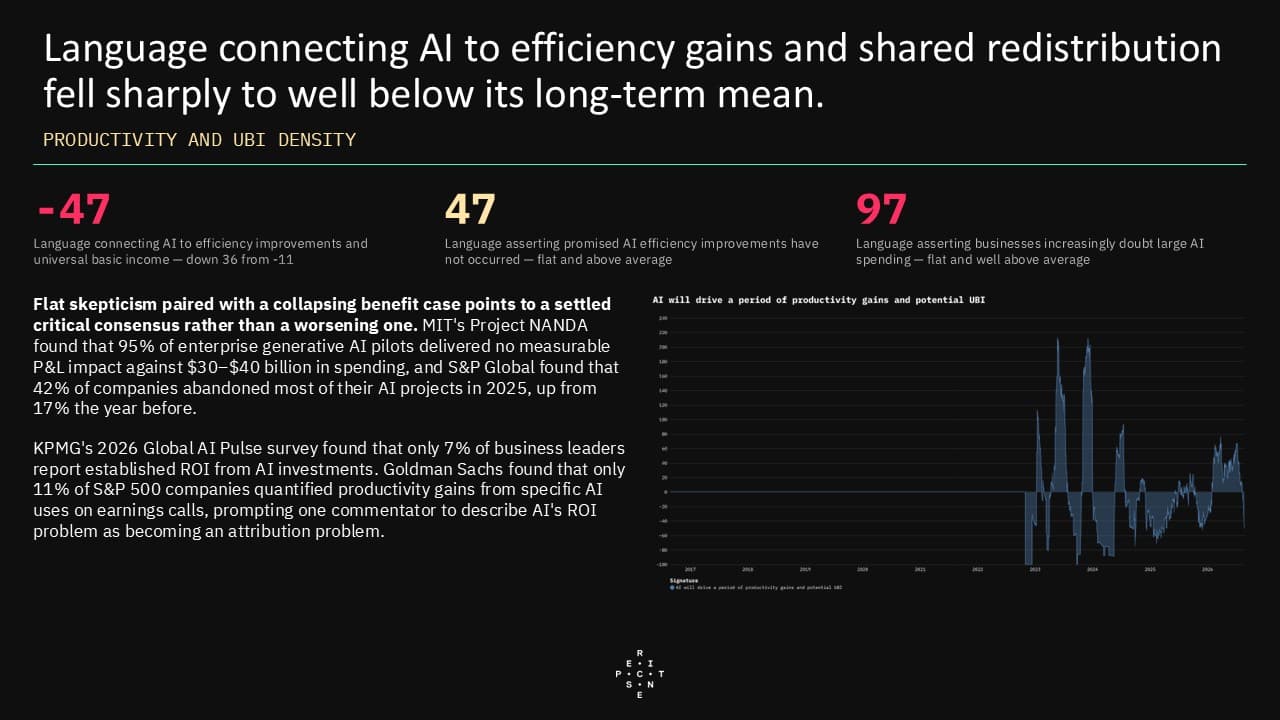
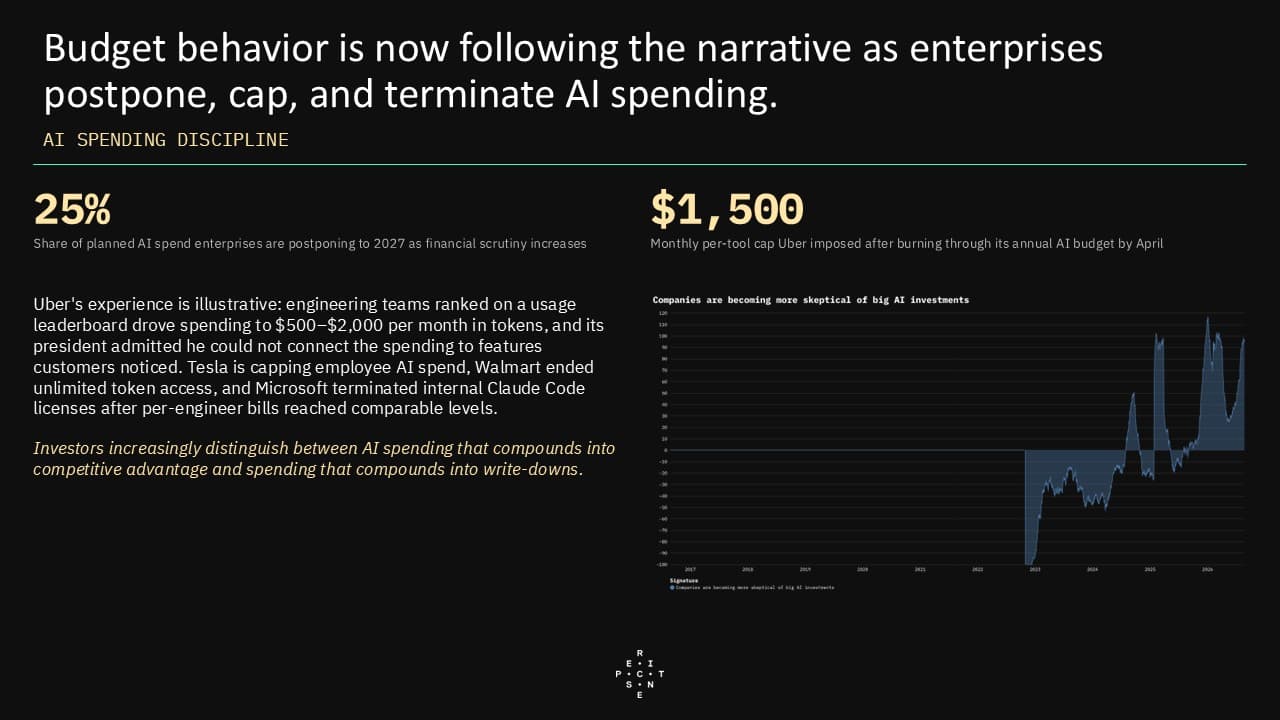
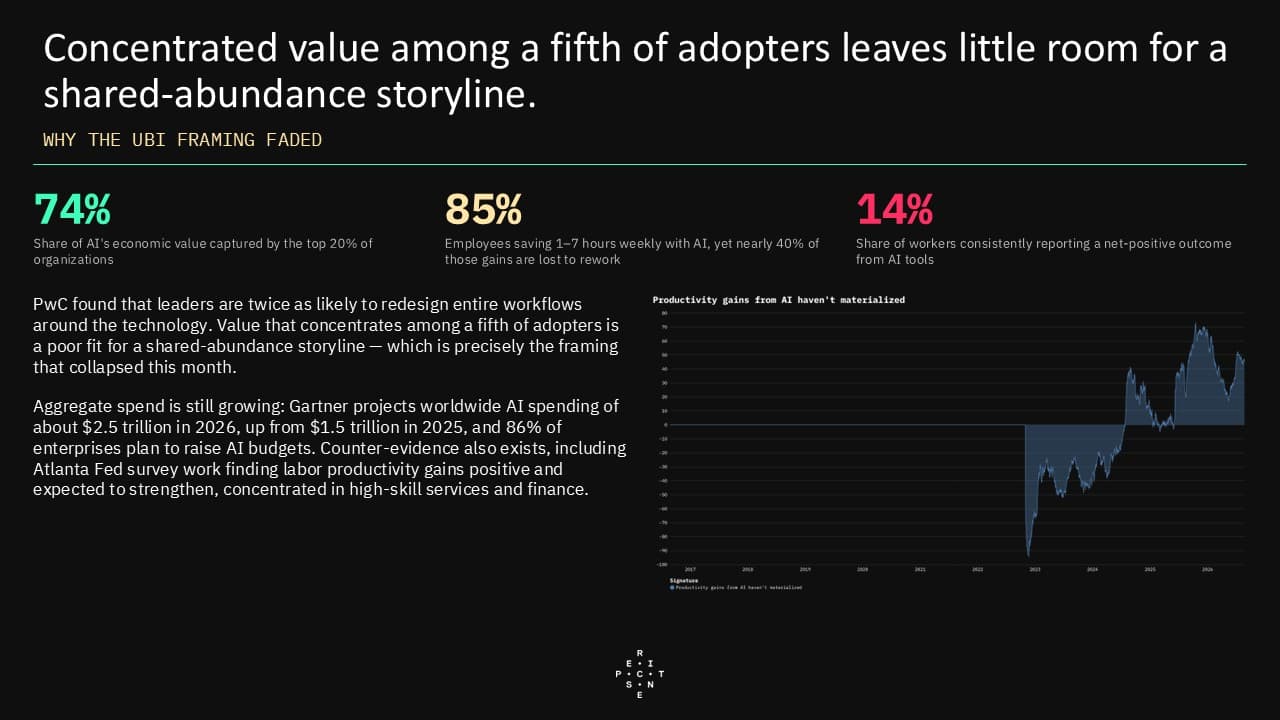
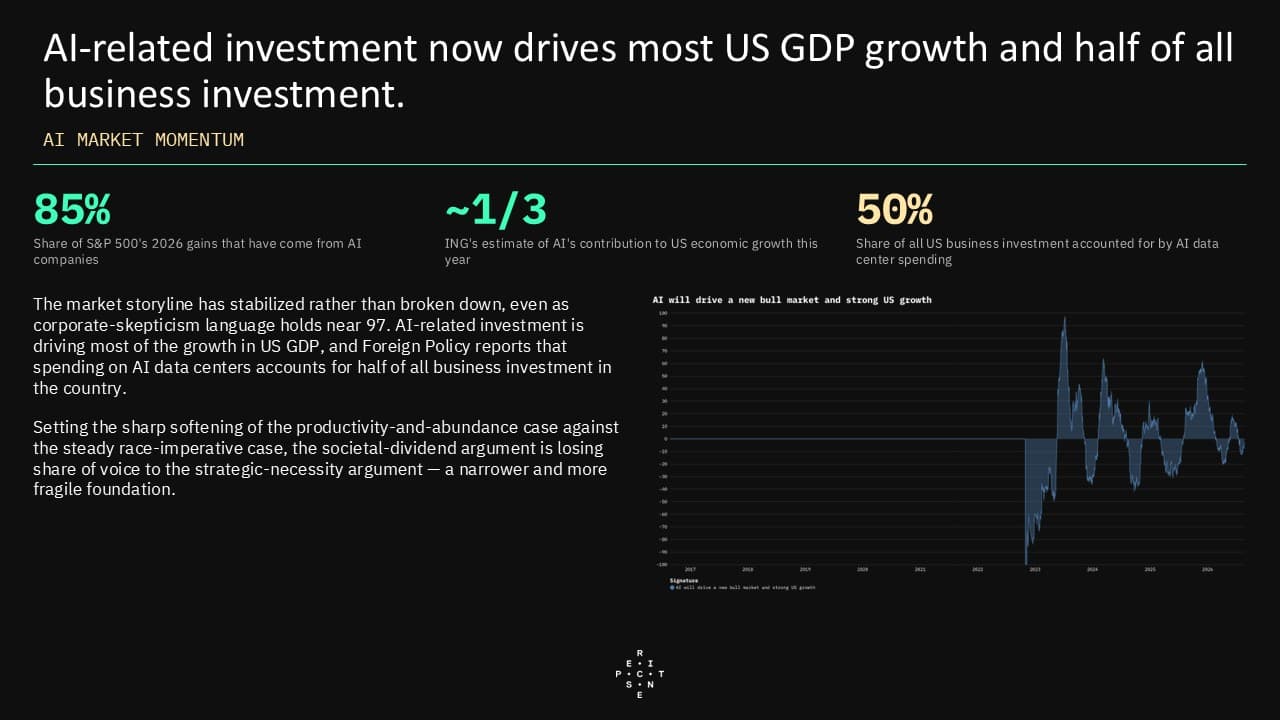
- Spending guidance climbs while the justification thins. Language describing massive and increasing infrastructure spending sits well above its mean alongside language predicting an investment collapse that crashes the broader market, now the second-densest frame tracked. The counterargument is conspicuously missing: signatures tracking claims that AI is reaching corporate bottom lines and that non-adopters will fall behind both sit below average, and the long-horizon defenses — productivity abundance, a multi-decade supercycle — fell hardest this week. Capex is being defended on near-term demand alone.
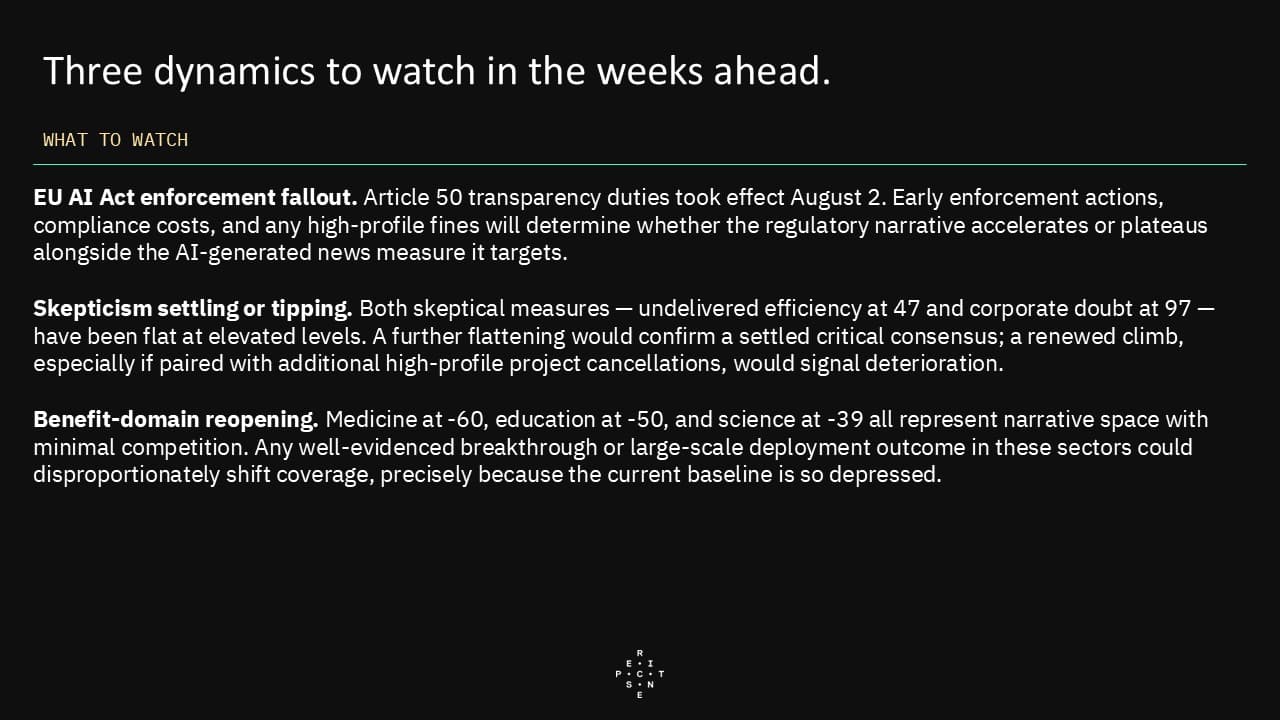
- The bubble case is being argued in macro terms, not hype-cycle terms. Comparisons to 1990s telecom overbuild and trough-of-disillusionment language have faded back toward or below their averages, displaced by valuation and systemic-risk vocabulary drawn from the ECB blog, fund-manager credit-event warnings, and MIT's finding on enterprise pilots. The skeptical frame has moved from technology commentary into financial-stability commentary.
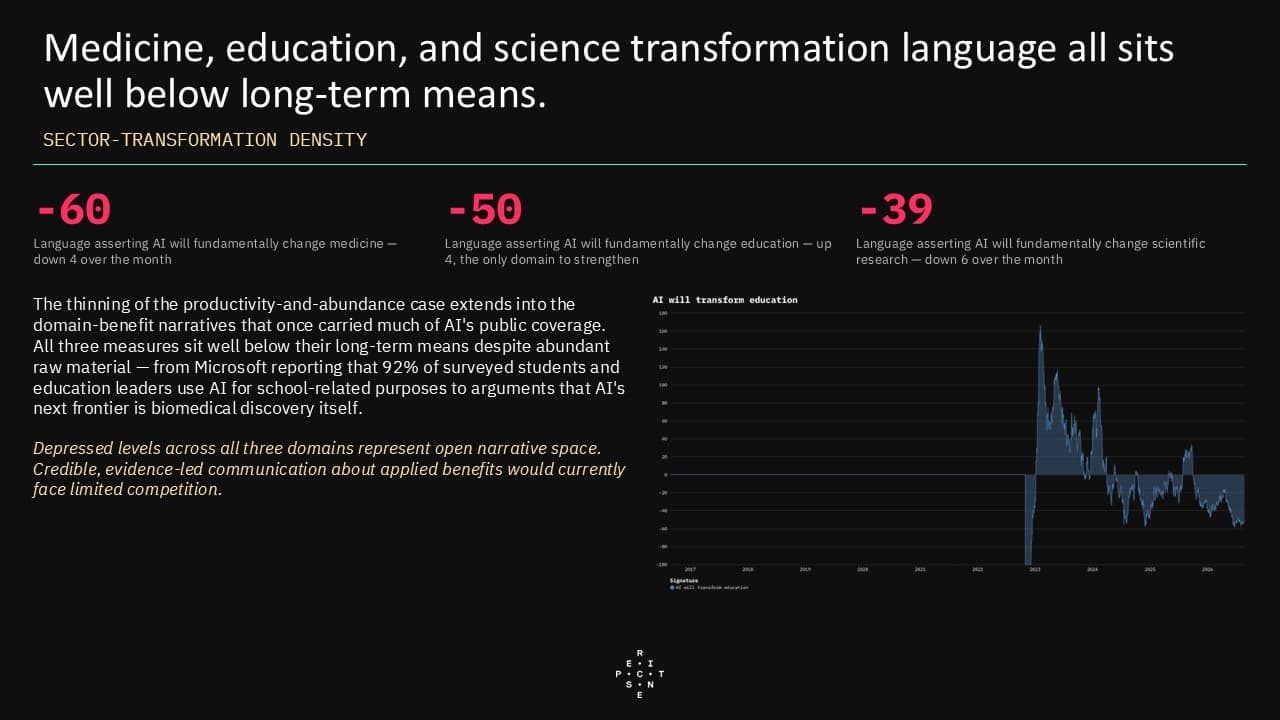
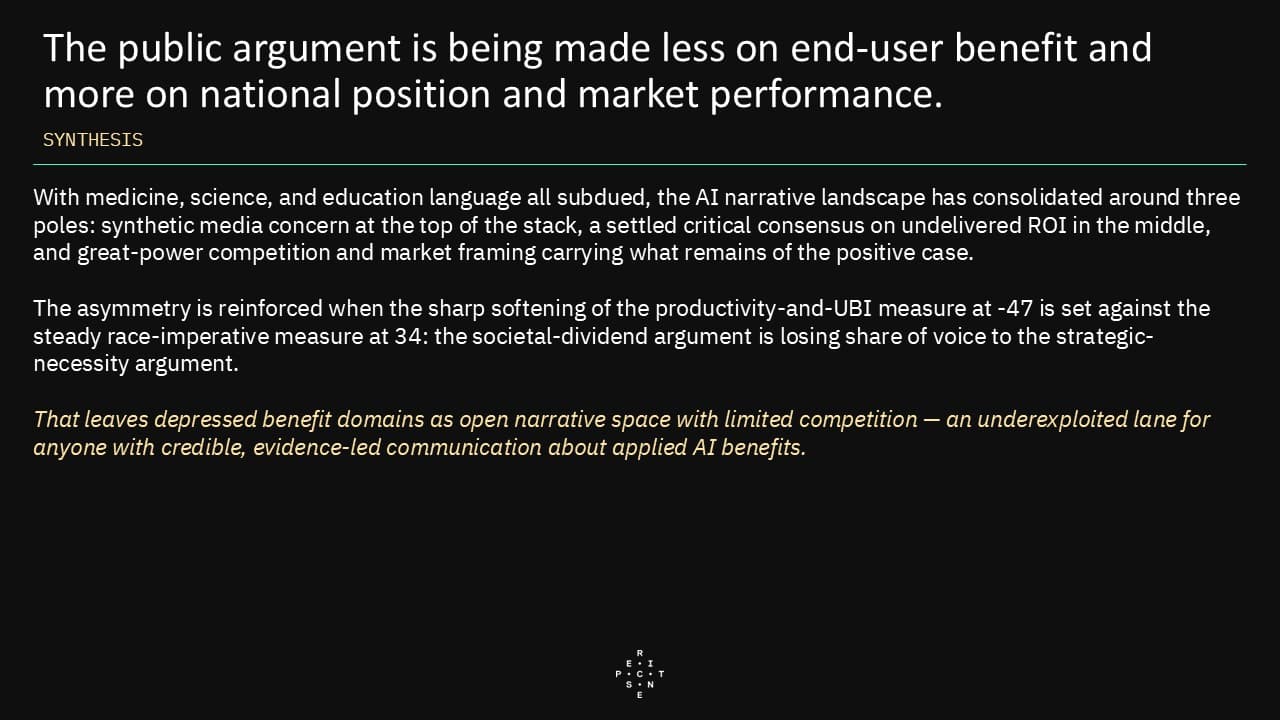
- Brand attention concentrates while the public-benefit case goes silent. Language asserting Anthropic's leadership holds far above equivalent frames for rivals, and Grok-leadership language recorded the steepest weekly drop despite a recent model release. Yet every benefit-framing signature — healthcare, education, science — sits below its long-term mean. A handful of firms command narrative share, but no one is supplying the legitimacy story that continued physical build-out would require, leaving the industry facing organized local opposition without a persuasive answer.